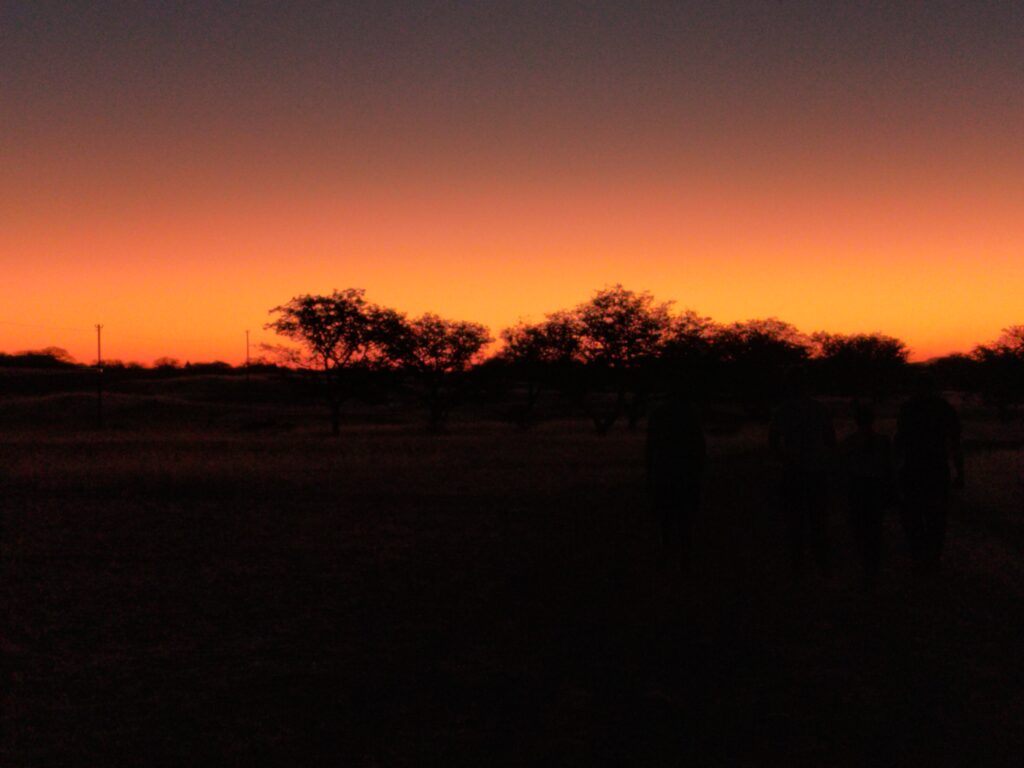
“And the sun slips away, beyond the dunes, to violate other nights.“
F. De Andrè, Il Testamento di Tito
Table of Contents
- Introduction
- Itinerary in pills
- Day 1: D707, Sesriem Canyon, Elim Dune
- Day 2: Big Daddy, Deadvlei, Hidden vlei, Dune 45, Dune 40
- Conclusions
Introduction
I took inspiration from one of my favorite songwriter’s best songs to introduce the diary of the most exciting day of my trip to Namibia, spent among what are probably the most fascinating dunes in the world. Mountains of sand in incredible colors, over 300 meters high, offering landscapes that leave even the most talkative speechless.
Reflecting on the lyrics of the song “Il Testamento di Tito” (Titus’ Testament), I thought about the fact that there are some places on Earth so special that they make you believe that their existence cannot simply be the result of nature’s work, but that something supernatural lies behind them. Places where even the most skeptical find it hard to believe that the hand of the Almighty has not displayed its power.
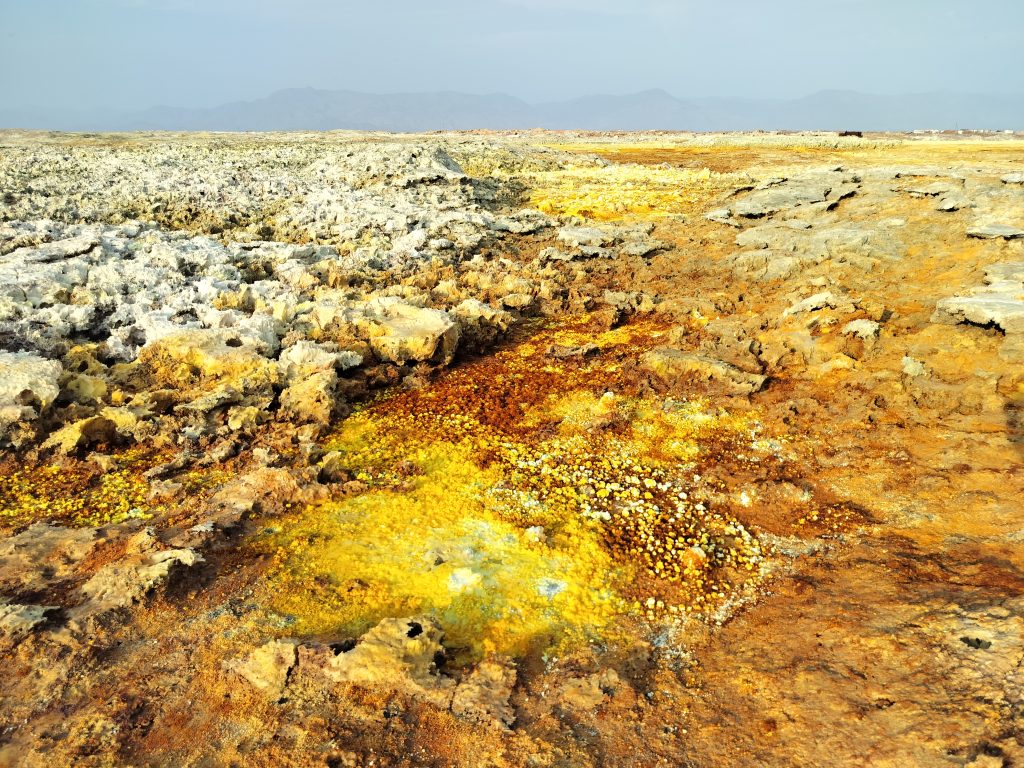
In my travels, I have experienced this feeling of grandeur more than once. For example, it happened to me on the plains of Dallol, in the middle of Tiramisu Canyon, or in the waters of Onuk Island, Aitutaki Lagoon, and the Great Barrier Reef. And then it happened to me from the highest point of Big Daddy, which I will tell you about, along with other amazing places, in the article you are reading. I hope you have stocked up on popcorn.
Itinerary in pills
As you may have guessed, visiting Sossusvlei is the most unforgettable part of any trip to Namibia. Sossusvlei is a large park located within the Namib Desert, the oldest desert in the world, and home to the country’s most famous attractions. As this is the main stop on the trip, we divided our visit to Sossusvlei into two consecutive days. On the first day, we visited Sesriem Canyon and climbed Elim Dune at sunset, starting our day in Aus and crossing the D707, considered by many to be the most beautiful road in Namibia. On the second day, we started with the climb up Big Daddy and the descent to Deadvlei, continuing on to Hiddenvlei, Dune 45, and Dune 40.
Among the stops we had included as nice-to-haves but had to give up due to time constraints, I would mention Solitaire Desert Farm and Naukluft Park.
Below is a summary table with maps of the routes (by car).
| Day | Attractions | Night | Travel time/km | Map |
|---|---|---|---|---|
| 1 | Aus, D707, Sesriem Canyon, Elim dune, Hammerstein | Sesriem (Hammerstein) | 6h20m/430 | Day 1 |
| 2 | Sesriem, Big Daddy, Deadvlei, Hiddenvlei, Dune 45, Dune 40 | Solitaire | 4h/285 | Day 2 |
Day 1: D707, Sesriem Canyon, Elim Dune
D707
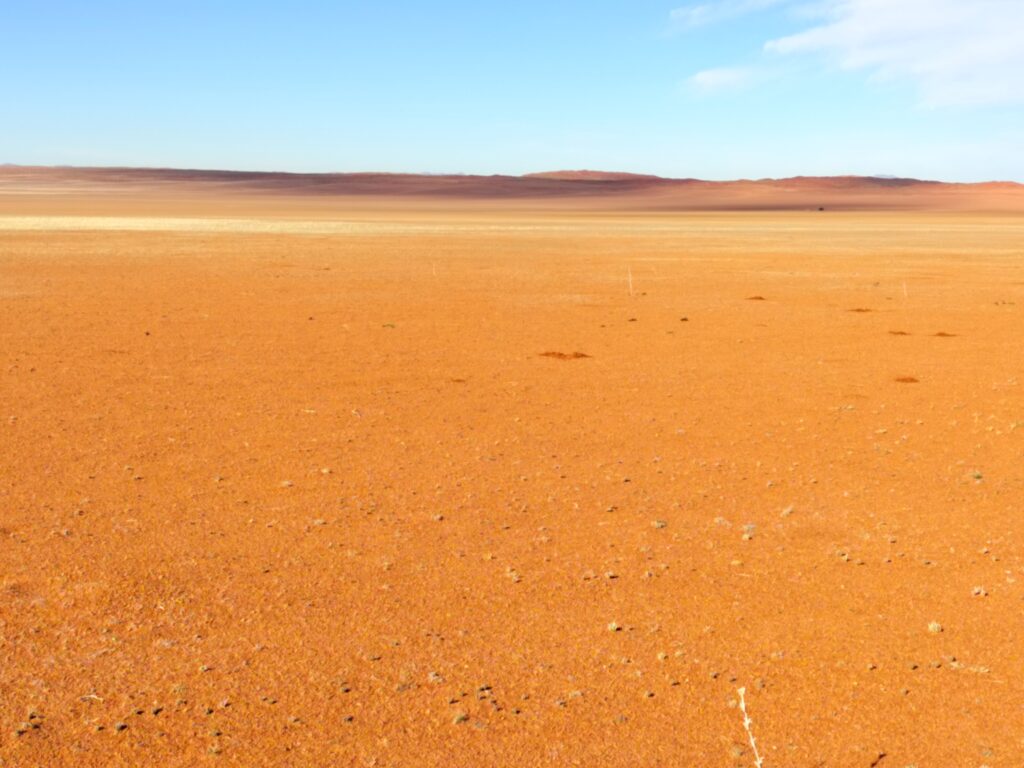
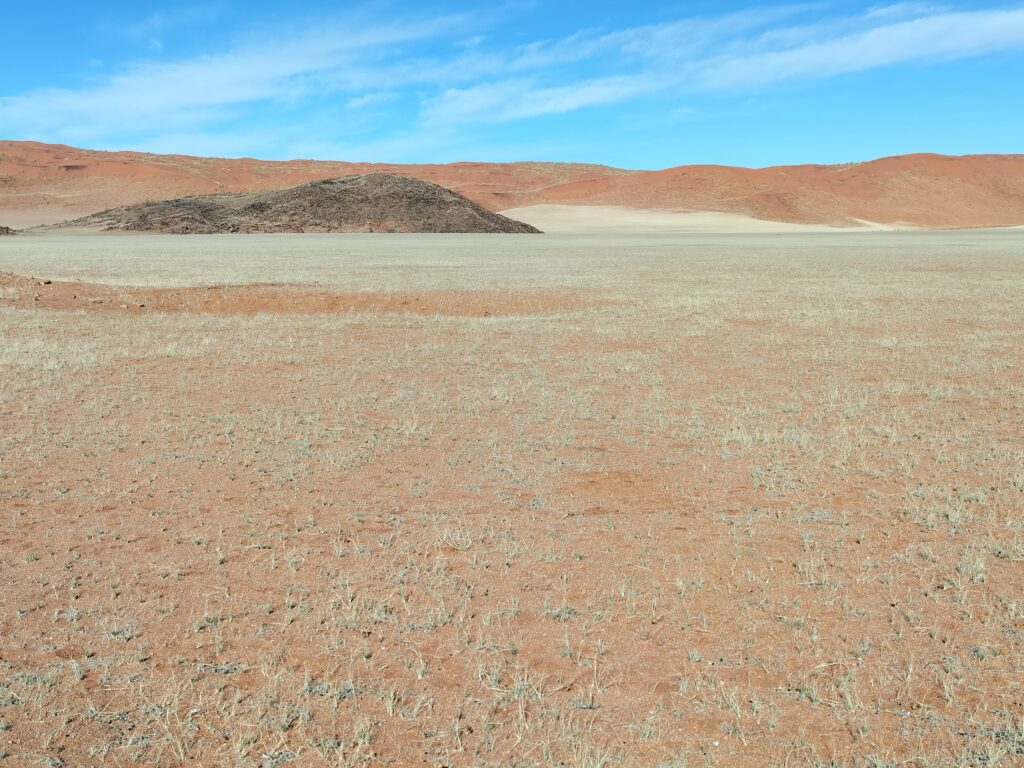
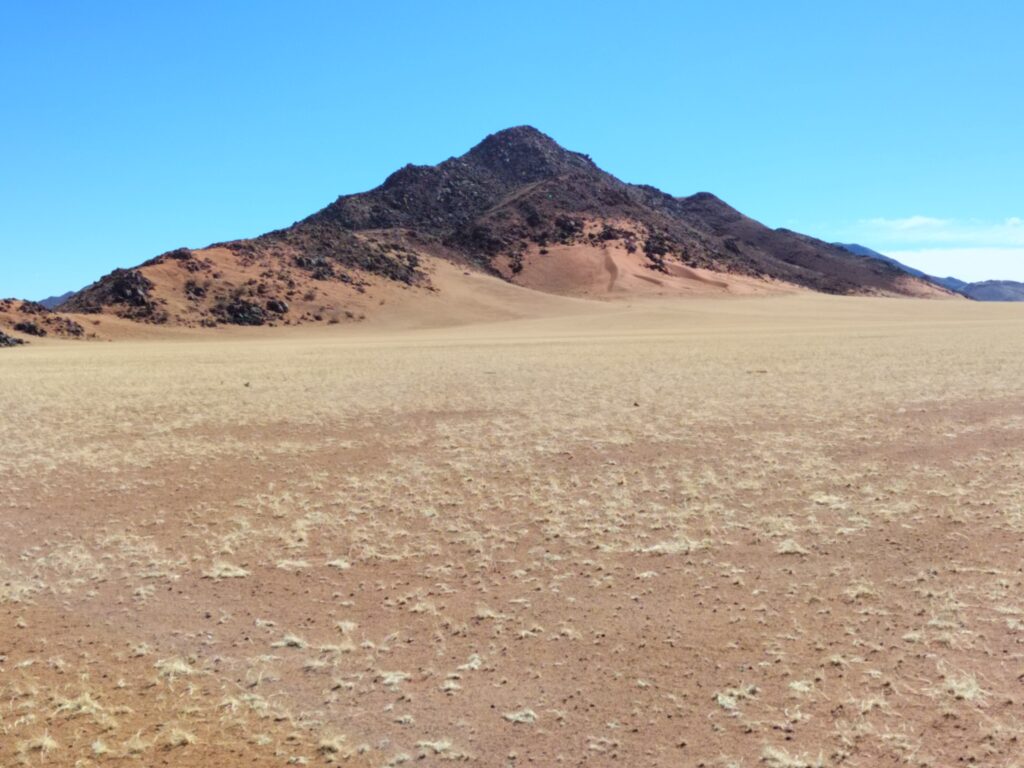
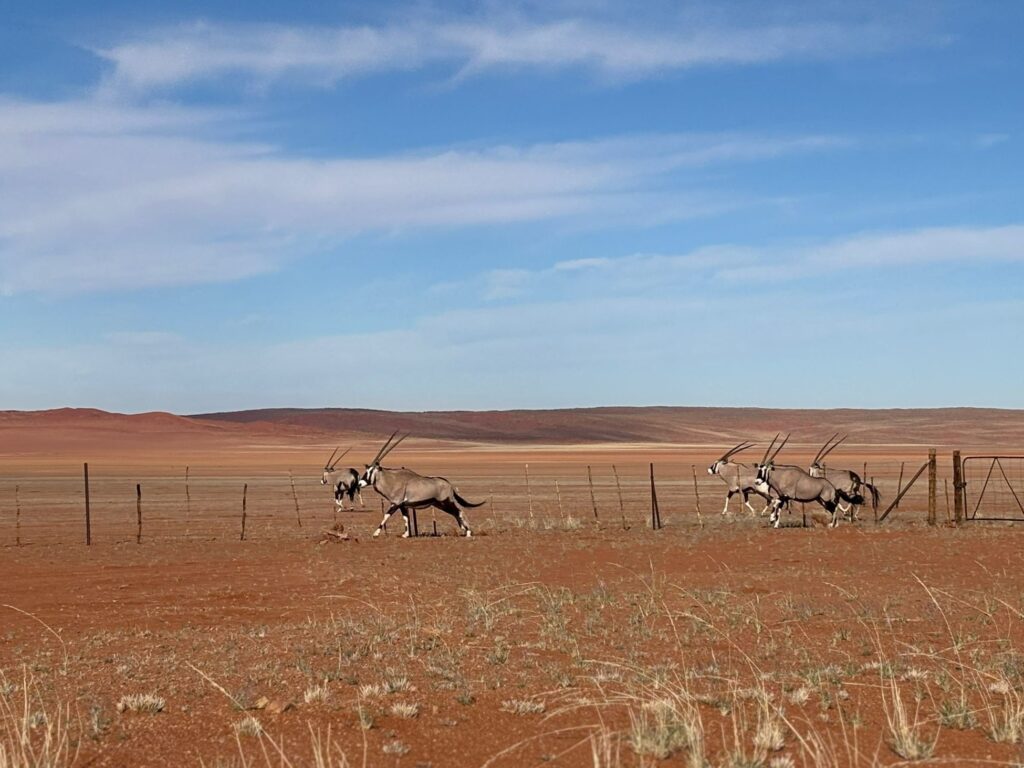
We leave Aus at dawn. After less than an hour, we turn onto the D707, which we decide to take despite Google Maps offering us an alternative that would have saved us at least half an hour of walking, as well as reducing the risk of puncturing our tires. The reason for this decision, of course, is not related to our questionable way of thinking, but to the fact that the D707 itself is an attraction not to be missed. In reality, this road is not generally given much consideration in the itineraries I found on the web, partly because the pavement is not the best. It is a dirt road, about 120 km long, which according to various sources can only be traveled by a 4×4 vehicle. From my experience, however, I believe I can dispel this rumor, as the road can be traveled easily even with a normal 2×4 (we never used 4×4 mode along the D707, even though our car allowed us to do so). It could be problematic in case of rain, as the road surface has some dirt on it, but in the dry season this is unlikely to happen.
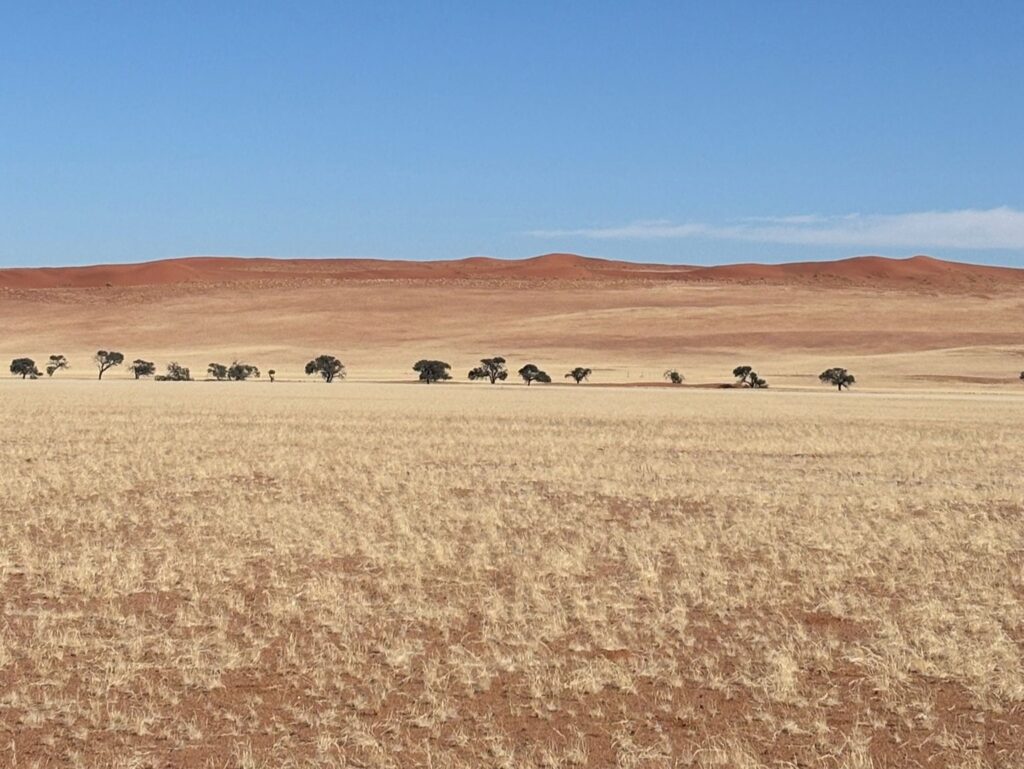
At this point, you may be wondering if it was worth it. I can say without a doubt that the D707 is the most scenic road I have ever traveled, even more so than the Ring Road in Iceland. The Namibian D707 is located in a spot that overlooks the Tiras Mountains on one side and the red dunes of the Namib desert on the other.
Sesriem Canyon
Once we have traveled the entire length of the D707, we turn onto the C27, another beautiful scenic road that leads us to the entrance of Sossusvlei. We stop to pay the entrance fee, which costs us 800 NAD per day (1600 NAD in total, having visited the park on two consecutive days), including five personal fees and the car fee. That is, in total, about €16 per person. I can hardly remember a lower cost/benefit ratio than this. The park is open from sunrise to sunset, but the exact times may change. In our case, it meant that the gates were open from 7:30 a.m. to 6:30 p.m. This is because we were sleeping outside the park; for those staying inside, the opening time is brought forward by one hour.
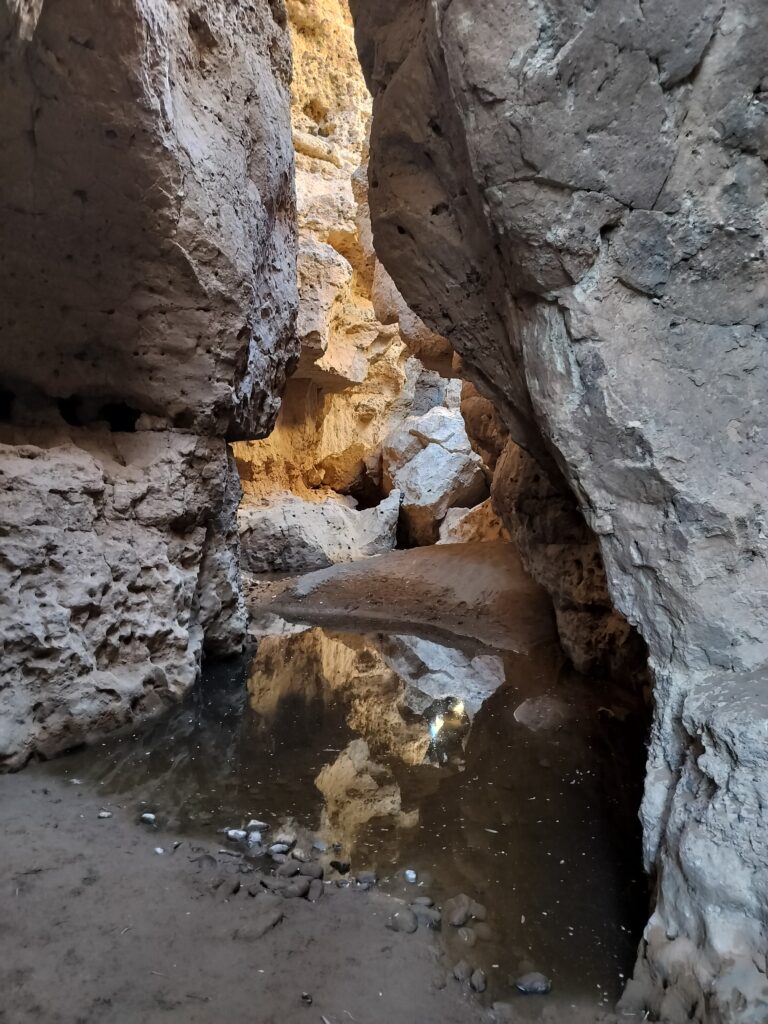
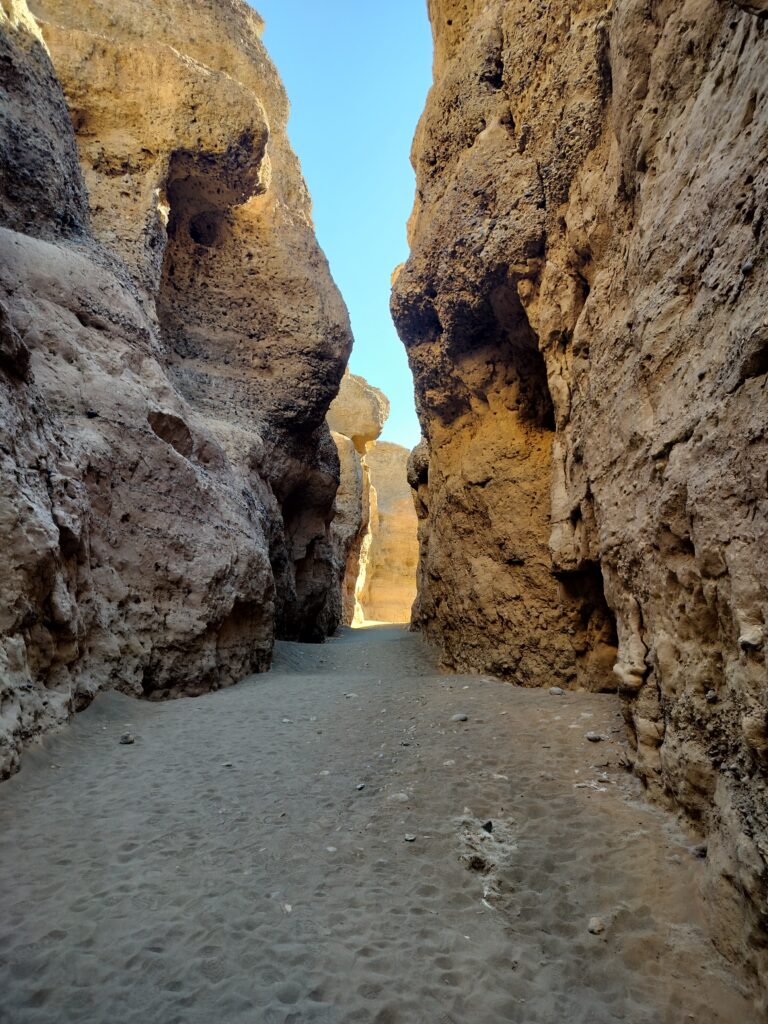
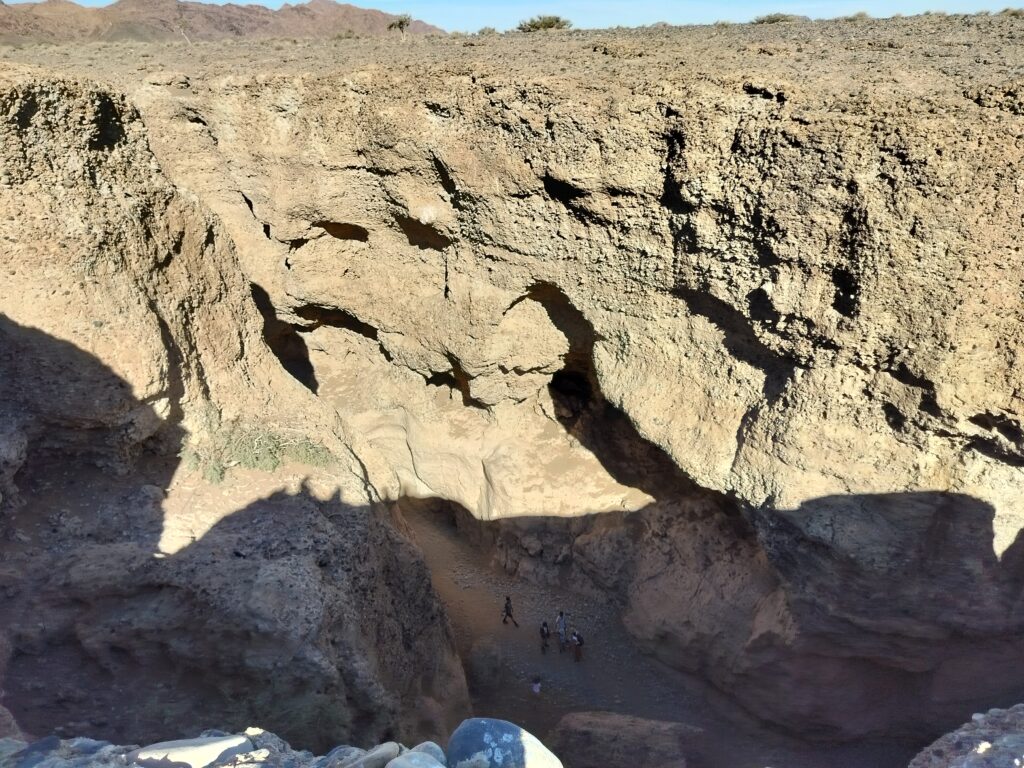
Our first stop, located a few kilometers from the park entrance, is Sesriem Canyon, a small canyon shaped by the Tsauchab River and dating back about 15 million years. The name Sesriem means “six straps” and derives from the fact that settlers had to tie together six strips of ox hide (“riems”) to reach the bottom of the gorge with buckets to collect water. The canyon is about 30 meters deep and about 1 km long. Therefore, visiting the canyon and descending into the gorges takes very little time. There are two short trails to follow. The first, which crosses the narrowest part of the gorges and is undoubtedly the prettiest, leads to a small lake. The second, which is rather wide, leads to a rock that, with a little imagination, resembles a sphinx. This second trail is not particularly fascinating, so if you are short on time, you can safely skip it. To be honest, I would say that you can skip it even if you have time! The trail is fairly easy, but it is advisable to wear hiking boots and walk away from the bushes, as you may encounter poisonous snakes, including the horned viper. For both trails, allow about 45 minutes. The Sesriem Canyon, in general, was the least compelling attraction in Sossusvlei.
Elim Dune
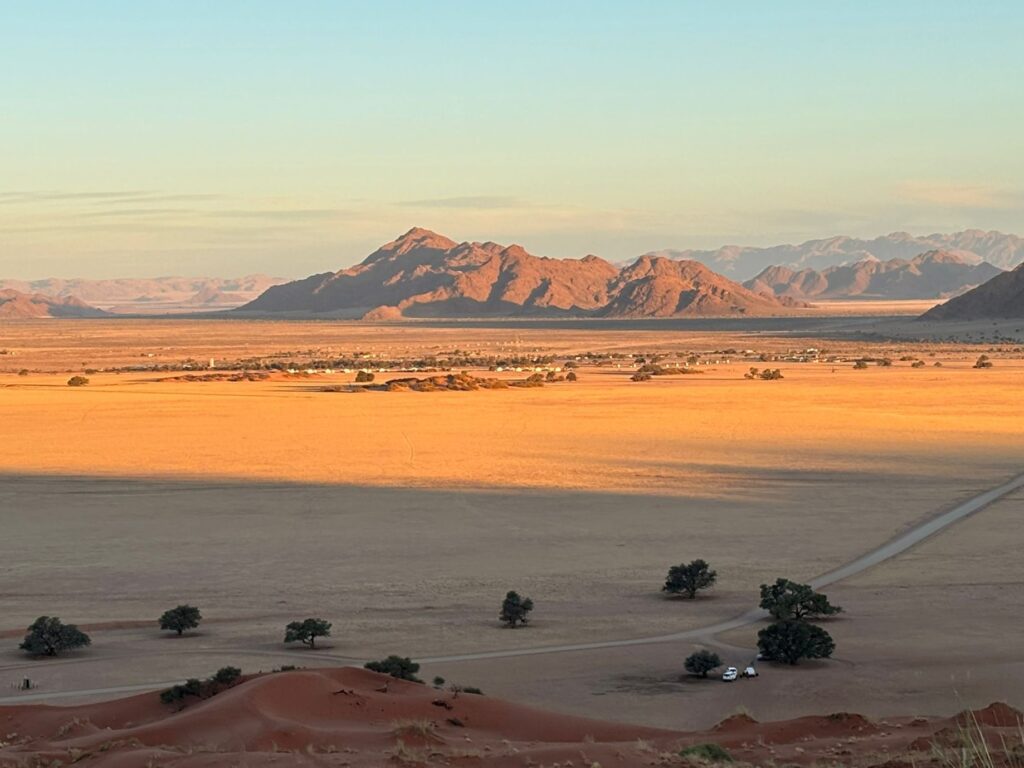
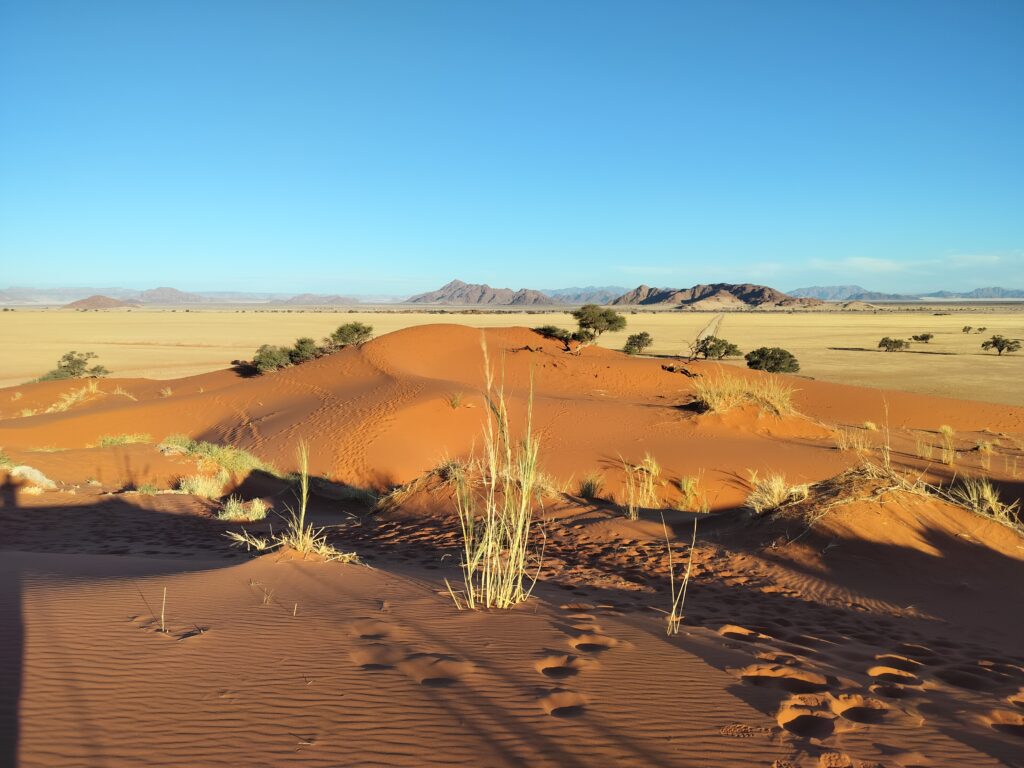
After visiting Sesriem Canyon, we have time for the last stop of the day before the gates close: Elim Dune, the first particularly attractive dune in the park, located just a few minutes from Sesriem Canyon and only 5 km from the park entrance/exit. The name “Elim” comes from an old German farm in the area. The hours around sunset are the ideal time to climb this dune and enjoy the splendid view of the Namib Desert.
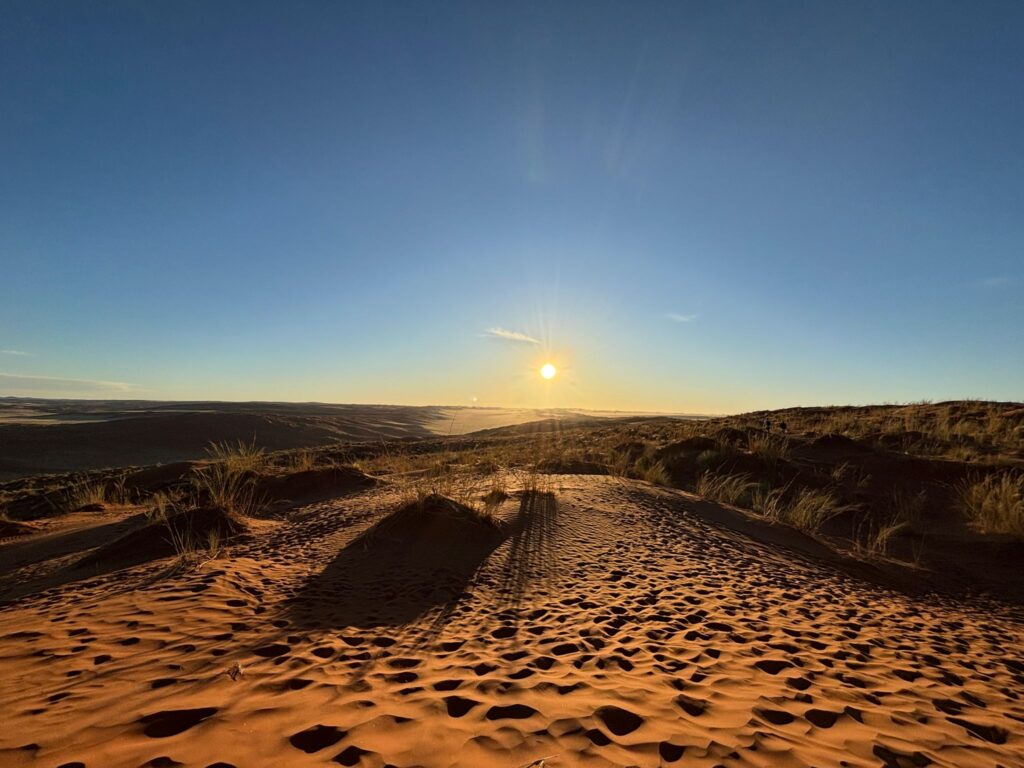
Elim Dune is just over 100 meters high, but despite being lower than its more famous cousins within the park, the climb is more challenging than expected. Fearing that we will not make it back in time, we are unable to reach the top, but we are nevertheless entranced by the landscape, which turns an increasingly intense red as the sun sets. Apart from us, there are very few other people around.
We arrive at the park gates a few minutes after closing time, which earns us a good telling-off from the guards, who had already closed the gates. However, we get away without a fine, unlike others.
Finally, we end the day at our lodge in Hammerstein, where we arrive in time for dinner.
Day 2: Big Daddy, Deadvlei, Hidden vlei, Dune 45, Dune 40
The most eagerly awaited day of the whole trip has arrived, the one we expected would be worth the price of the ticket alone. The alarm clock rings early, around 5:30 a.m., to allow us to have breakfast and arrive at the gates of Sossusvlei just before 7:30 a.m., the opening time for those sleeping outside the park. When we arrive, there is already a decent queue, but nothing traumatic.
Big Daddy
We head straight for the main destination of the day (and the trip), namely Big Daddy, which at 325 meters high is the second highest dune in the world and at the foot of which lies Deadvlei, the most iconic place in all of Namibia.
Big Daddy is directly accessible from the 4×4 parking lot, located about 65 km from the Sesriem gate. To reach this parking lot, you first pass through the 2×4 parking lot, accessible by any type of vehicle, which is about 4 km away. Once you reach the 2×4 parking lot, there are essentially two options for getting to the 4×4 parking lot:
- Travel the 4 km in your own vehicle, which must be a 4×4. This is not because there is anyone checking, but because there is someone ready to come and pick you up, as it often happens that someone decides to venture out in a 2×4 and gets stuck in the sand, which is very soft and abundant.
- Use the shuttles (for a fee, costing around the equivalent of €5-10 per person) that run between the two car parks and pass with a sufficiently manageable frequency (which I cannot quantify, however).
Since we had a 4×4 vehicle, we chose the first option, and it was very funny. I honestly believe that without using 4×4 mode, even though we are good drivers, we would probably have got stuck in the sand, as we saw happen to other people. So yes, I would say that 4×4 is really necessary.
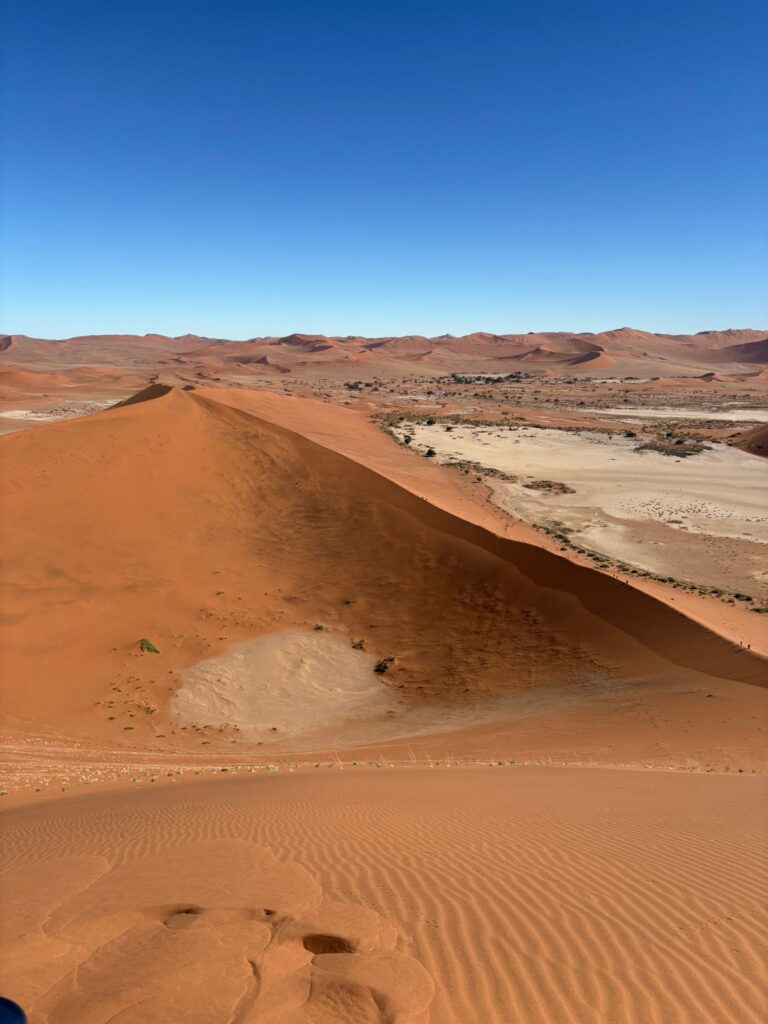
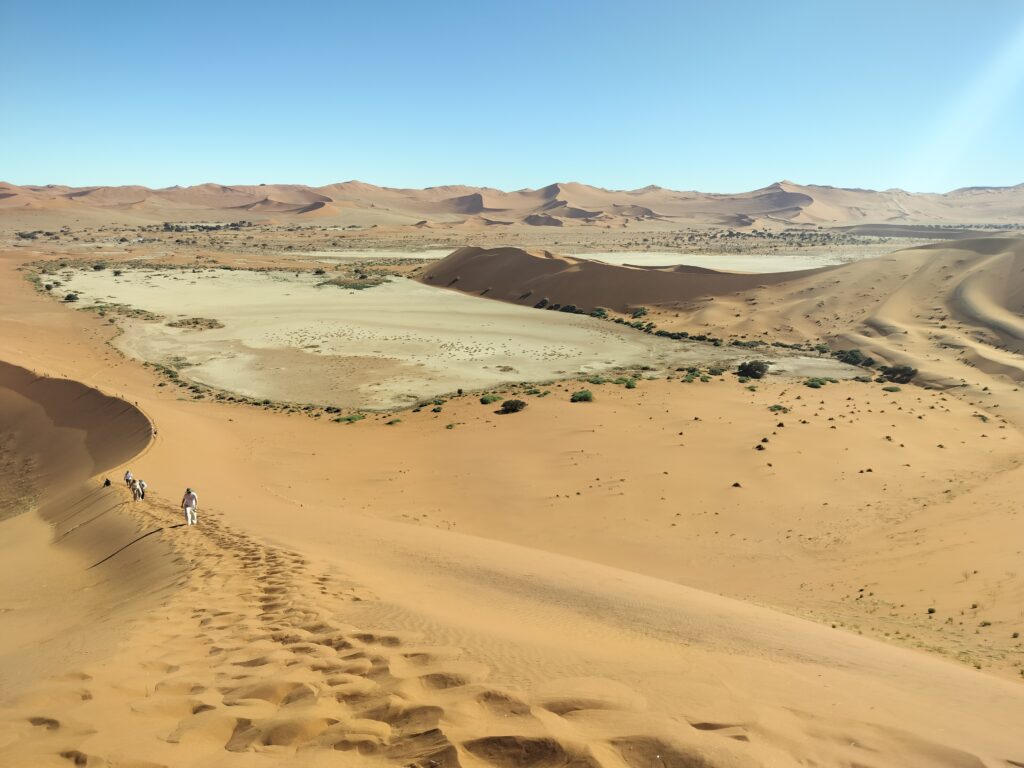
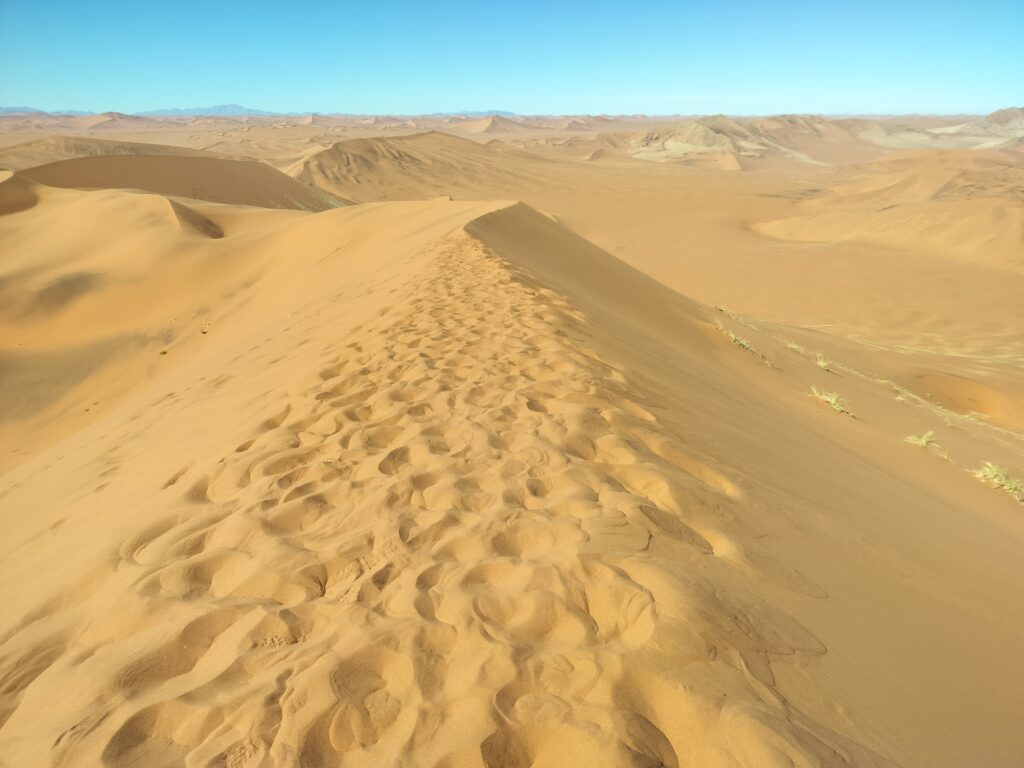
The 4×4 parking lot is the furthest point in the park from the Sesriem gate. Along the way, you can enjoy the landscape surrounded by fiery red dunes, somewhat reminiscent of the Red Center. It’s around 8:30 a.m. when we arrive at the 4×4 parking lot and begin the climb up Big Daddy. The estimated time for this climb varies between one and two hours, depending on various factors, ranging from the outside temperature (the higher it is, the less compact the sand) to the degree of preparation. We managed it in an hour and a quarter, taking advantage of the sand still being fairly compact and, above all, following the footsteps of those who had gone before us (who had therefore helped to make the sand harder). I had read the usual recommendations on various competitors’ blogs, about the importance of bringing plenty of water and avoiding the hottest hours of the day, but I must say that in the end it was less challenging than expected (ask the person in our group who only brought beer with him for confirmation!), although still intense. Moreover, the temperature was perfect, around 25 degrees Celsius (August is one the best months!), with bright sunshine.
In addition to Big Daddy, some people also climb his “wife,” Big Mama, a slightly lower dune that rises next to Big Daddy.
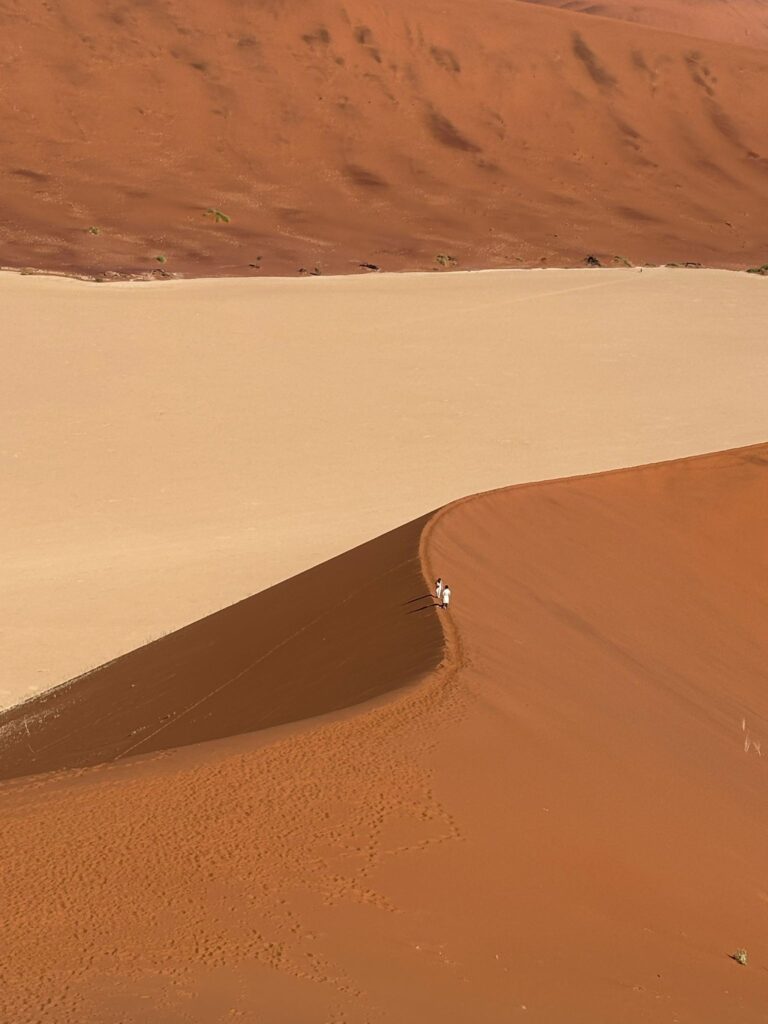
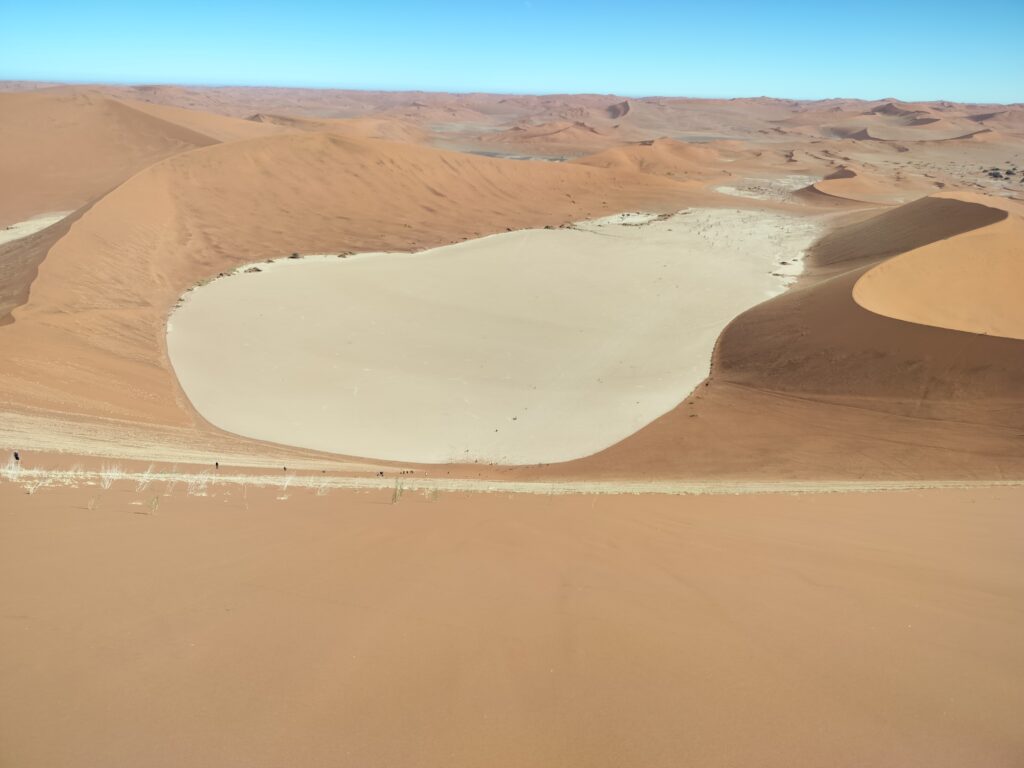
The climb, however, was actually the best part of the trip. The view is truly incredible. Among the places I have visited on land, I would rank it second among the most beautiful I have ever seen, behind only Dallol in Ethiopia and on a par with some places in the Mangystau Desert in Kazakhstan.
Deadvlei
Once you reach the top of Big Daddy and take a trillion photos, the descent is great fun. If you can, do it barefoot. Even now, months later, I still find grains of sand in my shoes, and I swear I’m not joking!
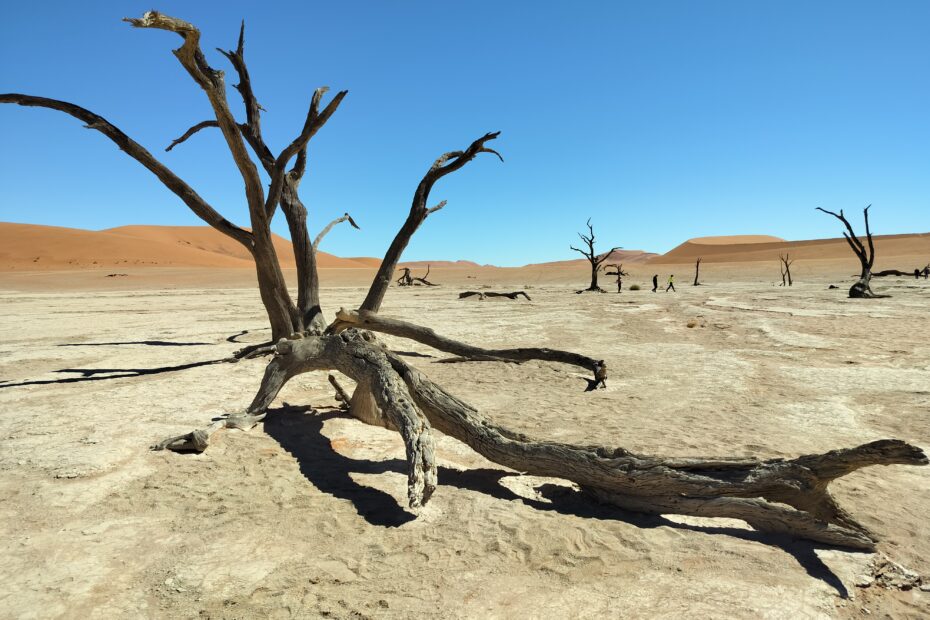
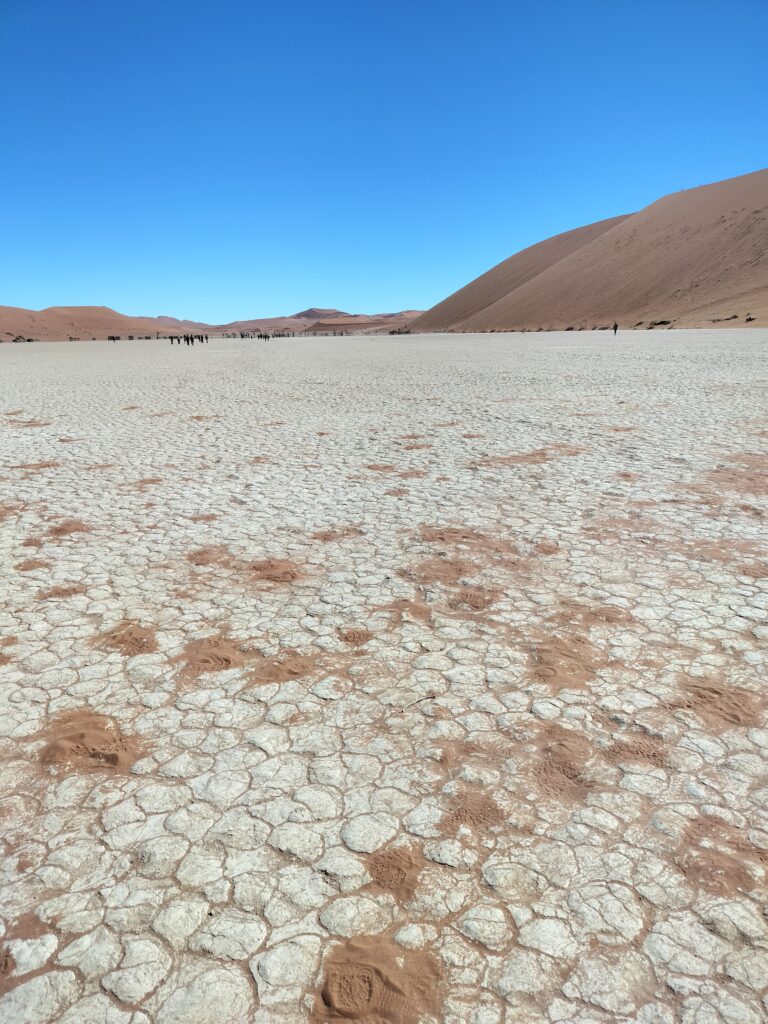
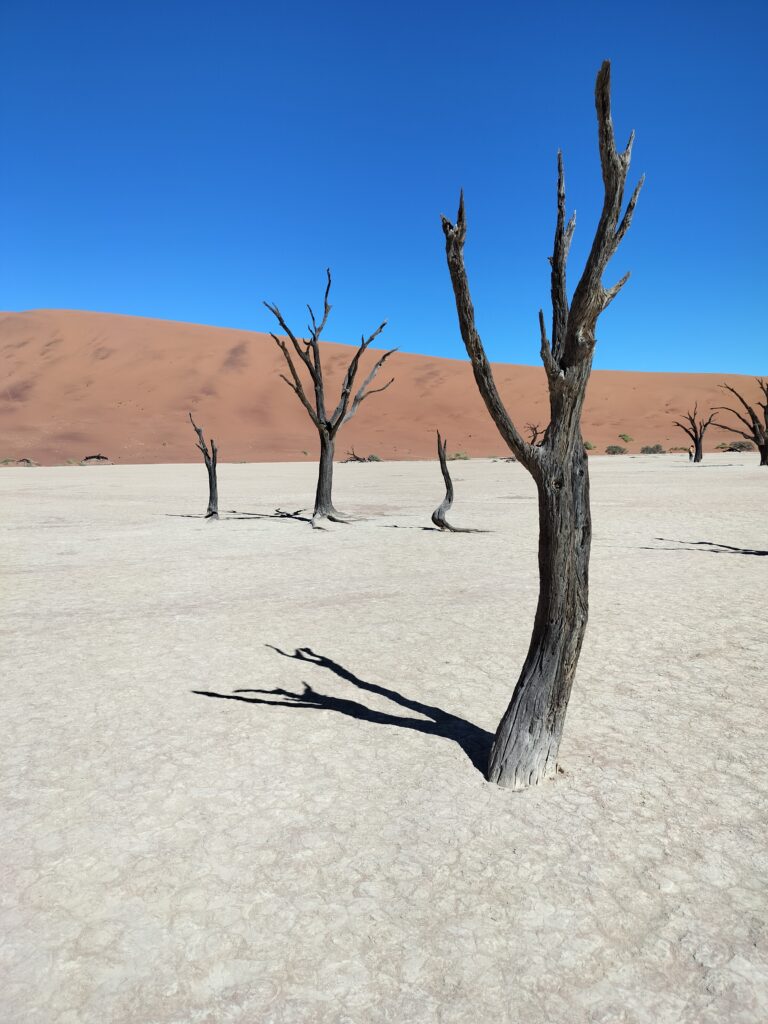
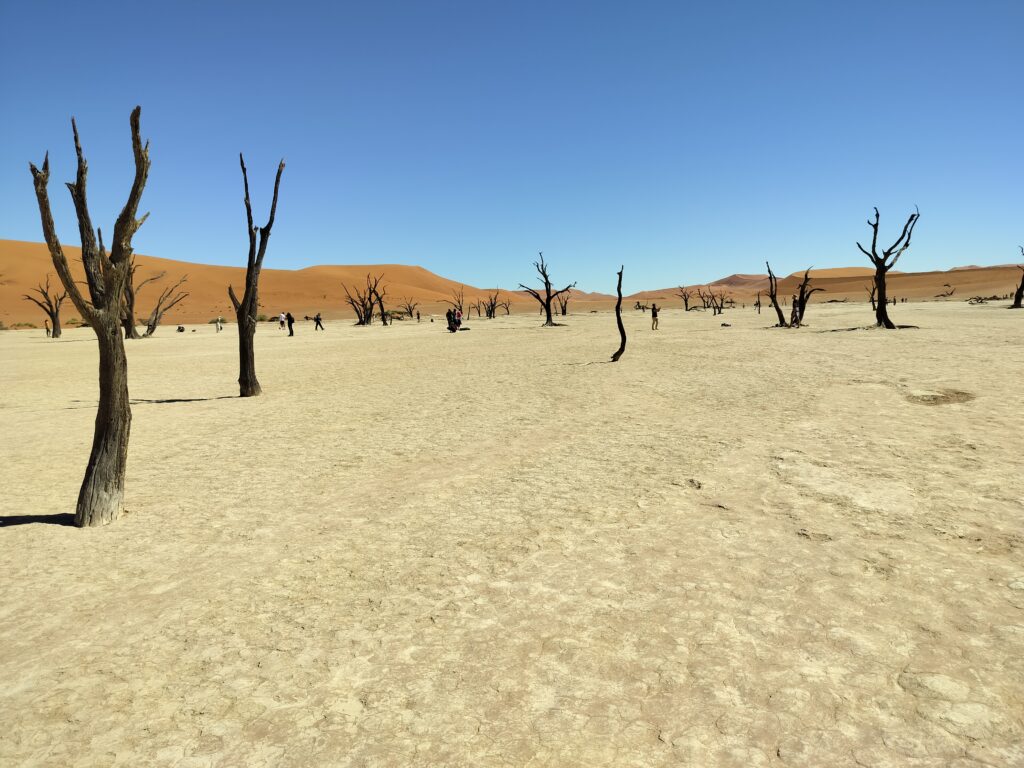
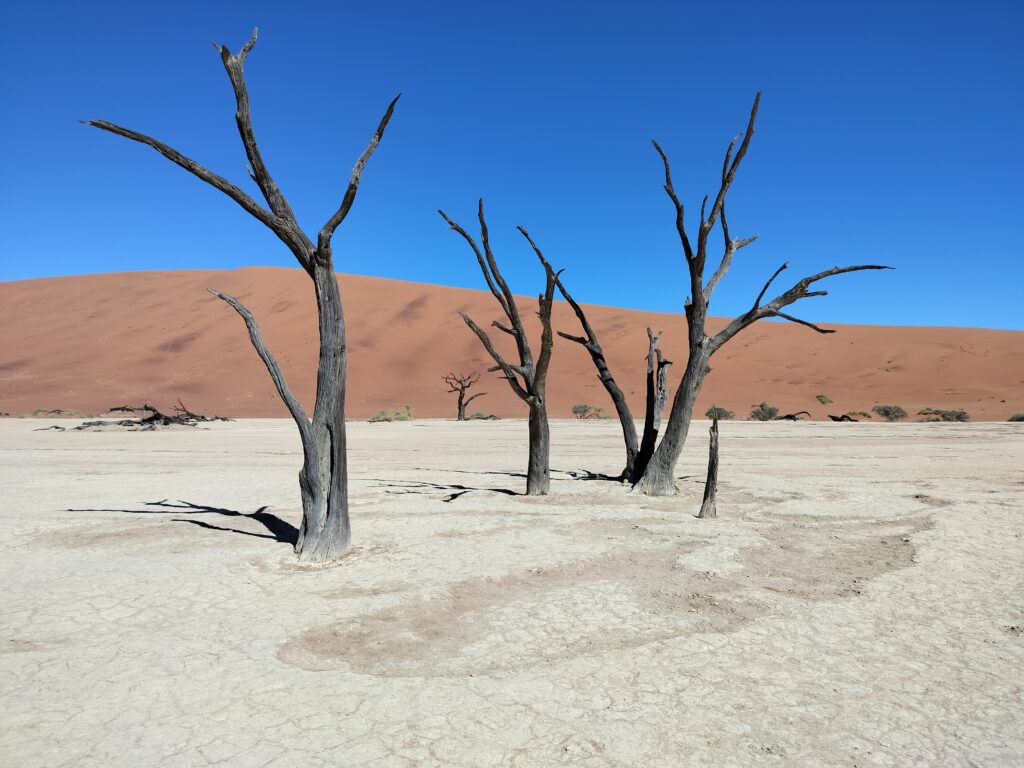
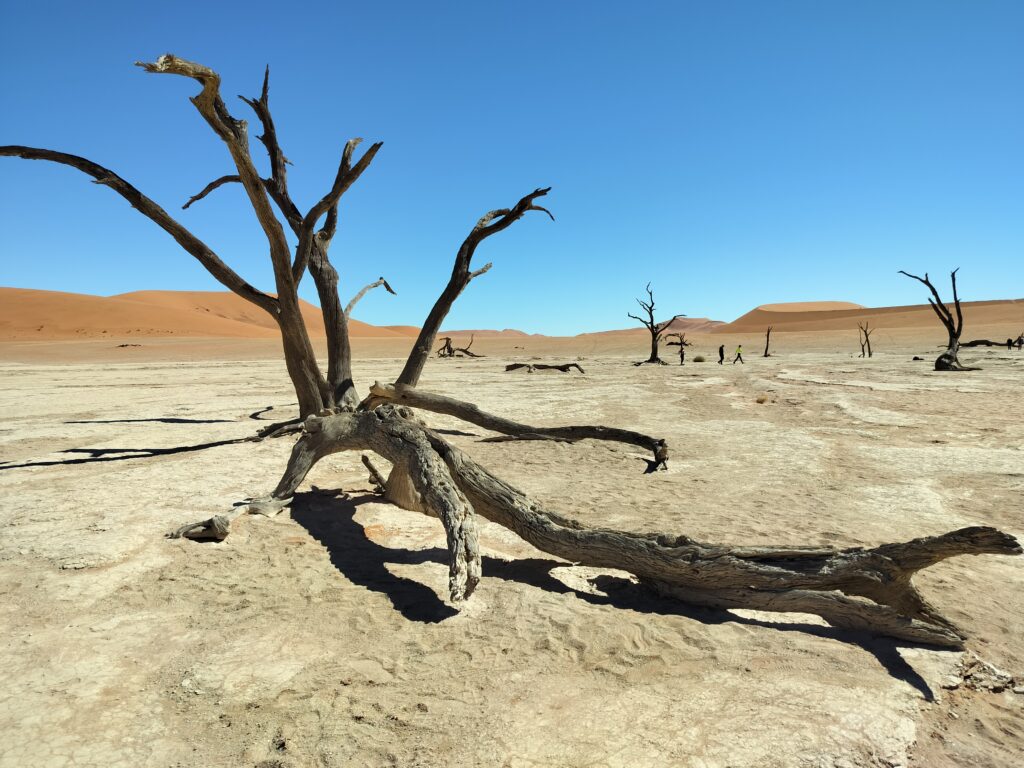
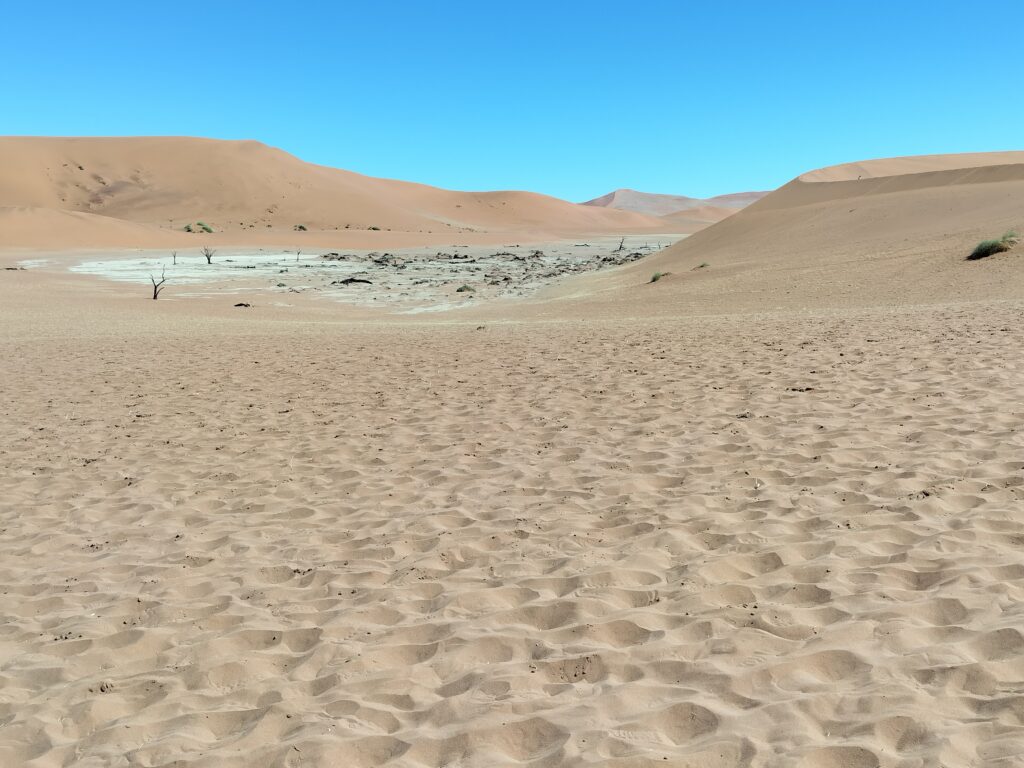
At the end of the descent, you find yourself directly in Deadvlei, a masterpiece of nature. It is an expanse of white clay, made spectacular not only by the landscape of Big Daddy in the background, but also by the presence of the famous and picturesque dead acacia trees (it is no coincidence that the Afrikaans term “Deadvlei” means “dead marsh”). The history of these trees is very peculiar and is linked to the presence of the Tsauchab River, which first flooded the area, allowing the trees to grow, and then diverted its course, causing the valley to change from a humid and lush place to a dry and arid one. At that point, the unfavorable climatic conditions that had been created killed the trees, but the same aridity prevented their deterioration and decomposition, creating the breathtaking spectacle that can still be seen today.
It is around half past noon when we leave the Deadvlei area to return to the 4×4 parking lot, where we have lunch, taking advantage of the tables set up under the trees.
Hidden vlei
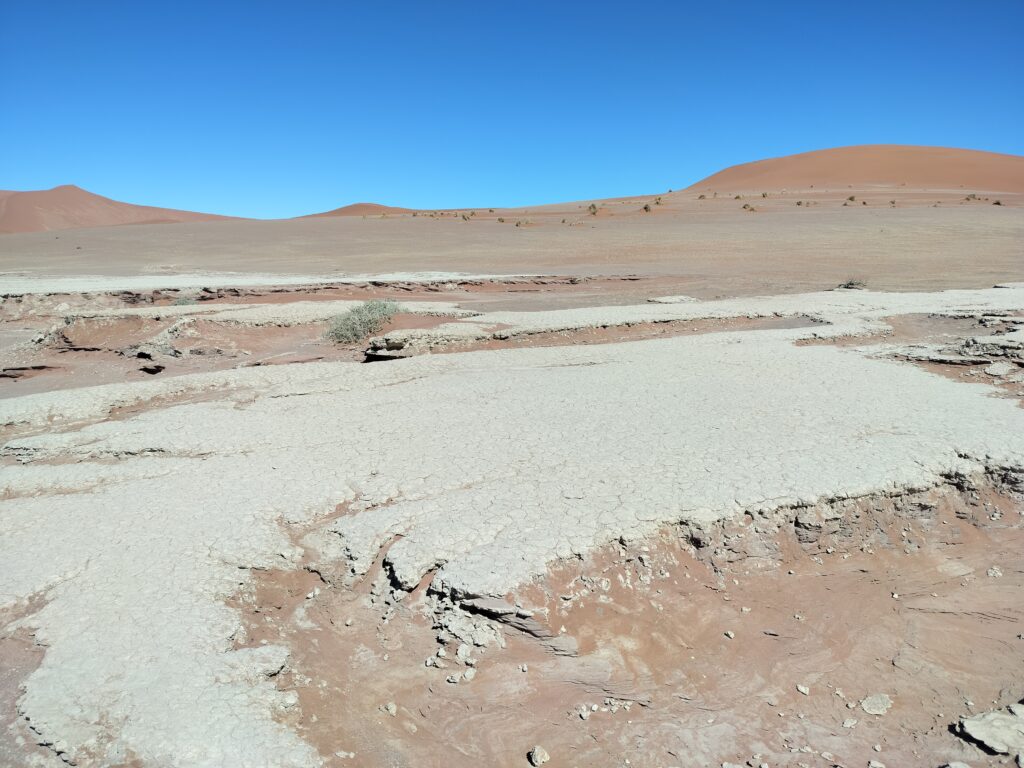
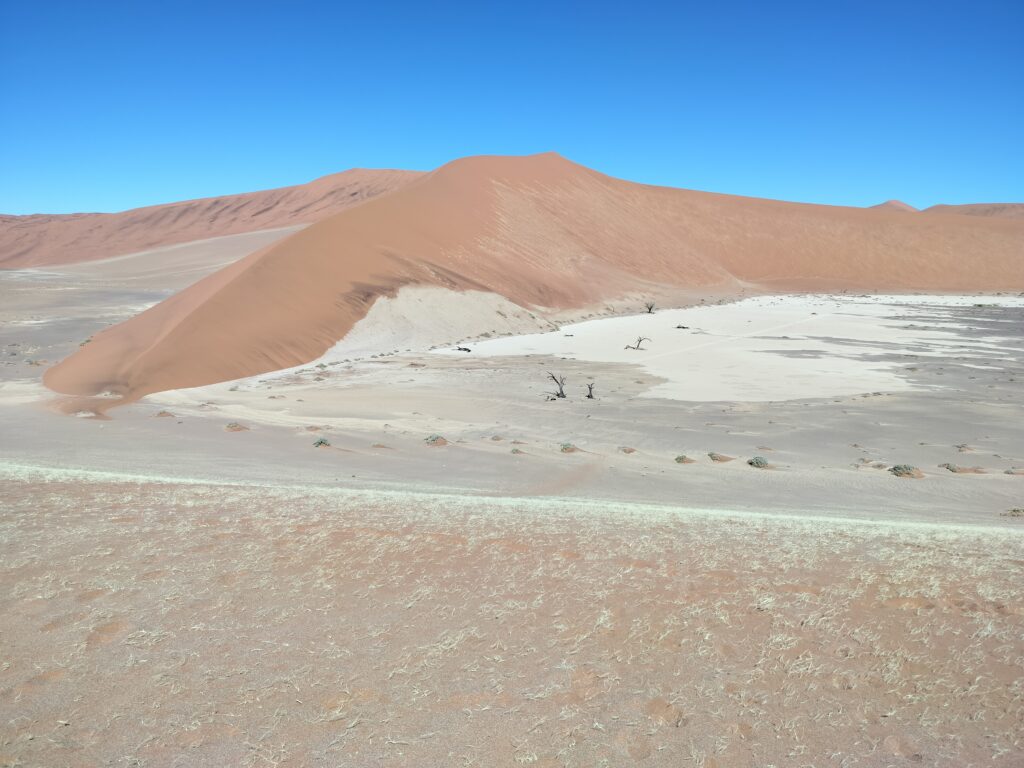
We then take the car back to the 2×4 parking lot, from where we walk towards Hidden Vlei. The trail to Hidden Vlei is about 4 km round trip (2 km + 2 km), is well marked, and is mostly flat. Despite these characteristics, I must say that the route was more challenging than expected, as the sand was quite soft and made walking difficult. Probably the best time of day to visit Hidden Vlei is early in the morning, but our schedule was busy with our appointment with Big Daddy.
Once at our destination, we visited the site mainly from the surrounding viewpoint to avoid having to climb back up the soft sand of the dunes surrounding the clay expanse, which is quite similar to that of Deadvlei. Unlike what happened in the latter, however, we were completely alone.
Between the round trip and the visit to the vlei, it takes us about two hours.
Dune 45
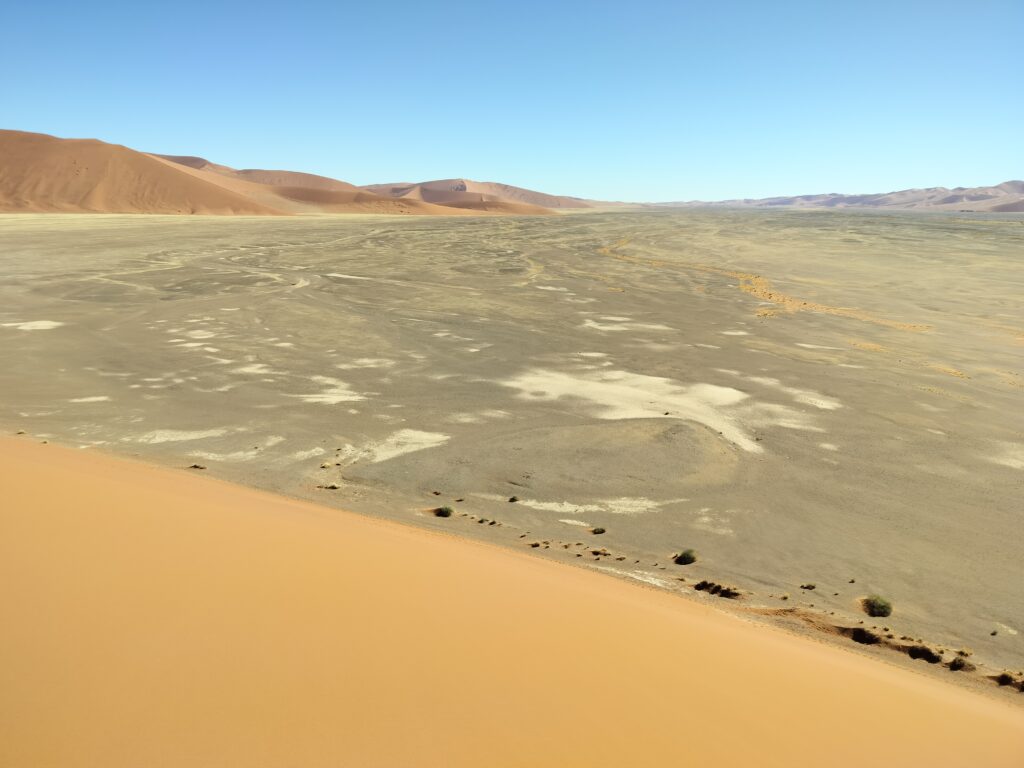
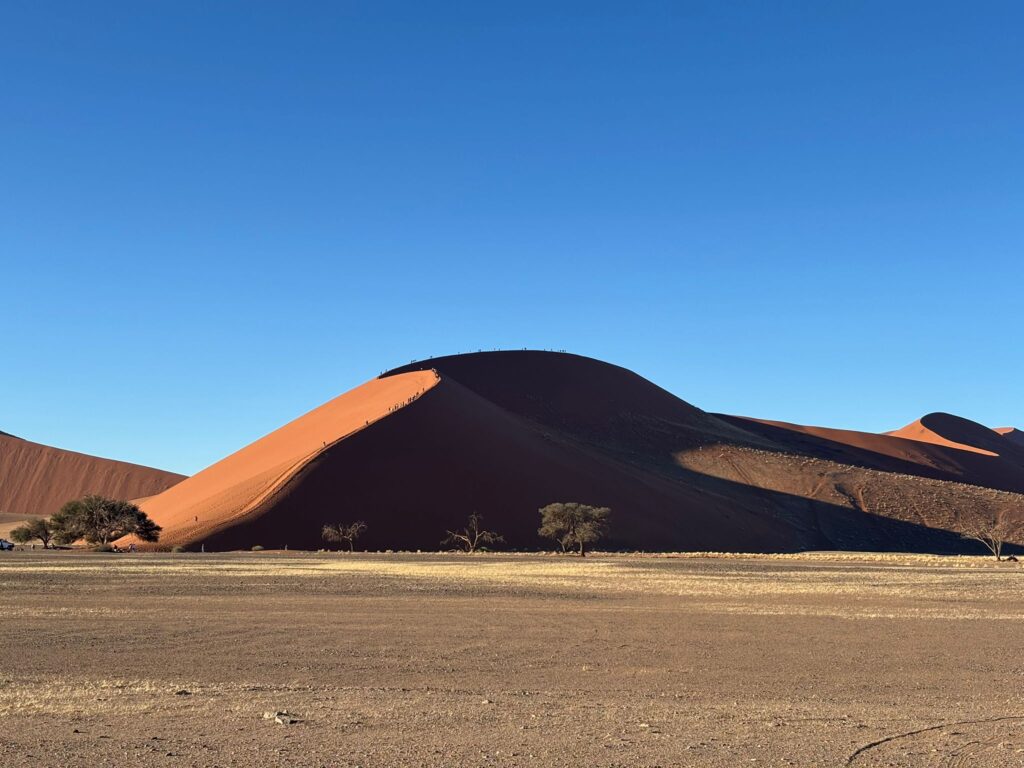
At this point, we begin our return journey, but we still have two important stops to make. The first of these is at Dune 45, a dune about 170 meters high named after its distance from the Sesriem gates (precisely 45 km).
Dune 45 is one of the most iconic and photogenic attractions in Sossusvlei. The best time to climb it is once again early in the morning, but this is also when it is most crowded. Around dawn, the colors of the sand, which is fiery red throughout the park, become particularly intense thanks to the play of shadows created by the landscape and the sunlight.
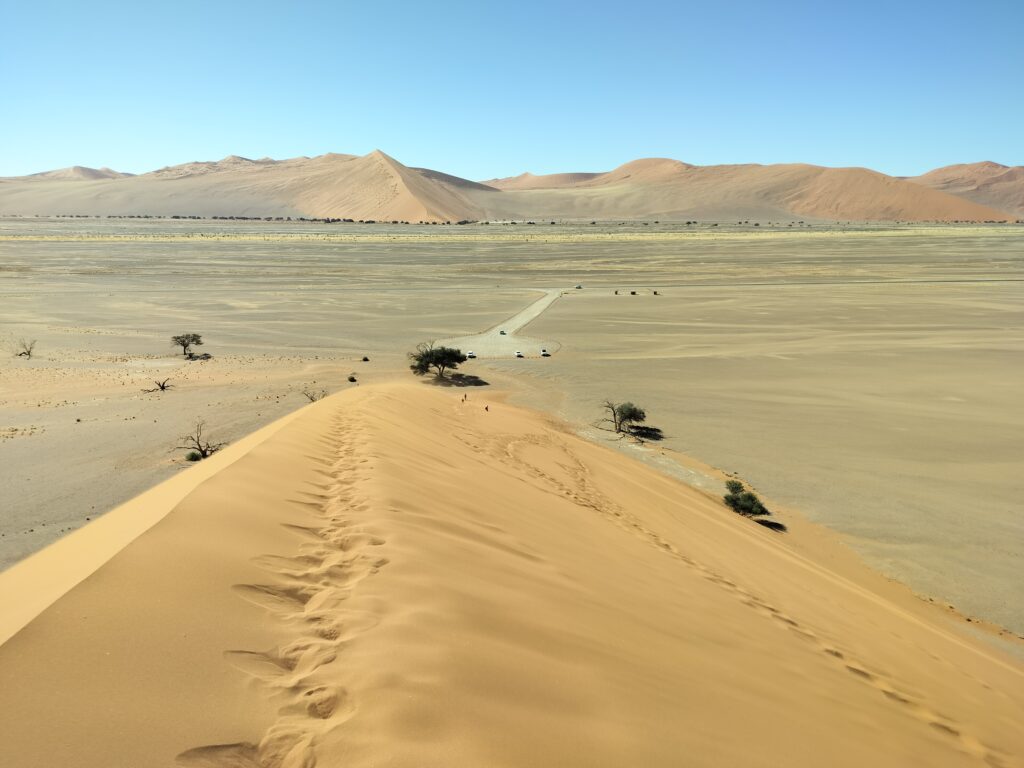
We arrive at Dune 45 around 3 p.m., and at that time, we are the only ones there. We begin the climb, which is definitely easier than Big Daddy’s, despite the softer sand. The climb takes us about half an hour. Here, too, the view is incredible..
Dune 40
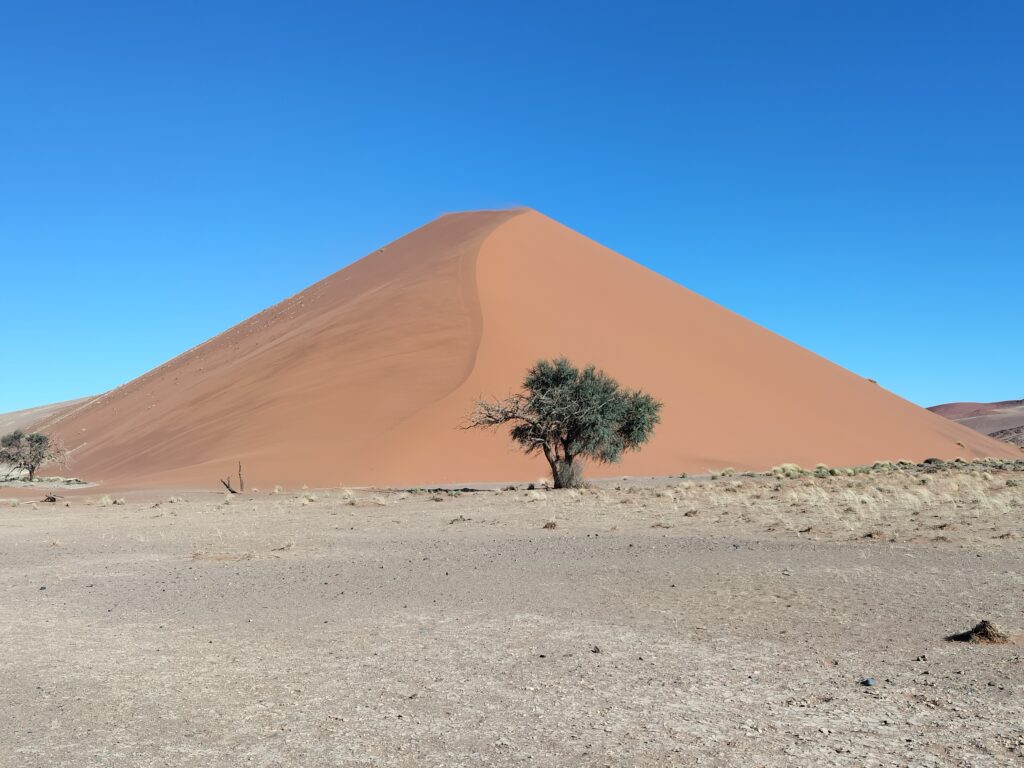
The second and final stop on our return journey comes a few minutes later, at Dune 40, located 5 km away from Dune 45 (the reason for the names of the two dunes is similar). At this point, our legs are starting to beg for mercy, so we avoid the climb, which, according to my sources, does not offer the same view as its cousins, that we have already explored extensively. We therefore settle for a quick visit from the parking lot.
At this point, all that remains is to exit the Sesriem gate and reach Solitaire, where we had booked our accommodation at Namib Desert Camping 2Go, arriving around dusk.
Conclusions
Sossusvlei was the destination we imagined would be the highlight of the trip, and our expectations were certainly not disappointed. In fact, I can confirm that this place is worth the price of the ticket.
The most unmissable and exciting part of the trip was definitely climbing Big Daddy, followed by the descent to Deadvlei, which is now one of the most incredible places I have ever visited. Climbing Elim Dune and Dune 45 was also wonderful, as was Hidden Vlei, a place that most people skip but which is almost as exciting as Deadvlei. On the other hand, I didn’t fall in love with Sesriem Canyon, which I honestly don’t consider unmissable, and which I recommend sacrificing if you have to cut something out.
In terms of climate, the temperature we encountered was excellent, absolutely ideal for climbing and visiting the park in general.
Related articles: