“It’s gonna take a lot to drag me away from you
There’s nothing that a hundred men or more could ever do
I bless the rains down in Africa
Gonna take some time to do the things we never had”
Toto, Africa
Table of Contents
- Introduction
- Itinerary in pills
- Day 1: Gondar
- Day 2: Simien mountains
- Day 3: Simien mountains – Geech and Chenek
- Day 4: Return trip
- Conclusions
- Additional remarks
Introduction
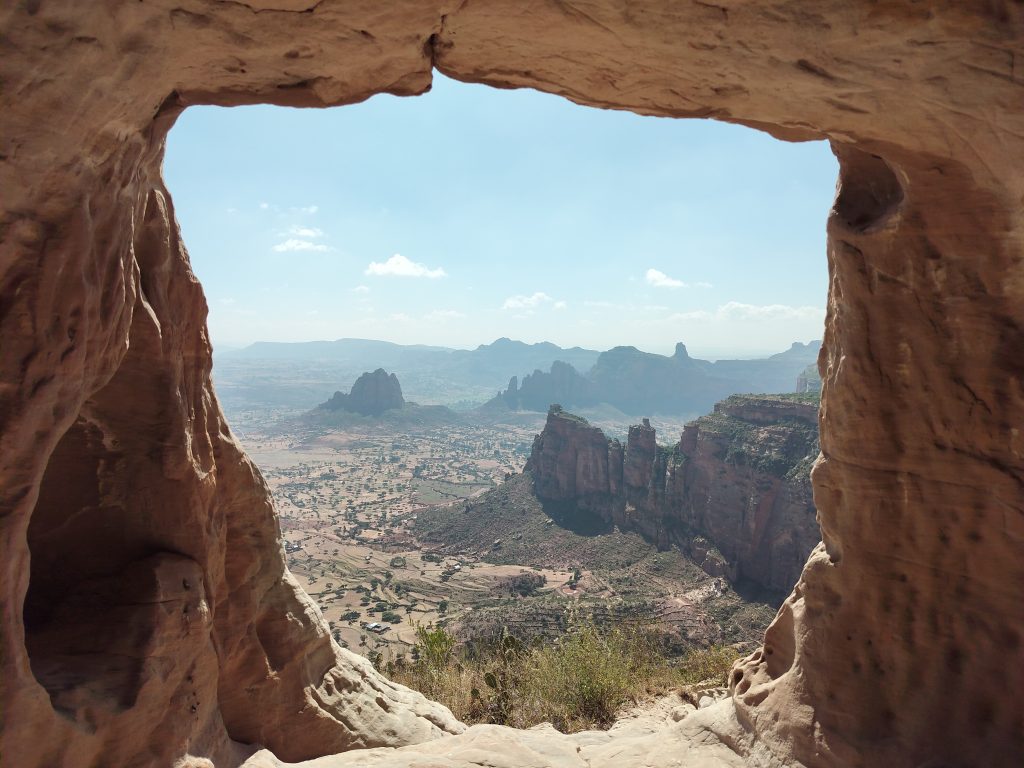
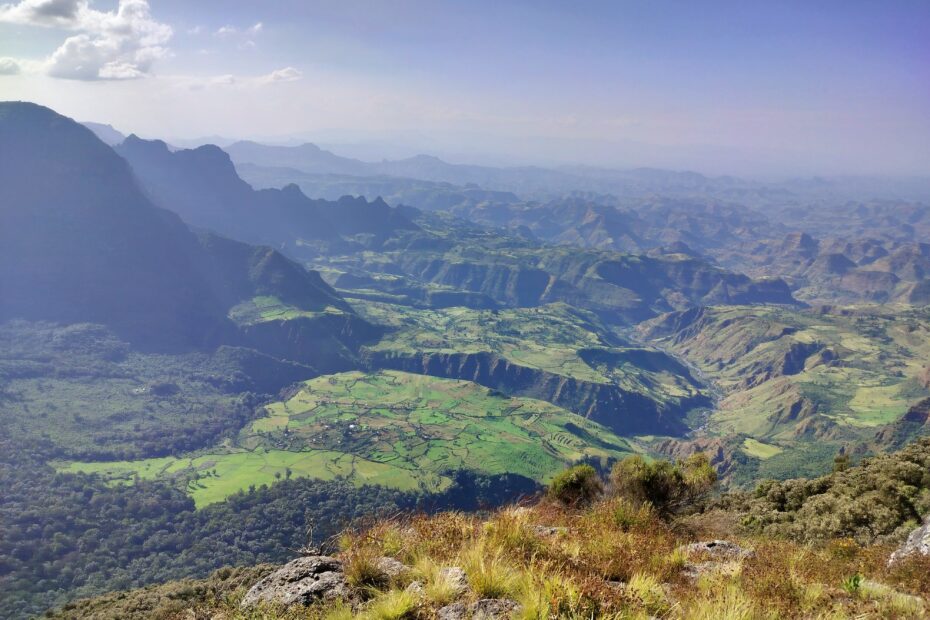
Ethiopia, third and final chapter. After visiting the most inhospitable region on Earth and the most inaccessible church in the world, it’s time for the last challenge of the trip: finding out if my body can withstand altitudes close to 4000 meters, while already breathless from the incredible views of the Simien Mountains, the backdrop to the expedition. Until now, the highest point I have ever reached is the summit of the Irazú Volcano in Costa Rica, located at over 3,400 meters above sea level.
From Tigray, I therefore move to Amhara, a region that I was not sure I would be able to visit until just before I left. In some areas of this region, in fact, episodes of violence linked to wounds not yet fully healed from the recent war in Tigray, which officially ended in 2022, reappear senselessly from time to time. When this happens, domestic flights connecting the region to the rest of the country are canceled directly by Ethiopian Airlines, the only airline serving the region, while land routes have been closed since long time.
As mentioned in previous episodes, my trip to Ethiopia took place in November 2024, one of the best times to visit the country due to the less humid climate. In the Simien Mountains, however, a few more degrees would certainly have been appreciated, especially at night. But let’s take it one step at a time.
I remember that you need a visa to enter Ethiopia, which you can apply for online here. It is issued within 72 hours, unless there are reasons to refuse it.
Itinerary in pills
According to the itinerary I had agreed with Ethiopian Travel and Tours (ETT), the local agency I chose, my four days in Amhara were to be divided into two parts. During the first three days, I was supposed to visit the Simien Mountains, with the aim of reaching the Imet Gogo viewpoint, located at an altitude of over 4000 meters. On the fourth and final day, I was supposed to visit the city of Gondar, the ancient Ethiopian capital, before boarding a domestic flight to Addis Ababa and concluding my trip by returning safely to Italy.
However, I am using the conditional tense because, due to a misunderstanding with the agency, the itinerary was reversed, starting with the visit to Gondar. This caused a considerable loss of time, so that, in fact, I only had two full days in the Simien Mountains. I will explain the reason for this last statement in more detail in the following paragraphs. Below is a rough outline of the final itinerary of my four days in Amhara.
| Day | Itinerary | Night |
|---|---|---|
| 1 | Morning flight ADD-GDQ, Gondar | Gondar |
| 2 | Gondar – Debarq – Simien mountains (day 1) | Simien mountains |
| 3 | Simien mountains (day 2) | Simien mountains |
| 4 | Simien mountains – Debarq – Gondar – Addis Ababa | – |
Day 1: Gondar
I get up very early because my flight to Gondar (GDQ) is scheduled at 6:40 a.m. I land on time, already looking forward to my first day in the Simien Mountains. However, as mentioned above, once I arrive at my destination, I realize to my disappointment that the itinerary has been changed and that the day will be spent visiting the city (which was originally planned for the last day). This decision, taken by ETT in a completely arbitrary manner, was probably due to the fact that two more people would be joining the tour the following day, so it would have been more convenient for the agency to combine the participants. ETT’s initiative did not leave me indifferent, especially since the change would prevent me from reaching the longed-for Imet Gogo. However, the agency will make up for it at the end of the trip with a partial refund, equivalent to the cost of the lost day.
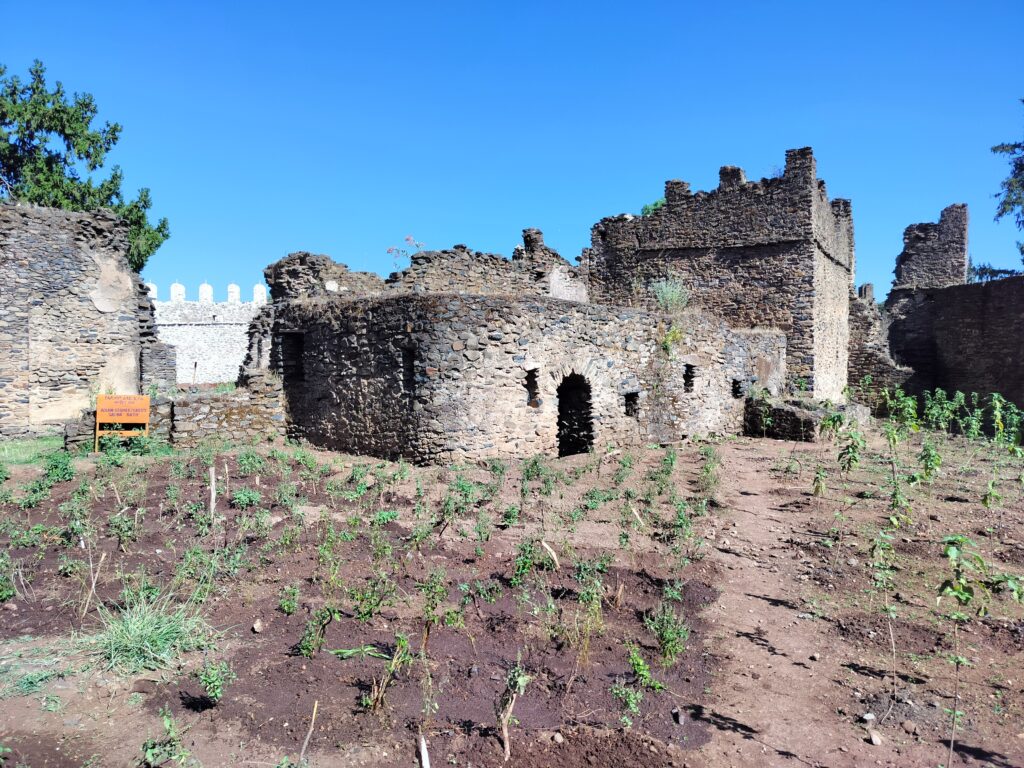
Anyway, the city tour really lasts a few hours, but, as happens to me everywhere in the world, I encounter a period of construction work, which also affects the main buildings. At the time of publication of the article you are reading, the work should be completed. My guide is very helpful and explains everything in detail. In addition to the castles, I also visit a few churches and baths (meaning thermal baths, not toilets), which are only open to the public at certain times of the year, and unfortunately for me, my trip does not fall within this period.
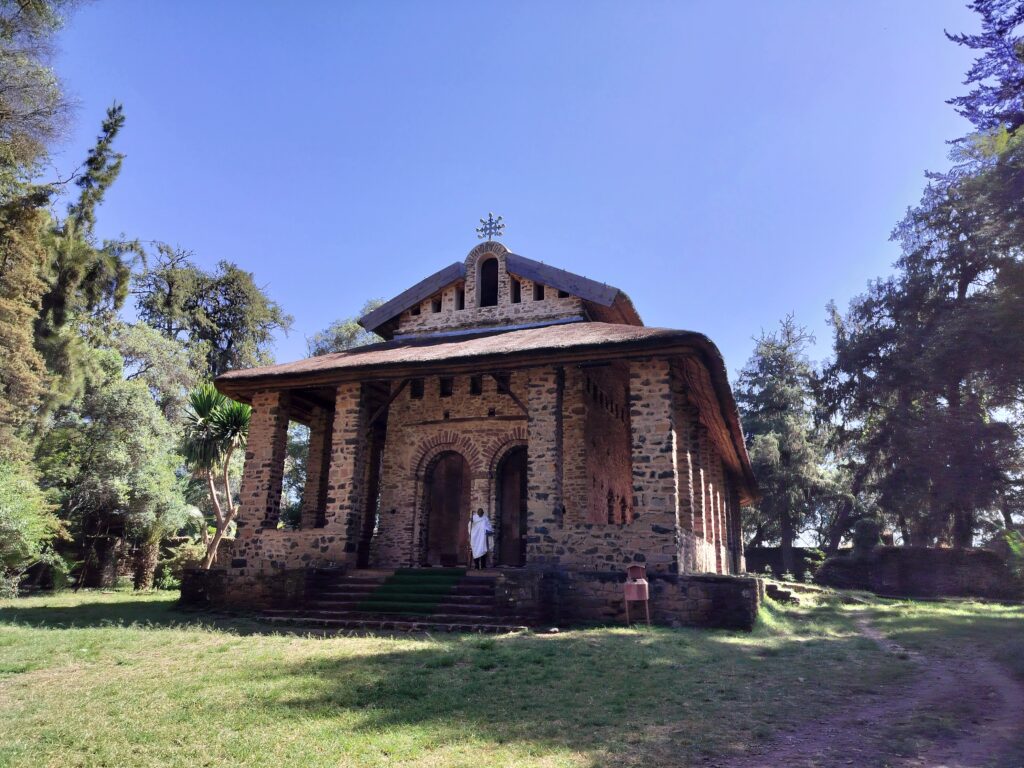
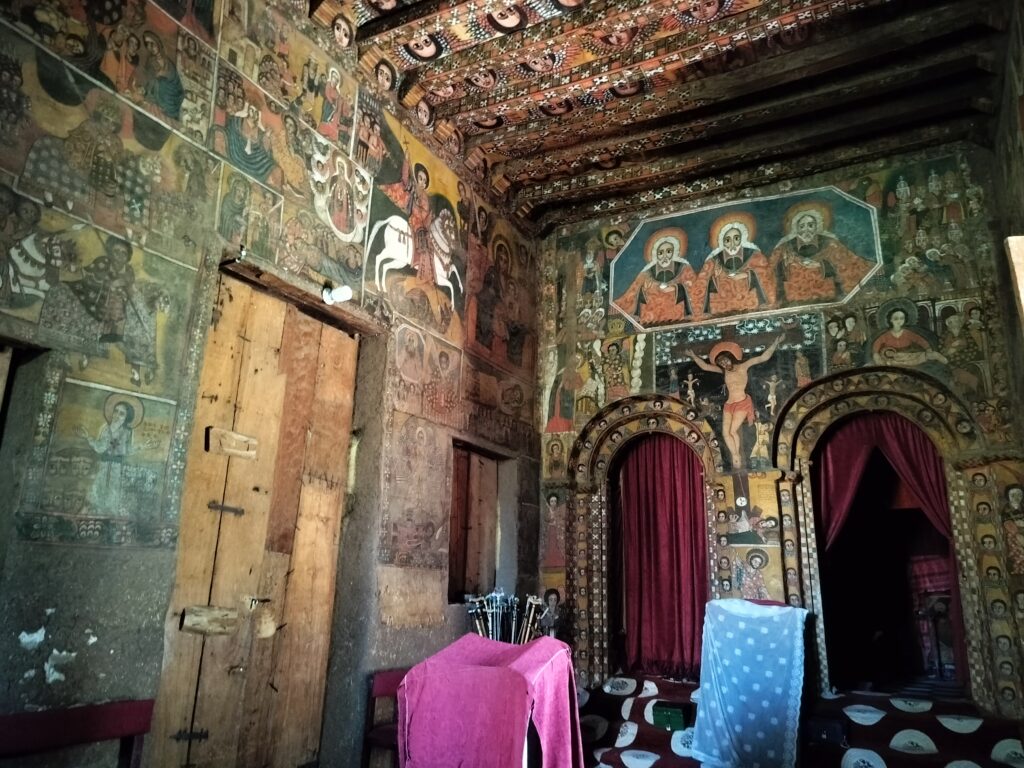
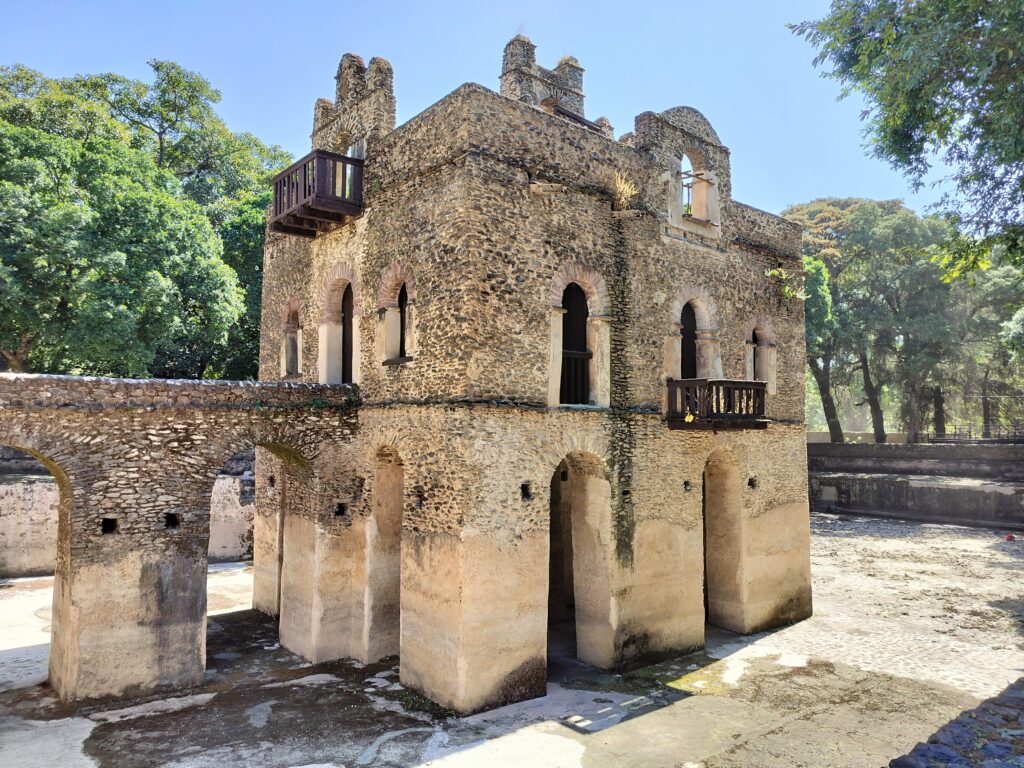
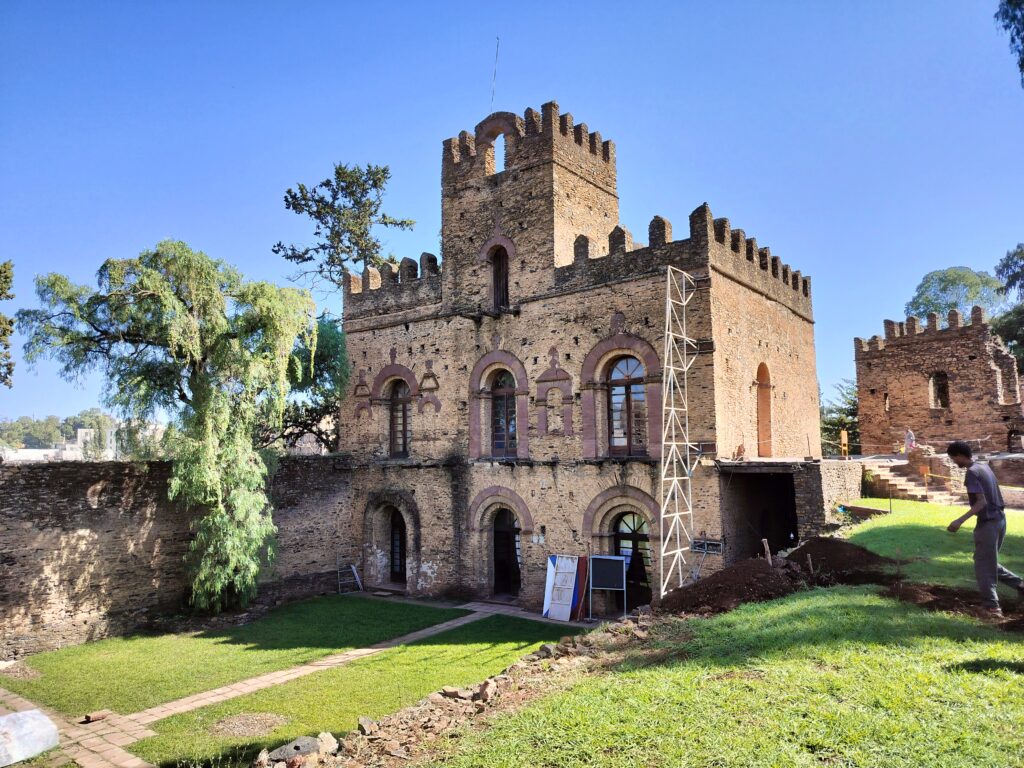
The tour of the city ends with participation in an Orthodox celebration, which will be one of the most special moments of the trip. Once among the crowd, I notice that practically everyone is watching me, and there are really so many people present. Some young people take photos of me secretly (in theory), others approach me to have their picture taken with me, looking at me as if I were the Pope. Several children seek physical contact with me, as if they had seen Jesus, which is incomprehensible given my not exactly thick hair. You have no idea of their amazement and happiness when I simply shook their hands. The guide told me that the reason for such a welcome was linked to the fact that people there are not used to seeing white people. In fact, participation in the service was a pit stop not generally included in the tour.
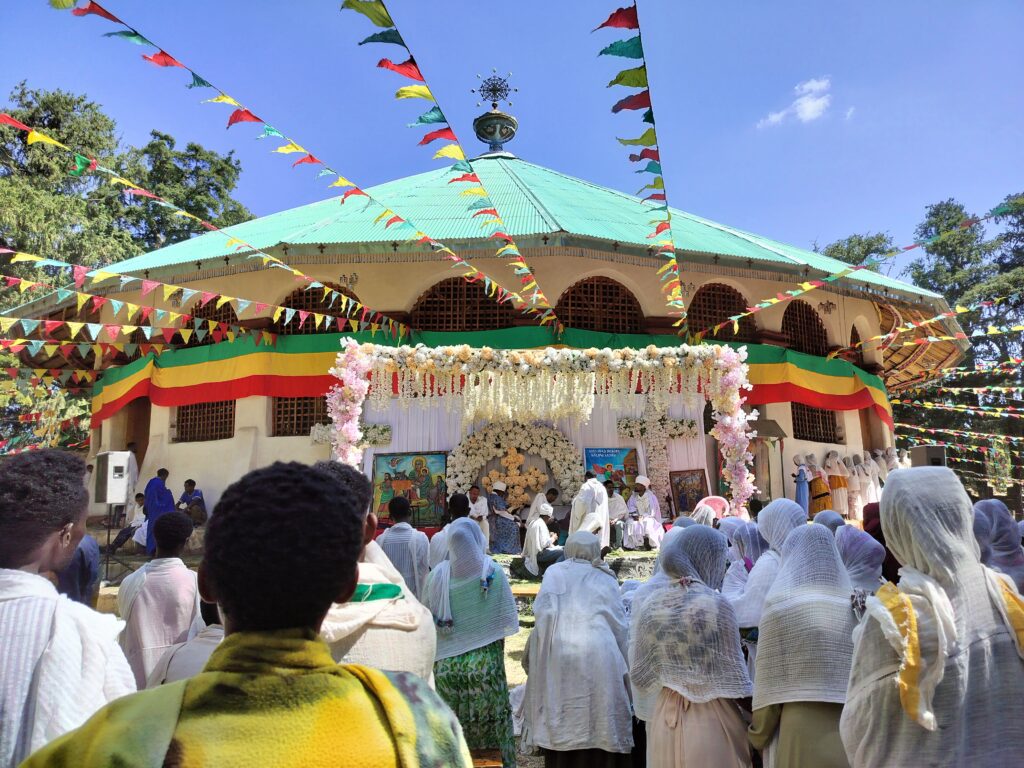
The city tour ends at midday, which I regret because I got up very early (I could have taken a domestic flight scheduled a few hours later). However, I take advantage of the second half of the day to rest a little, as I was very tired from the previous days and expected another three rather intense days ahead. I also take a nice shower, knowing that it will be the last one of the trip.
Day 2: Simien mountains
I started the day learning that the two people who would be joining me were two Italian guys who were in Africa for study reasons. I must say that this made me very happy, not only because they were extremely pleasant company, but also because I had the opportunity to hear about their fascinating experiences in Africa as doctors, and in particular how they found themselves having to deal with situations that would be considered truly absurd by average Western standards.
The journey from Gondar to the entrance of Simien Mountains National Park takes about three hours, during which there is a short stop in the town of Debarq (the closest to the Simien Mountains) to complete some paperwork. When we get out of the car, once we enter the park, we are already at an altitude of over 3000 meters. We begin our trek, which will last a little over three hours in total. The climbs are not particularly steep, but the altitude makes everything more tiring, not only for me, but also for my new traveling companions. However, the landscape that forms the backdrop to the climb is truly spectacular and more than repays the effort. We walk along the edge of the mountain, surrounded by lush green colors. The hike lasts until sunset, covering a total distance of about 10 km.
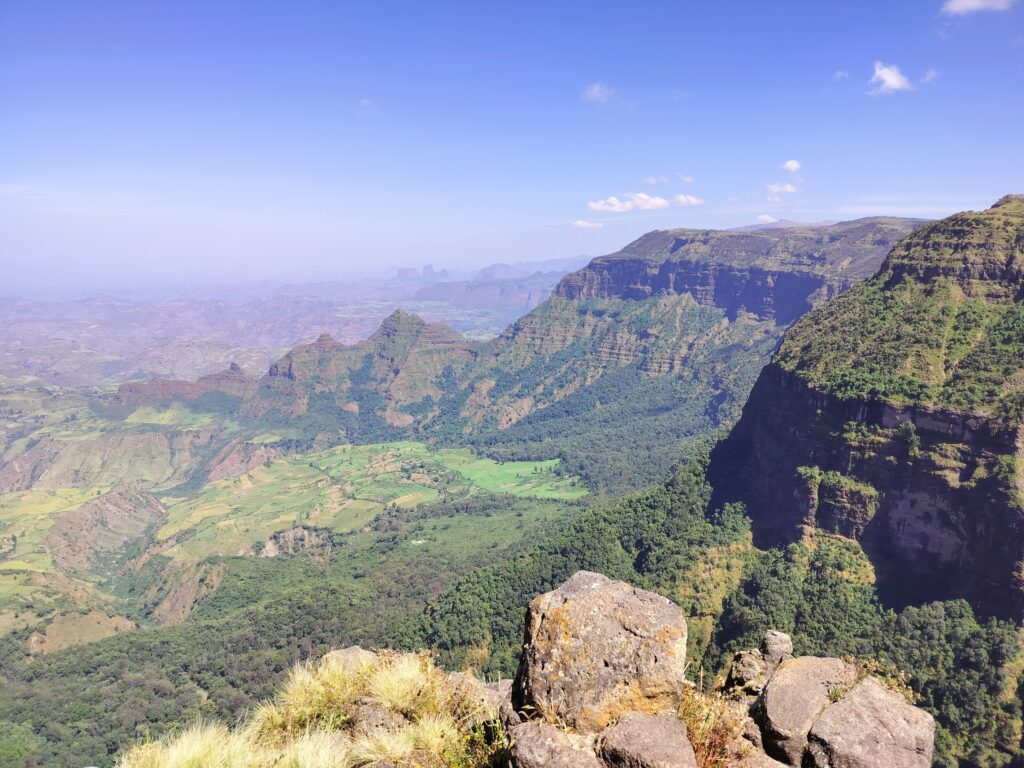
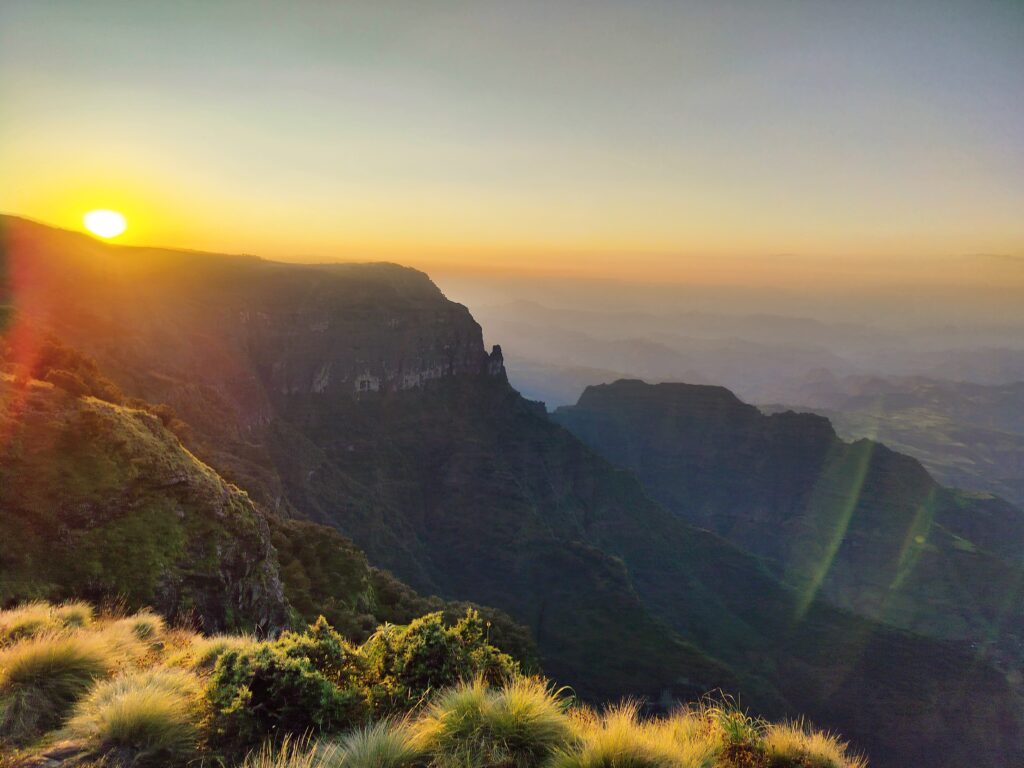
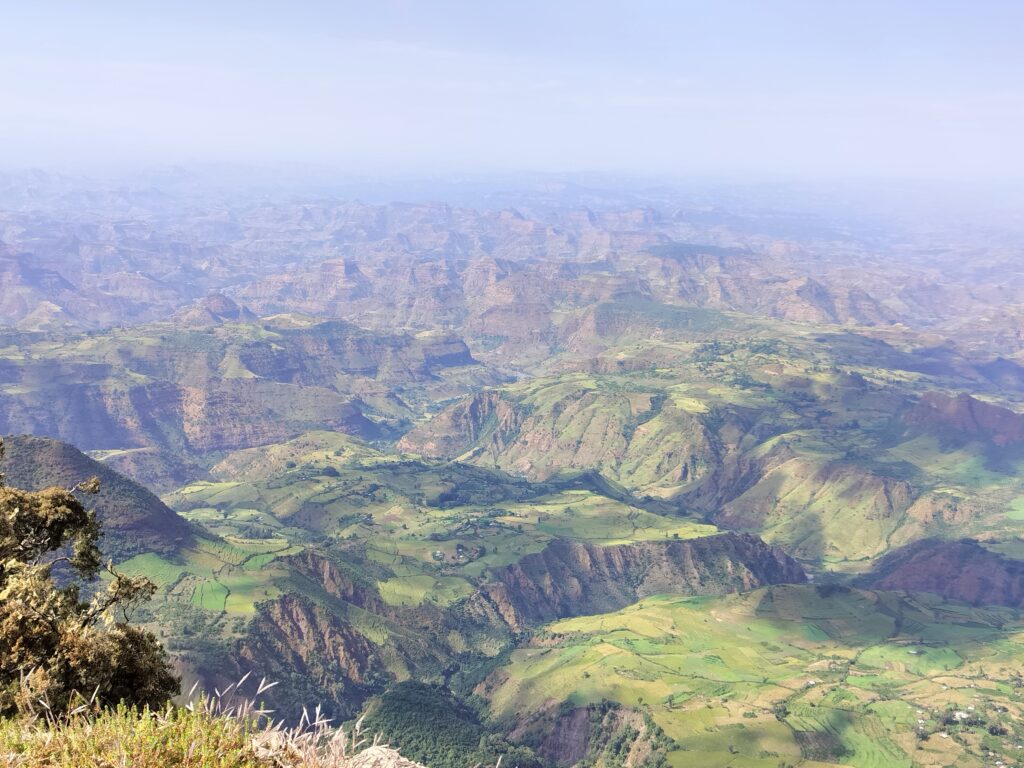
We arrive at our camp at dusk, in time for dinner, which we eat by candlelight, since there is no electricity. By 8:30 p.m., we are already in our tents. It will be a very long night, partly because, despite our snowman-like padding, the cold is biting hard. After all, we are at 3,200 meters (the maximum elevation gain for the day was 500 meters, but we descended to reach the camp). However, it would be unkind of me to complain, given that the guides sleep outdoors under a simple blanket (after the second night, I left my sleeping bag with the staff to allow some of them to improve their situation a little).
Day 3: Simien mountains – Geech and Chenek
We rise at dawn to begin our second day in the Simien Mountains, which involves a challenging trek with a series of steep ascents and descents totaling approximately 11 km and a total elevation gain of about 400 meters. The whole trek takes about 7 hours. Since the base camp at the end of the trek will be different from the previous one, and the route is not accessible by car, our luggage is transported by donkeys. The first part of the day is dedicated to Geech, a place renowned for its waterfalls with a drop of over 500 meters. The landscape accompanying the trek is similar to that of the previous day. Halfway through the day, we stop for our packed lunch, which we eat on the bank of a stream, descending along a rather steep path.
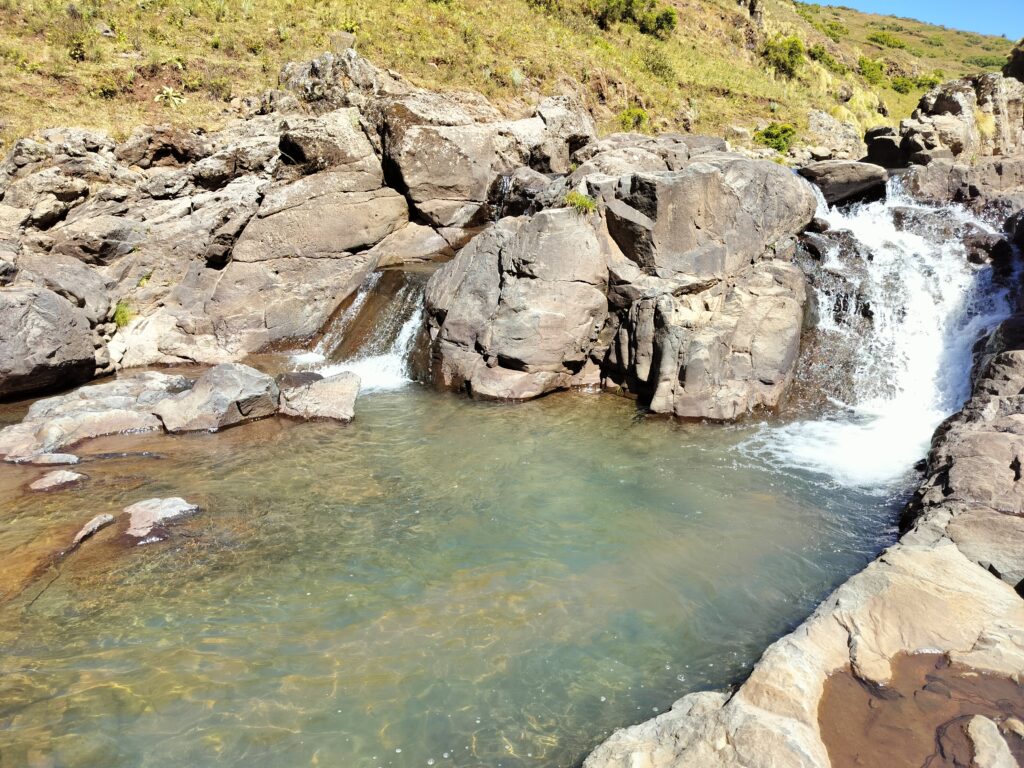
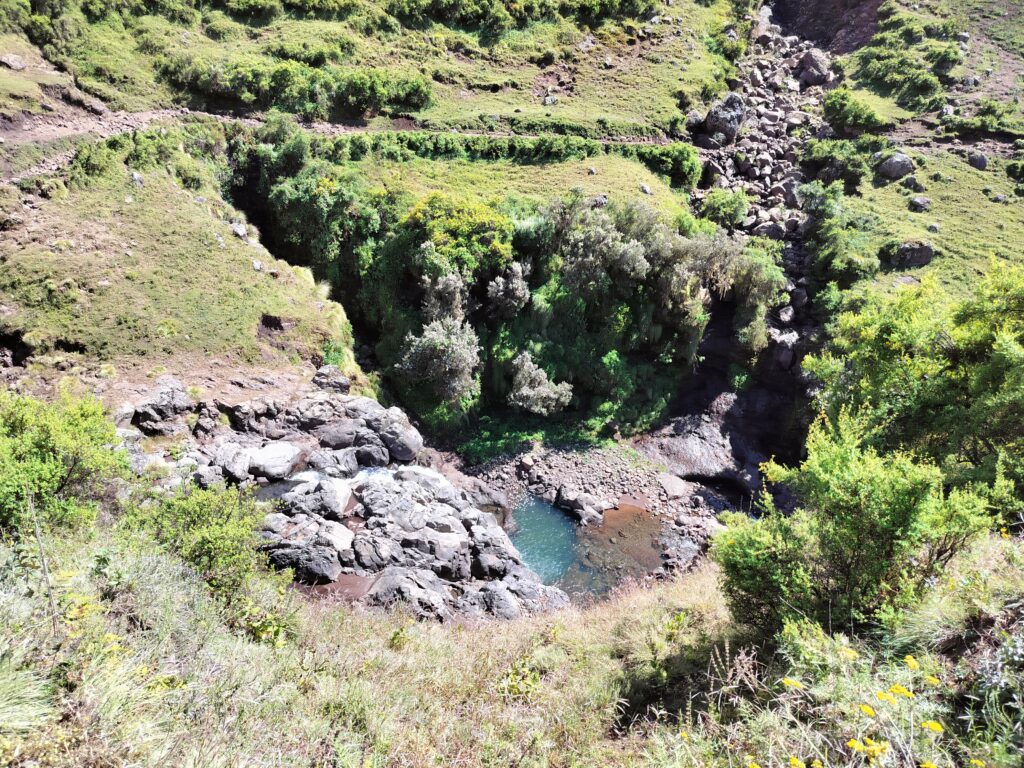
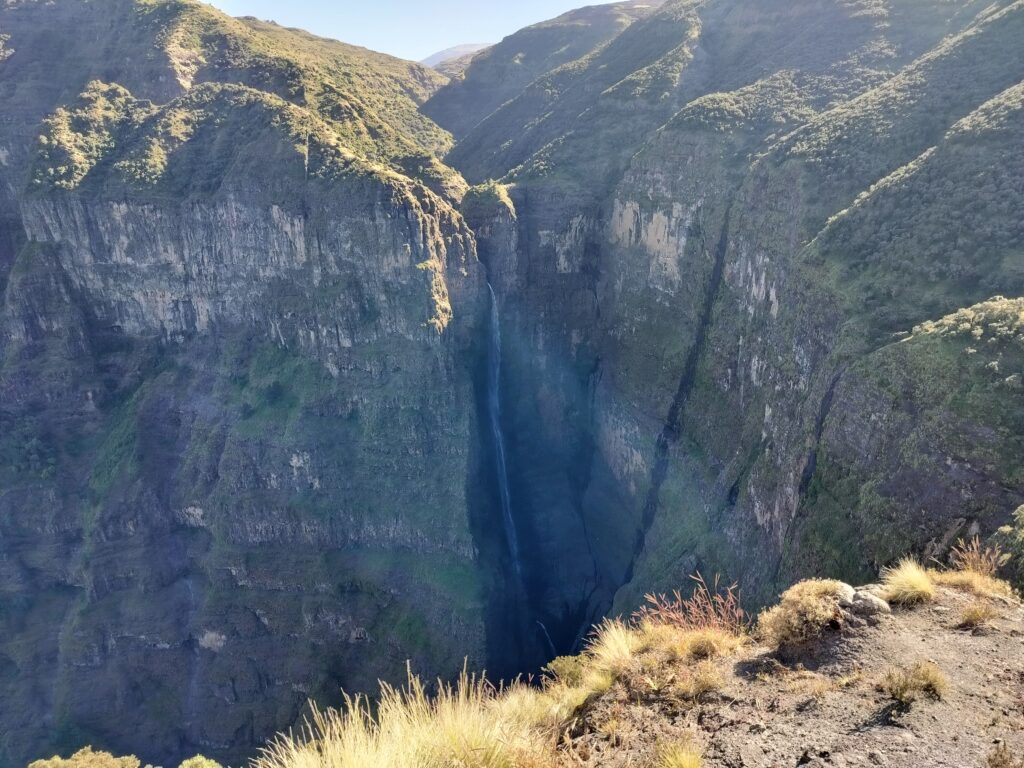
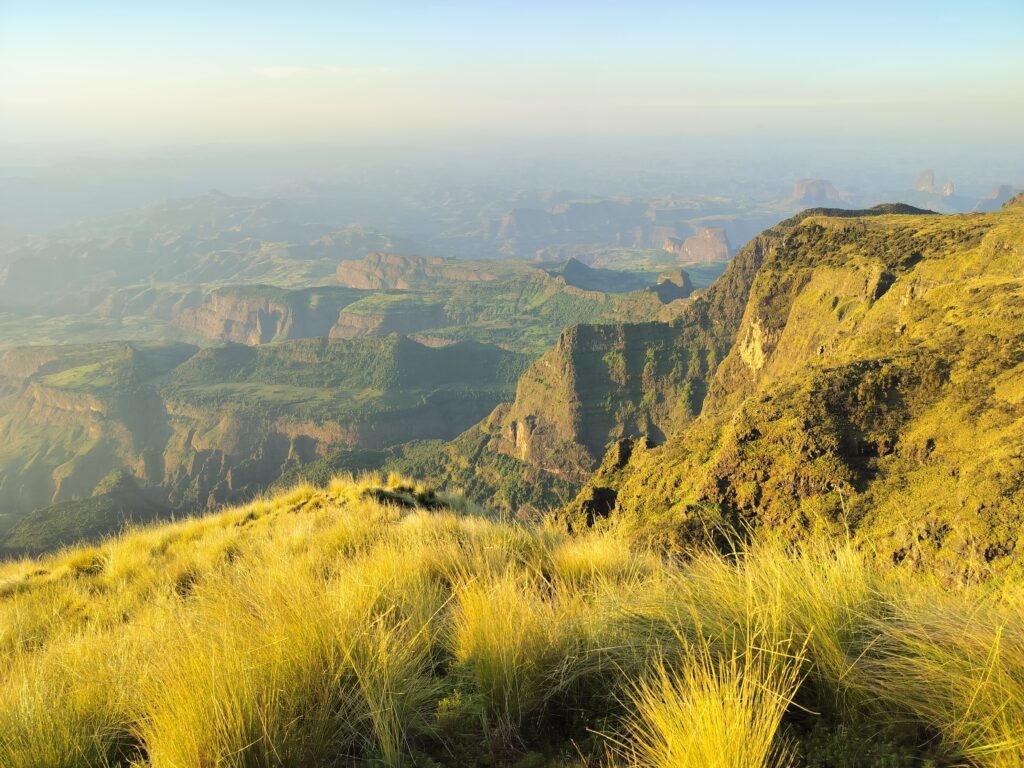
In the afternoon, we set off for Chenek, located at over 3600 meters, where we will spend the night. The climb is very tiring, mainly due to the altitude, which does not help. The landscape is still similar to that of the previous day, but it becomes more and more spectacular as we climb. We also encounter some rather colorful rock formations.
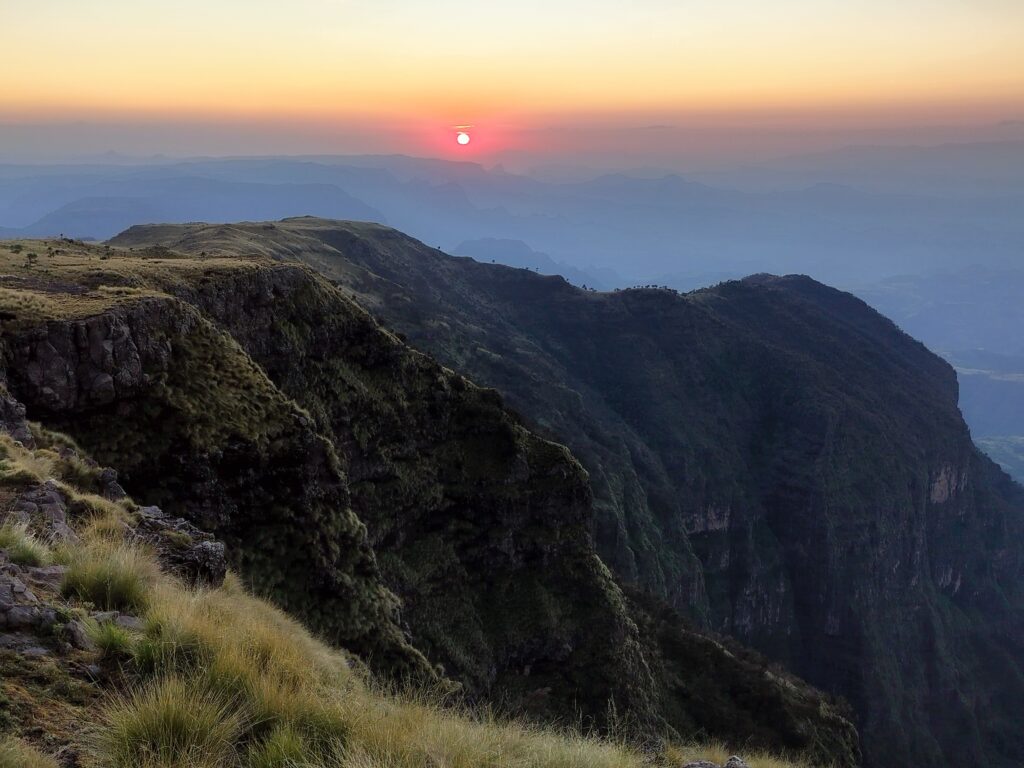
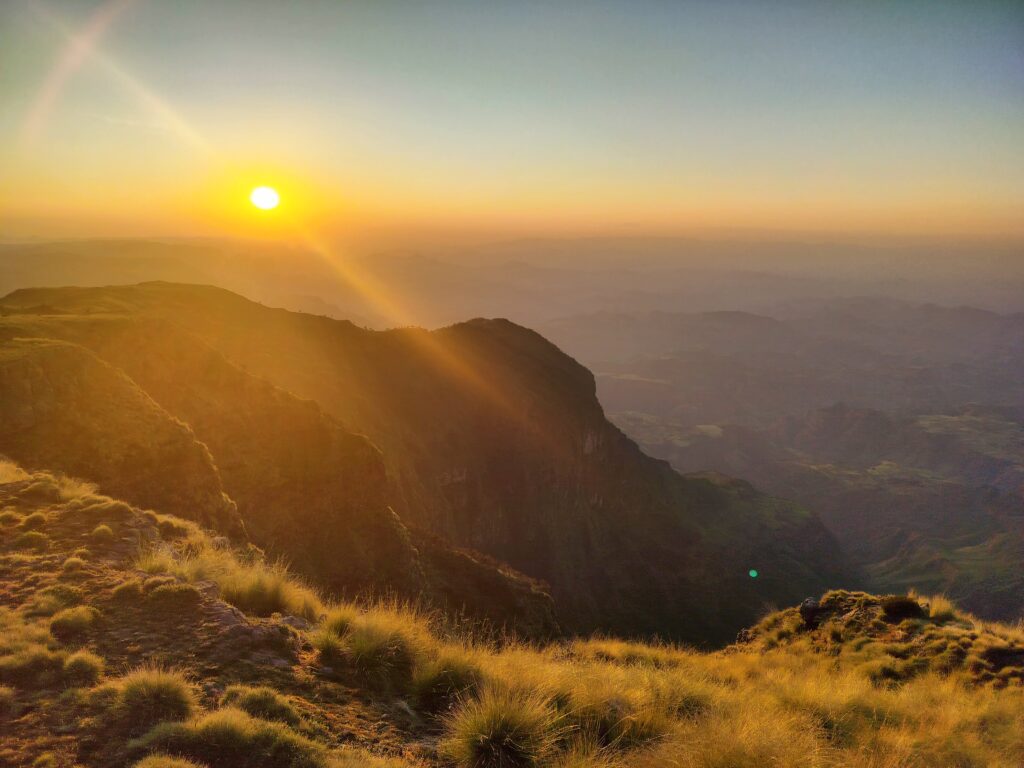
We end the day first with a beautiful sunset at an altitude of 3,800 meters, and then with the final descent to base camp at 3,600 meters.
Day 4: Return trip
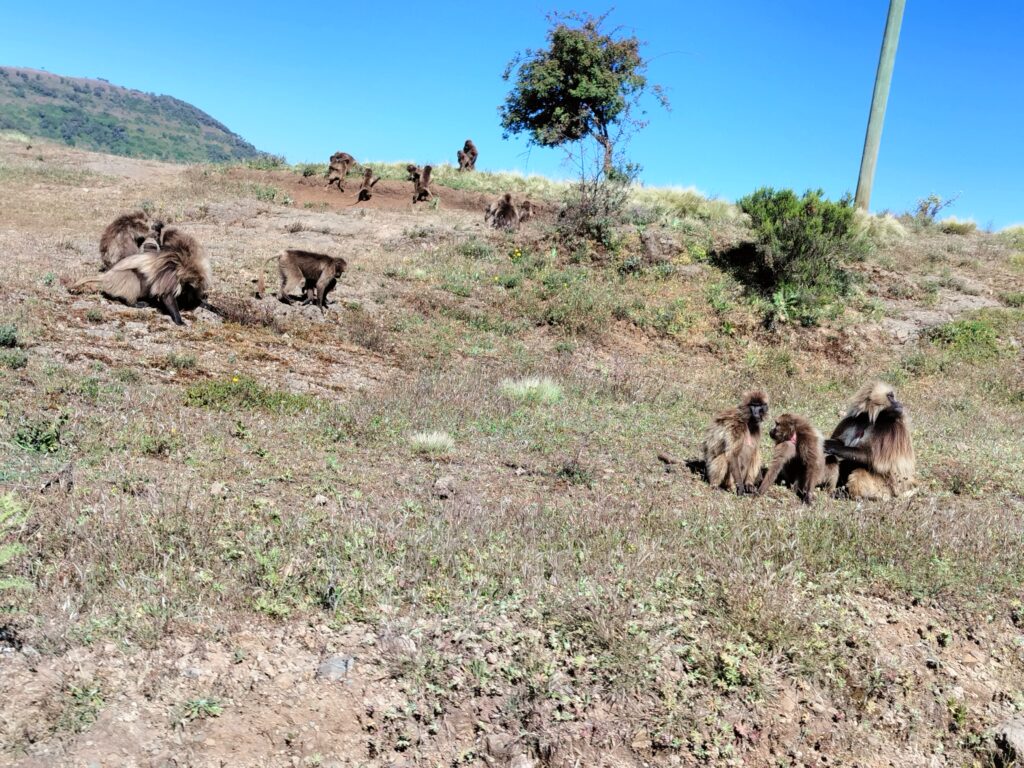
Unable to reach Imet Gogo due to time constraints, I leave the group to return to Gondar, where my last domestic flight to Addis Ababa awaits me. That same evening, I will board the first of my international flights. The alarm is set for 5 a.m., and we leave immediately after breakfast. There is no road accessible by car near the base camp, so a final trek of about two hours is necessary to reach the pick-up point. After a second freezing and restless night, the two hours prove to be very tough, but in the end I manage to survive. During the journey, I also come across a beautiful family of Gelada baboons, the masters of the Simien Mountains. The view is spectacular as always.
The driver takes me back to Gondar, retracing the route we took on the way there. Nothing to report except for a couple of skids on the edge of the cliff, which gave me quite an adrenaline rush.
I arrive in Gondar in the early afternoon. My domestic flight is scheduled for 7 p.m., and the airport is very small (there is only one gate), so I try to ask at the desk if there is another flight scheduled before mine that I could board at no extra cost, if there are any seats available. You can imagine my surprise when I learn that this is the only way I discover that the 7 p.m. flight does not actually exist, while my name is not associated with any of the departing flights. Fortunately, after a few minutes of worry, the airline (the usual Ethiopian Airlines) receives notification of the change of booking from ETT, so I board the 4 p.m. flight, the last of the day.
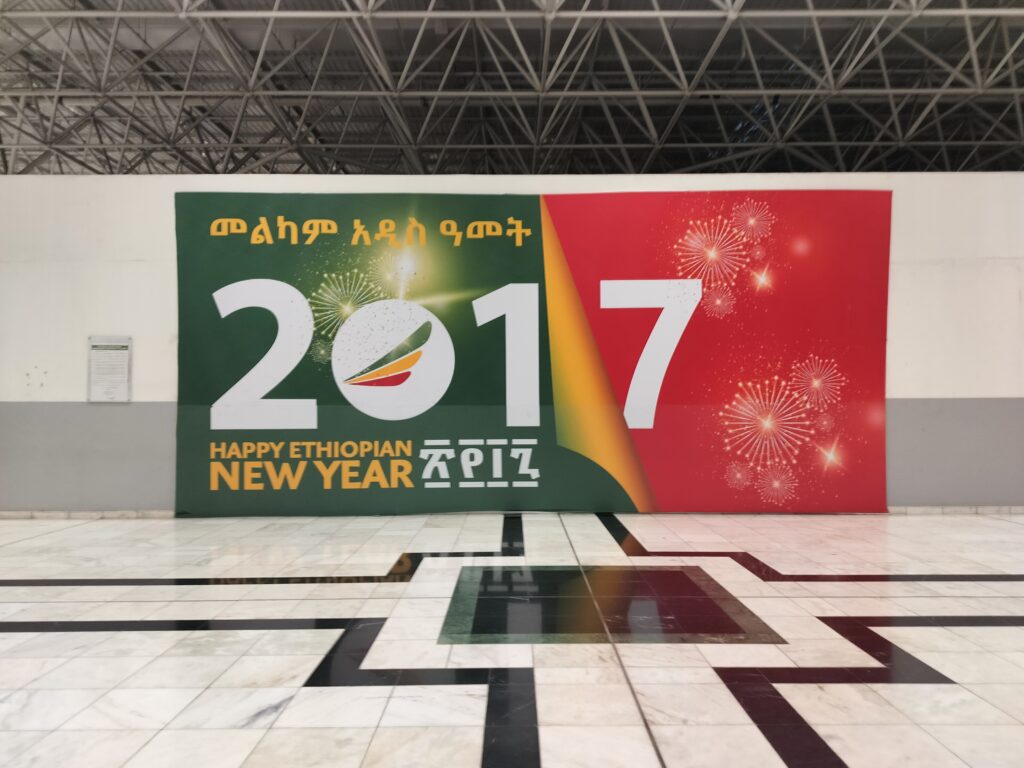
I arrive at Addis Ababa airport well in advance of my international return flight, so I take the opportunity to browse the few shops inside. As I walk around randomly, I notice a sign wishing everyone a happy new year. It might seem a little early, given that it’s only the beginning of November, but all in all it would be fine, apart from the fact that the year in question is 2017! No, it’s not a mistake, nor is it a poster that has never been removed. In Ethiopia, in fact, the calendar is a little different from ours. I won’t go into details, but I can confirm that Ethiopia is a few years behind the rest of the world, and not just in a metaphorical sense. If traveling from Australia to the Cook Islands meant traveling through time for a few hours, in this case I can say that I really outdid myself!
Conclusions
My four days in Amhara were the icing on the cake of one of the most beautiful trips I have ever taken, certainly the one that required the greatest spirit of adaptation. Compared to Danakil and Tigray, the Amhara region excited me a little less, but only because the first two are unbeatable (especially Danakil, which remains the most incredible place I have ever visited).
The landscapes of the Simien Mountains are absolutely spectacular, and it was definitely worth getting there, even if only to test my endurance at higher altitudes than I am used to. In terms of organization, if it hadn’t been for the mix-up with the agency, I would say that the timing was right, and after all, you can see a lot in the Simien Mountains in two days. If I had to choose the top three moments in Amhara, I would say:
- The sunset in Chenek at an altitude of 3,800 meters, an incredible sight.
- The Orthodox ritual in Gondar, especially for the contact with people.
- The climb to Geech.
I was disappointed not to be able to reach Imet Gogo, but my traveling companions, who continued on to that point and beyond, consoled me by saying that the view from there is not very different from the one I saw when I stopped at 3,800 meters.
In terms of cost, the 3D2N tour of the Simien Mountains cost $350 (not including the refund), including all meals, a guide, an armed guard (also necessary here as in Danakil), and overnight accommodation in tents. The Gondar tour cost USD 100, which I consider a little high for the characteristics of the tour. Domestic flights cost USD 50 each, if booked directly through ETT.
Additional remarks
- I had read somewhere that there would be internet connection in the Simien Mountains. From what I understand, this is only true if you sleep in the few huts in the park. Having stayed in a tent, there was no connection available, and there was no network even for those with a local SIM card.
- The highest peak in the Simien Mountains, which is also the highest in Ethiopia and among the top 10 in Africa, is Ras Dashen, reaching over 4,500 meters. Since I had never been above 3,500 meters, I decided not to go that high. If you are interested, it is possible to reach this peak on the 4D3N tour.