

“- The Northern Lights? In this period of the year? In your kitchen?… Can I see it?
– No!”
The Simpsons
Table of Contents
Introduction
We’re nearing the end of our road trip in Iceland; our Dacia Duster has already covered around 1,500 km, but we’re not quite satisfied yet. The weather conditions haven’t been favourable so far, though the forecast gives us hope of a few spells of clear skies. So far, Fantozzi’s cloud has been constantly by our side, whilst clear skies have returned to every place we’ve left behind, accompanied – despite the unfavourable time of year – by splendid Northern Lights. Lights visible to everyone except us, as we’re always ready to set off again for new, rainy destinations. Perhaps we should ask ourselves a few questions, but we’re not giving up.
After visiting the magnificent Myvatn region, it’s the turn of the Snæfellsnes Peninsula, which lies quite a few kilometres from Akureyri, our starting point. By the end of the day, we’ll have added another 600 to the list, the first half of which we’ll cover almost without stopping. But let’s take it one step at a time.
Itinerary in pills
⭐ Fun scale: 8/10
🏛️ Not to miss: Djúpalónssandur beach and Mount Kirkjufell
⏱️ Total time: 1 day
👣 Mood: Nature and e adventure: 100%
💰 No charge for any destinations.
💡 Keep in mind: Near Akureyri, you pass through the Ring Road’s only toll road.
🎟️ Tip: Stop off halfway between Akureyri and Stykkishólmur to visit the Kolugljufur canyon.
Much like the Golden Circle, the Snæfellsnes Peninsula can be thought of as Iceland in miniature, thanks to the presence of landscapes representative of the island as a whole, from glaciers to lava fields, including waterfalls and fjords.
Coming from Akureyri, the gateway to the Snæfellsnes Peninsula is the town of Stykkisholmur. The distance between Akureyri and Stykkisholmur is around 350 km, which, according to Google Maps, takes about 4½ hours to cover. Our destination, however, is Borgarnes, the town we’ve chosen for our overnight stay as a convenient base from which to set off the following day for Landmannalaugar. Between these two small towns, two roads branching off the Ring Road – namely the 54 and the 574 – allow you to easily visit the points of interest along the Snæfellsnes Peninsula. The most important and well-known of these is undoubtedly Mount Kirkjufell, the most photographed attraction in the whole of Iceland.
Another of the main attractions in this part of Iceland is the crater of the Snæfells volcano with the Snaefellsjökull glacier, also mentioned by Jules Verne in Journey to the Centre of the Earth.
Given their geographical location, therefore, visits to almost all of the day’s attractions take place in the afternoon, according to our itinerary. In the table below, you will find a list of the various stops made during the day – with names that, as always, are nearly impossible to pronounce – and a map of the route by car.
| Attractions | km | travel time | Map |
|---|---|---|---|
| Gerouberg Cliffs, Budir church, Arnastapi, Malariff Lighthouse, Londragar, Djupalonssandur black beach, Olafsvik Rif (Svodufoss), Kirkjufell, Kirkjufellfoss, Stykkisholmur, Kolugljufur canyon | 585 | 8h | Akureyri-Snæfellsnes-Borgarnes |
Among the other attractions worth visiting on the Snæfellsnes Peninsula, the Vatnshellir lava cave, the so-called ‘Singing Cave’ Sönghellir, and the crater of the Saxholl volcano are also worth mentioning.
Itinerary in details
Kolugljufur canyon and arrival in Stykkisholmur
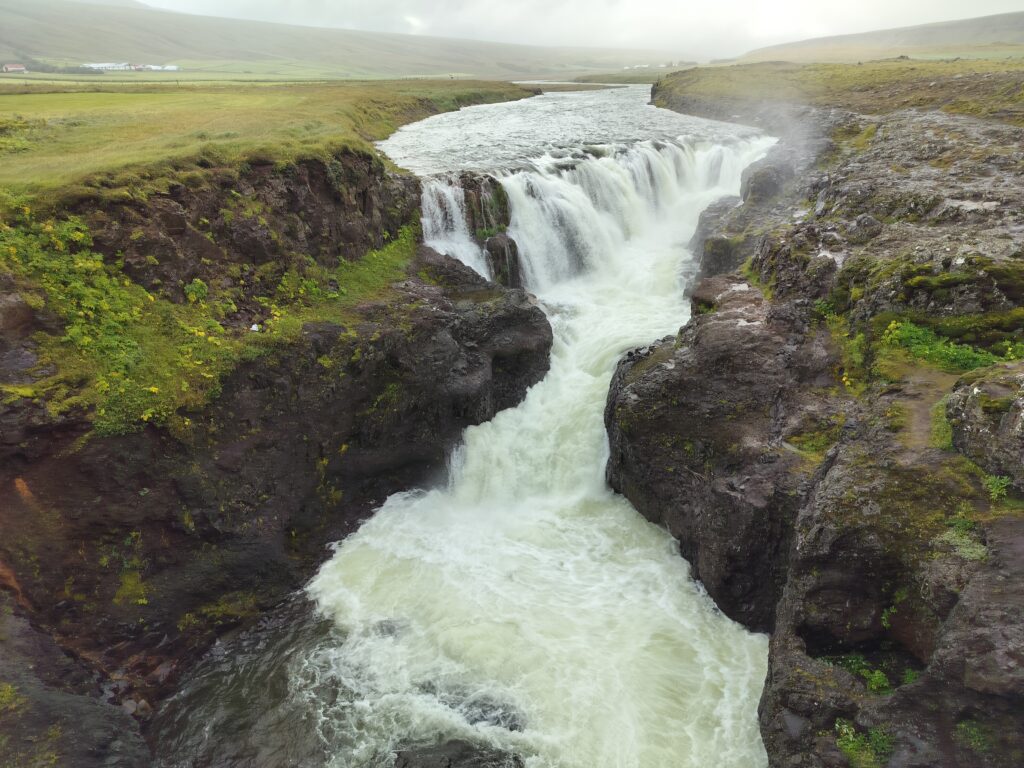
We wake up early, as, as mentioned, this will be the busiest day of the trip in terms of driving. The whole morning is spent driving to Stykkisholmur, a charming little town where the tour of the Snæfellsnes Peninsula begins and where we’re planning to stop for lunch. As we need to plan at least one stop halfway, we decide to take the opportunity to visit Kolugljúfur Canyon, an attraction little known to most people. When we arrive, in fact, we are practically on our own, despite the fact that the canyon is easily reached via a short detour from the Ring Road and is easily accessible from the car park, as well as being a truly beautiful spot. We stop here for a few minutes, just long enough to stretch our legs and take a few photos. It’s not possible to go down into the canyon, but if you wish, you can take a walk along the top edge – which we decide against, partly because the ground is rather slippery due to the rain that had fallen earlier.
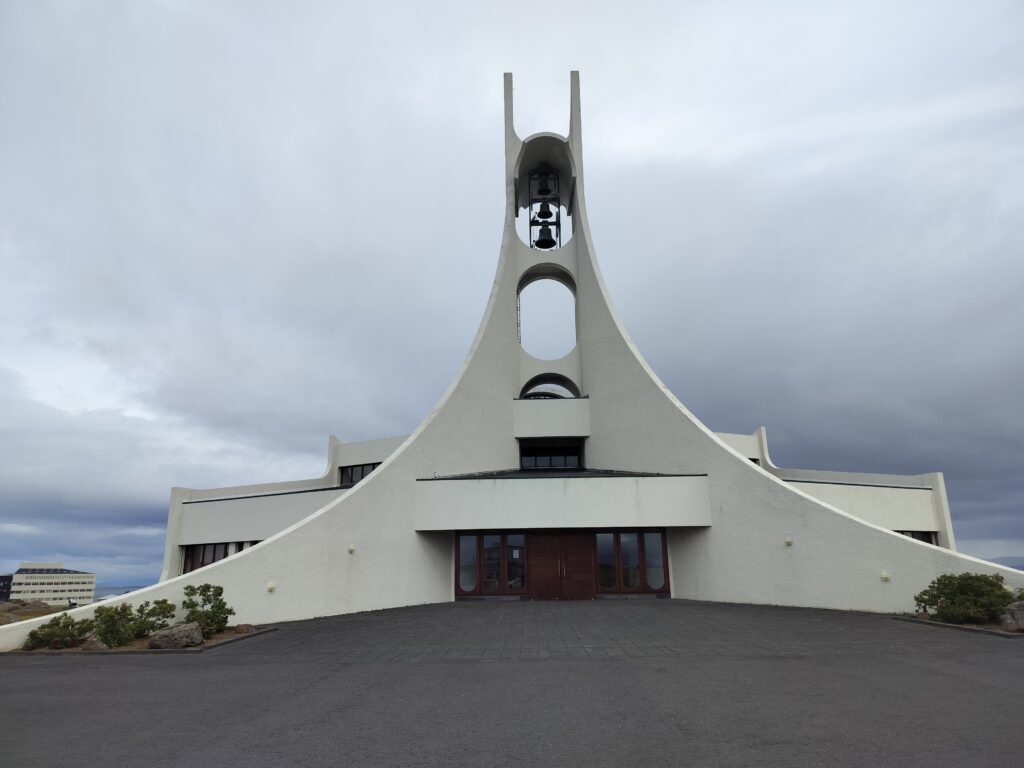
We arrive in Stykkisholmur around lunchtime, and whilst we’re having a bite to eat, we take the opportunity to have a stroll around the town, which, in my humble opinion, you could die without ever having seen. The town’s most famous attraction is its church, the design of which is highly questionable.
Grundarfoss and Mount Kirkjufell
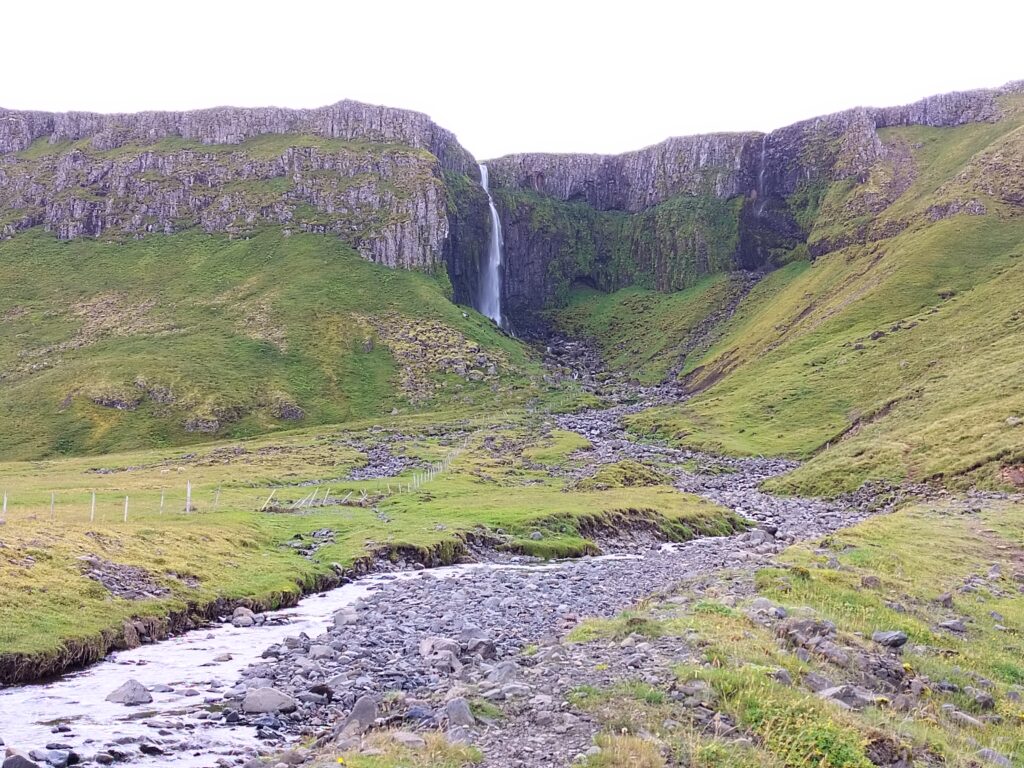
After our lunch break, we set off on our tour of the peninsula, starting at Grundarfoss, a waterfall we don’t spend too much time at, partly because we can only get as far as a certain point due to the road being closed.
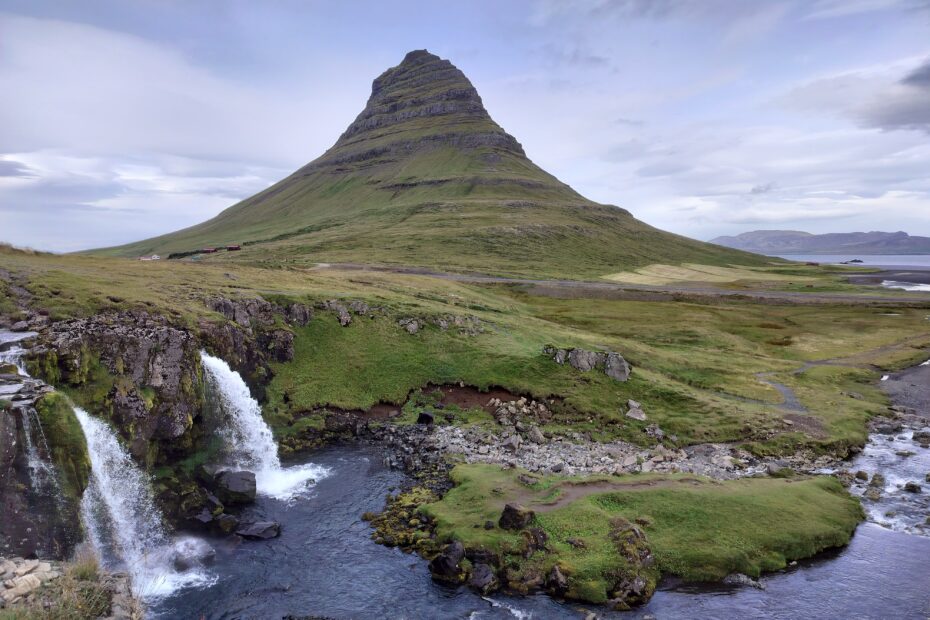
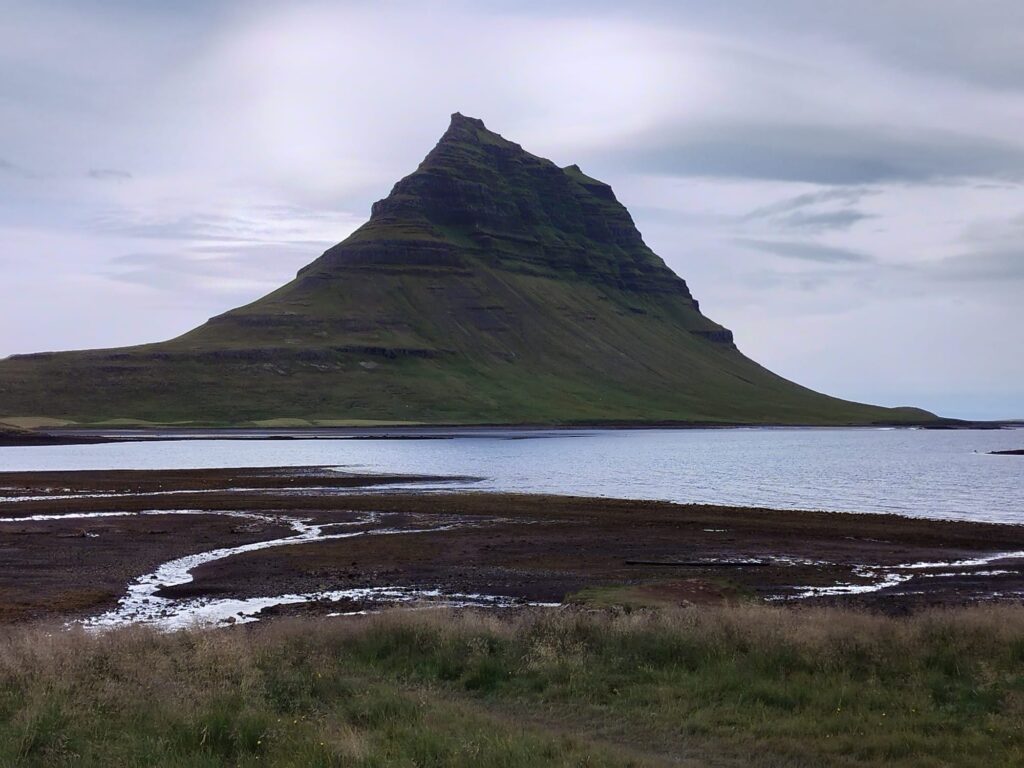
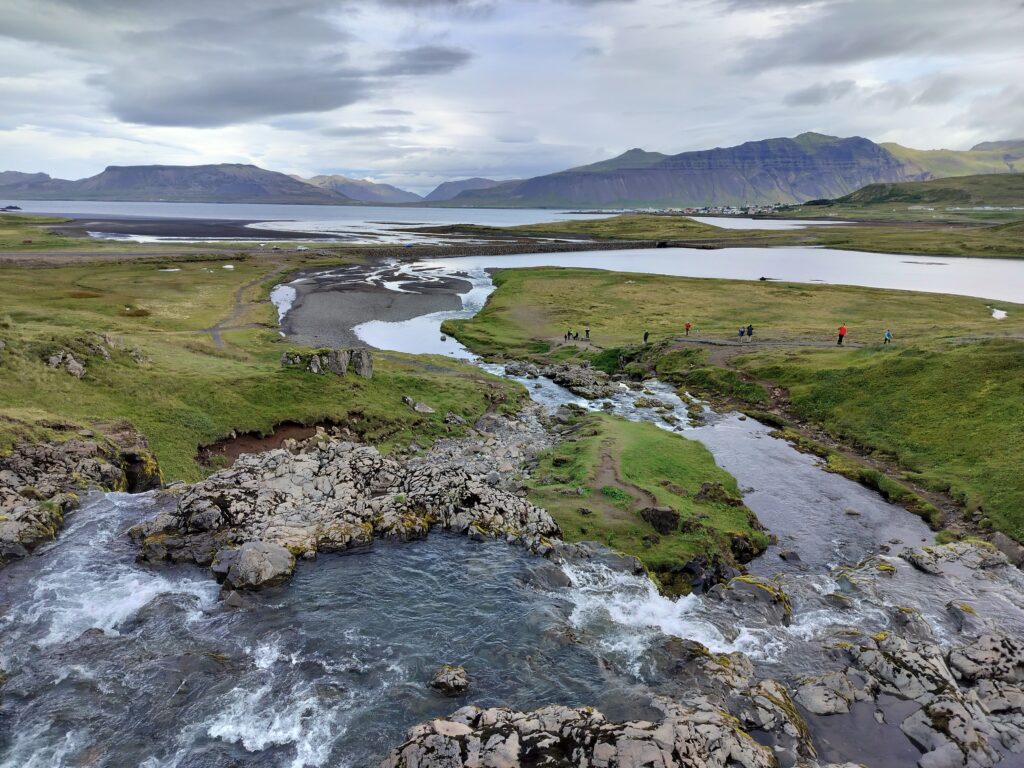
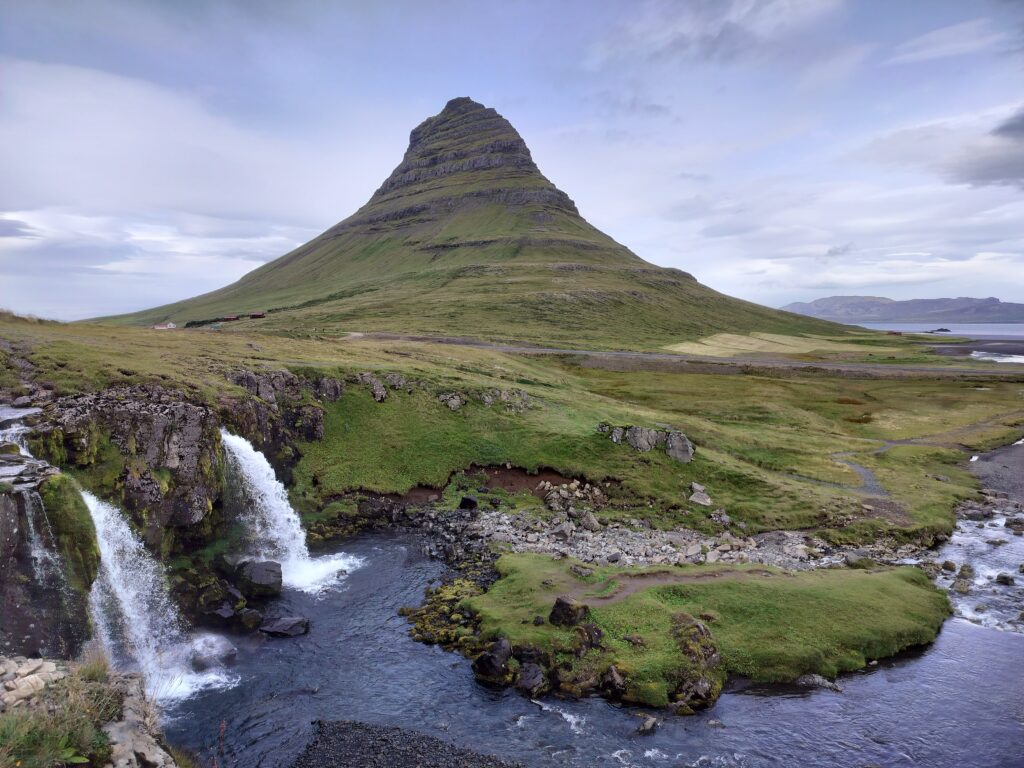
We then carry on to Iceland’s most photographed attraction, Mount Kirkjufell, which literally means ‘church-shaped mountain’. Unlike what we’ve seen at the country’s other attractions, there are a lot of people here. Fortunately, we arrive at a time when many are starting to leave, although it’s actually still only early afternoon. It’s a truly fascinating place, although I probably wouldn’t rank it amongst the most beautiful spots I’ve visited in Iceland. The most famous panoramic view is easily accessible from the car park, but it’s worth stopping for a while to take in the surrounding scenery. Our stop at Mount Kirkjufell lasts about an hour.
Svodufoss and Djúpalónssandur beach
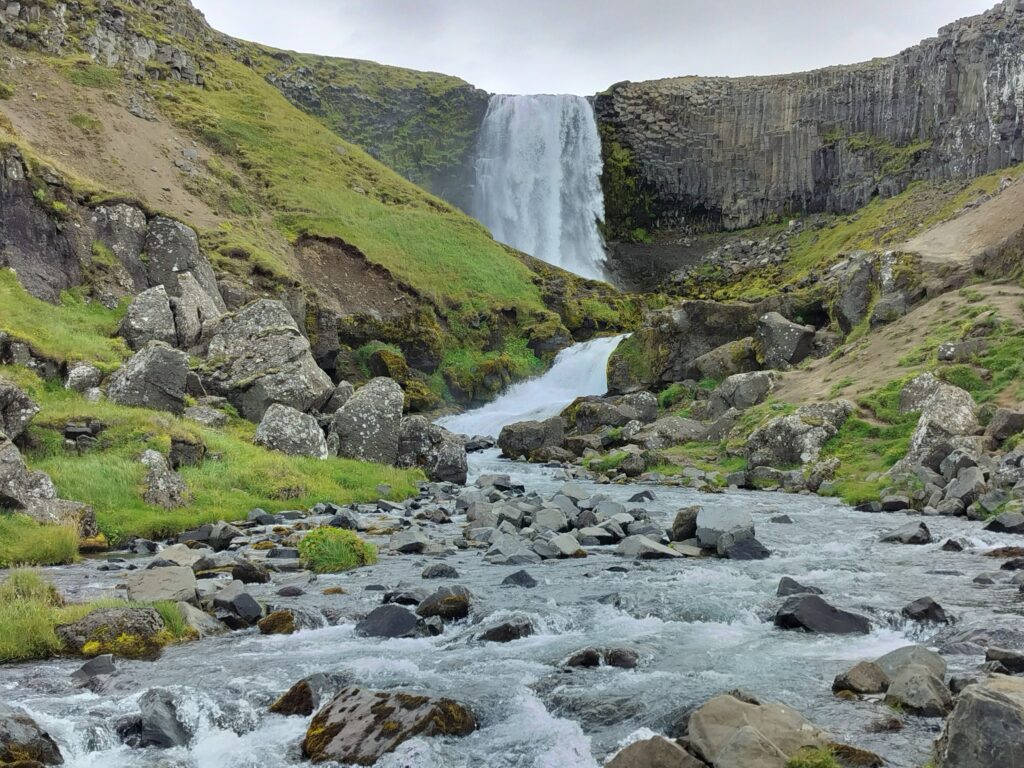
At the end of our stop, we carry on towards Svodufoss, a small waterfall in the middle of nowhere, which we reach after a pleasant walk. Fortunately, the weather starts to improve slightly and the sky begins to clear. We’re completely on our own here. Including the walk, the stop lasts just under an hour.
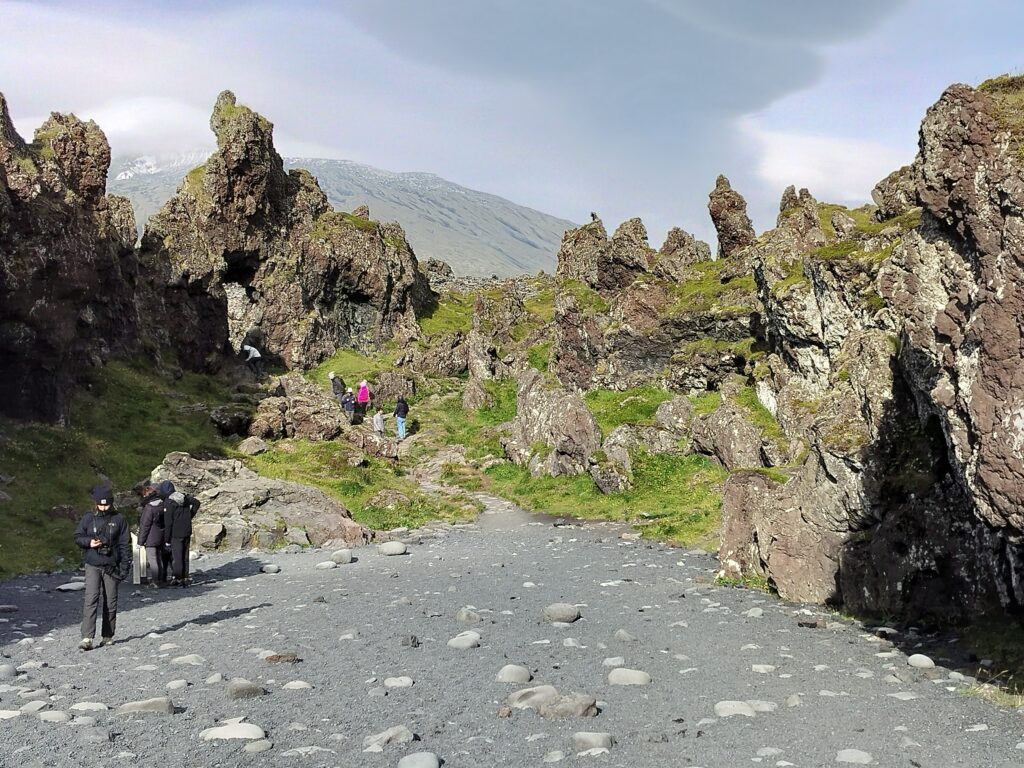
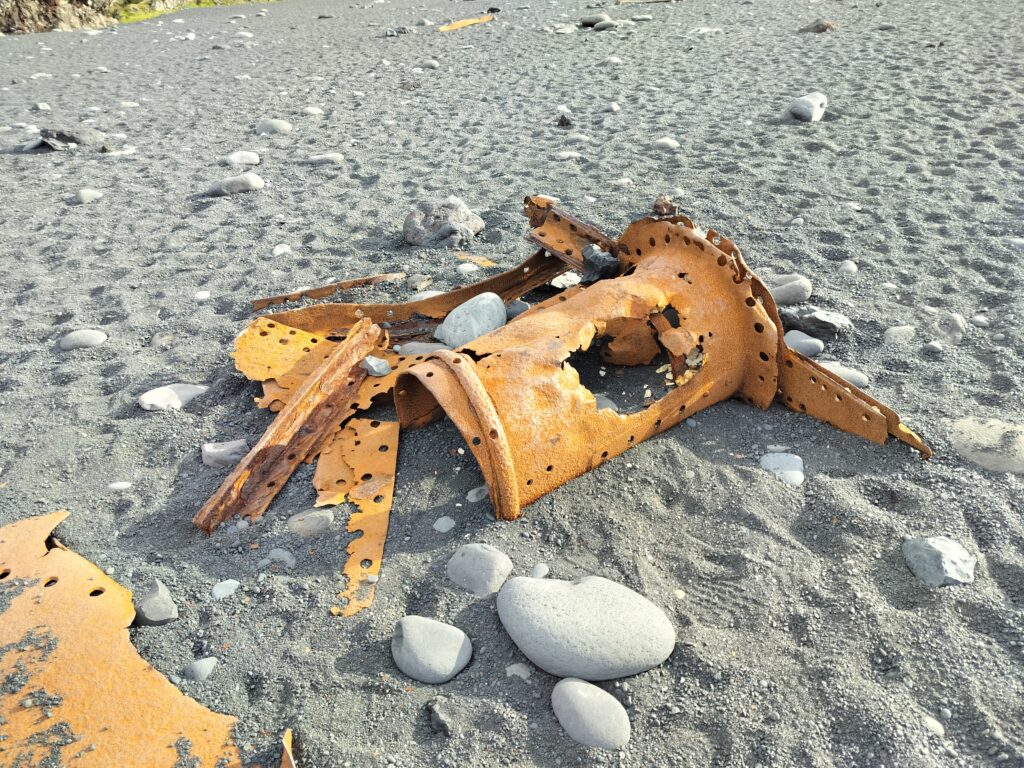
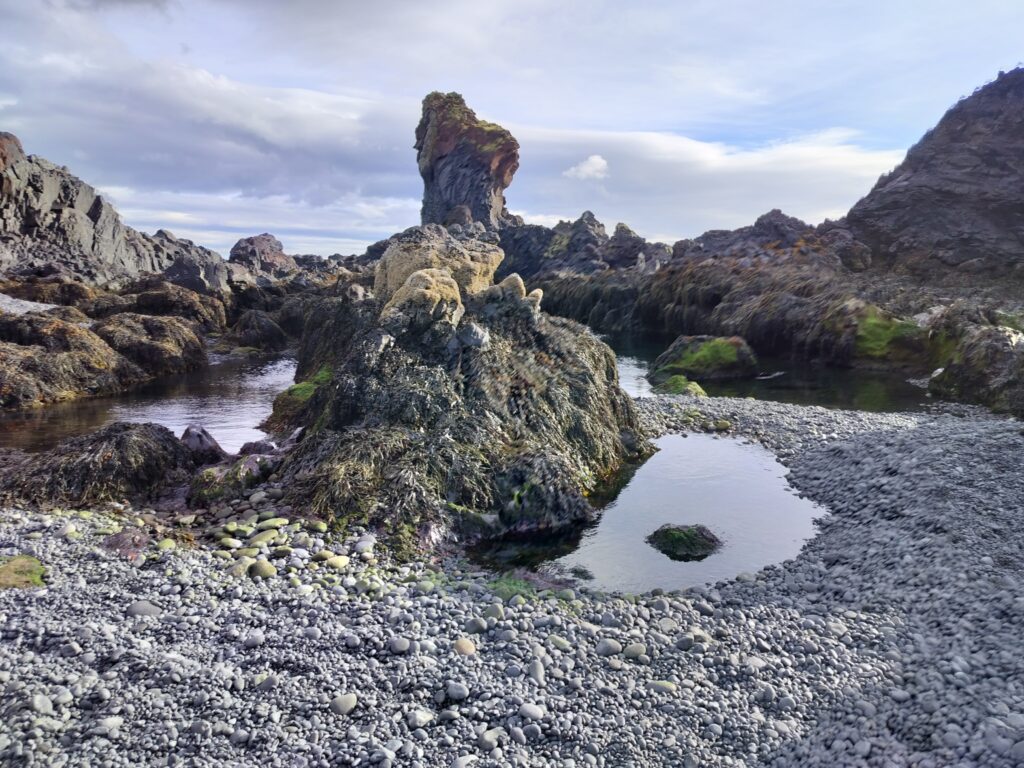
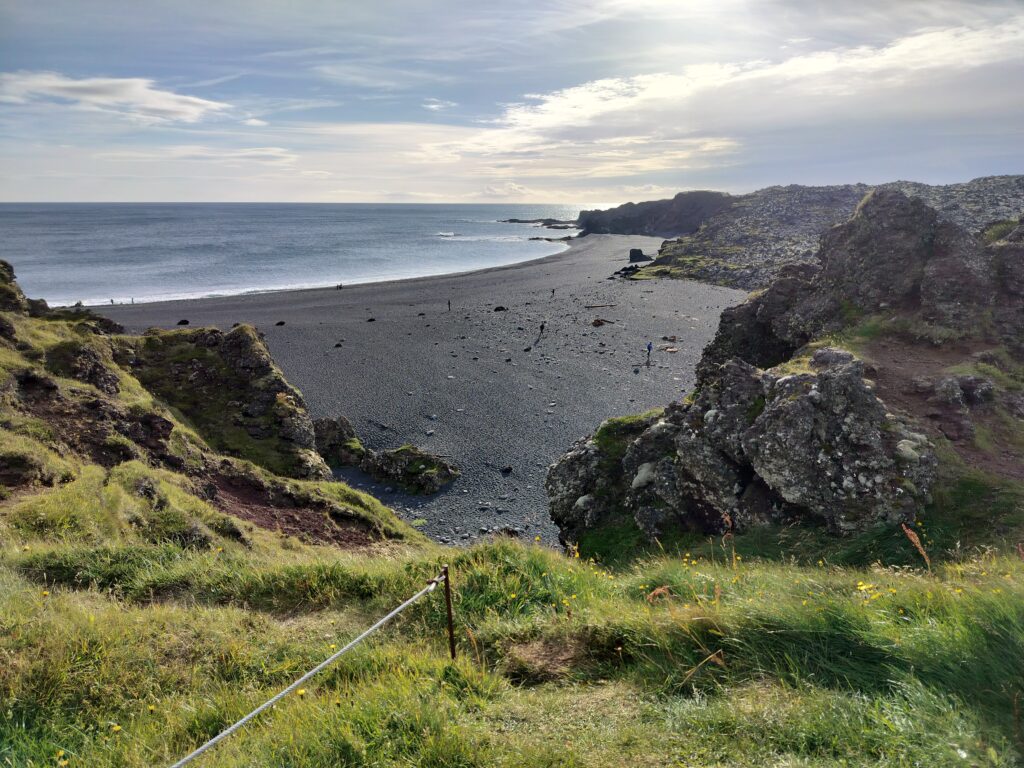
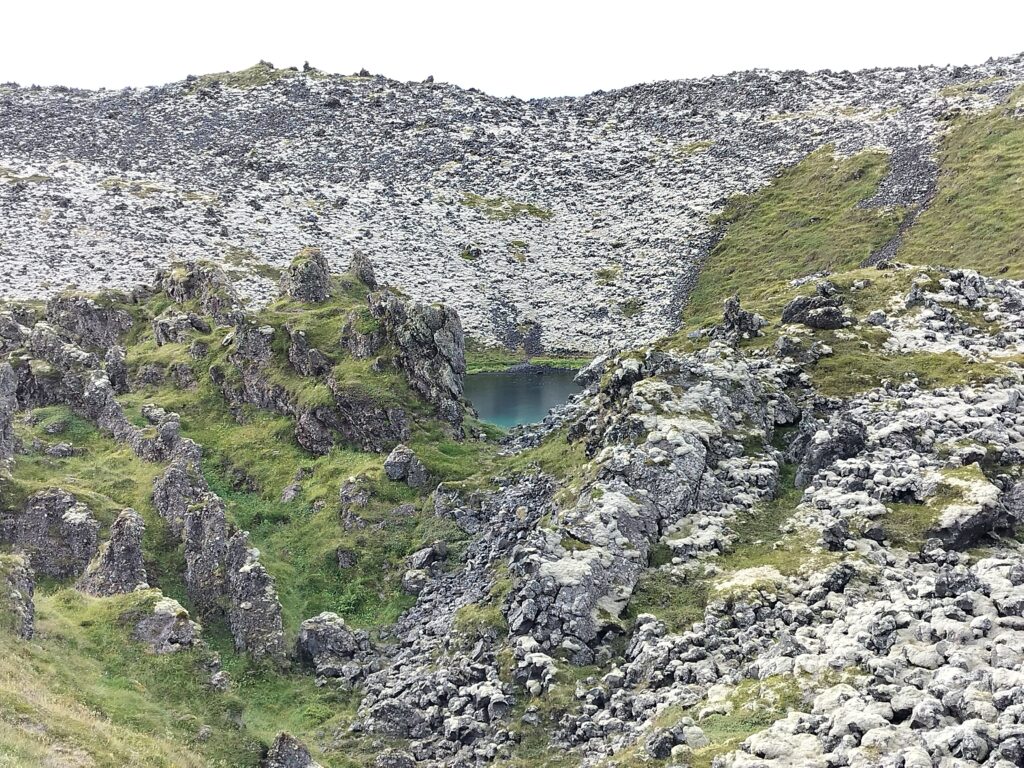
Back at the car park, we then headed for Djúpalónssandur beach – a beach I hadn’t had high expectations of, but which turned out to be the highlight of the whole day. At this point, we entered Snæfellsnessjökull National Park, driving along a road flanked by expanses of lava that stretch right down to the beach, which is easily accessible from the small car park. One of the beach’s unique features is the wreck of a ship that crashed onto its rocks a few decades ago, the remains of which have never been completely removed. The short path leading to the beach, which also frames it, is truly special. We stopped here for nearly two hours.
Arnastapi and Budir
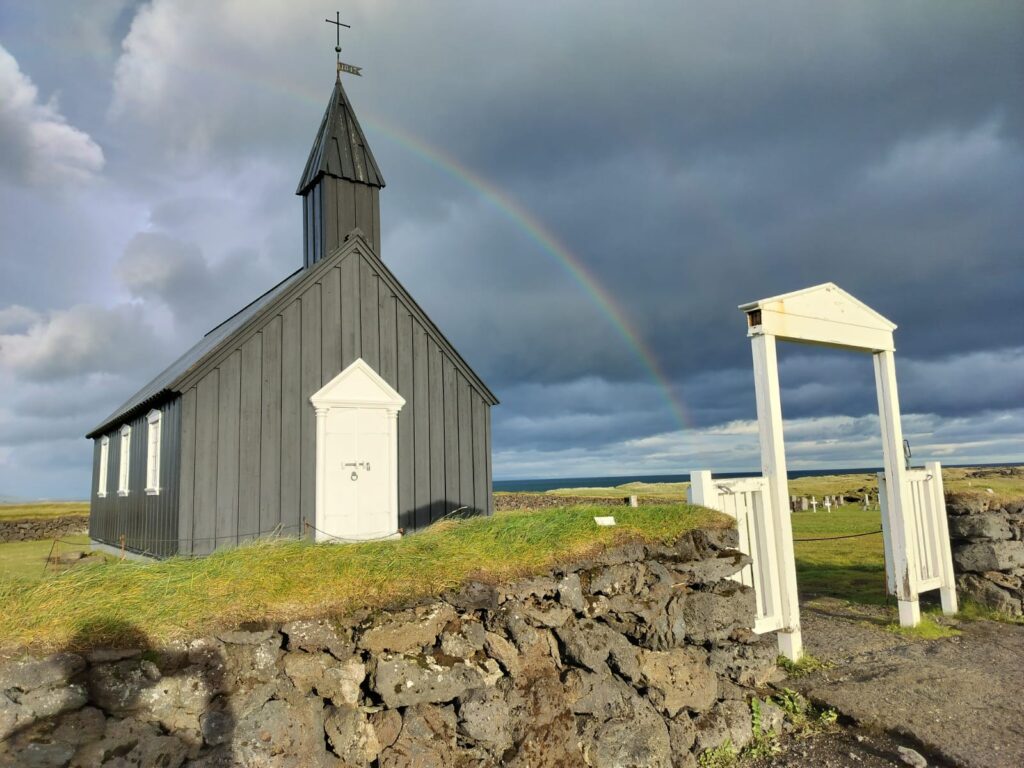
After our visit to the beach, we make two very brief stops: first at Arnastapi, where we take in the view of a beautiful cliff, and then at Bjarnafoss, a waterfall visible even from the road, before arriving at the little black church in Budir. It has just rained, and the sky treats us to a beautiful rainbow, which we manage to capture whilst taking photos of the church. Our stop here is rather brief, as the car park is right in front of the church, which is closed.
Borgarnes: glimpses of the Northern Lights
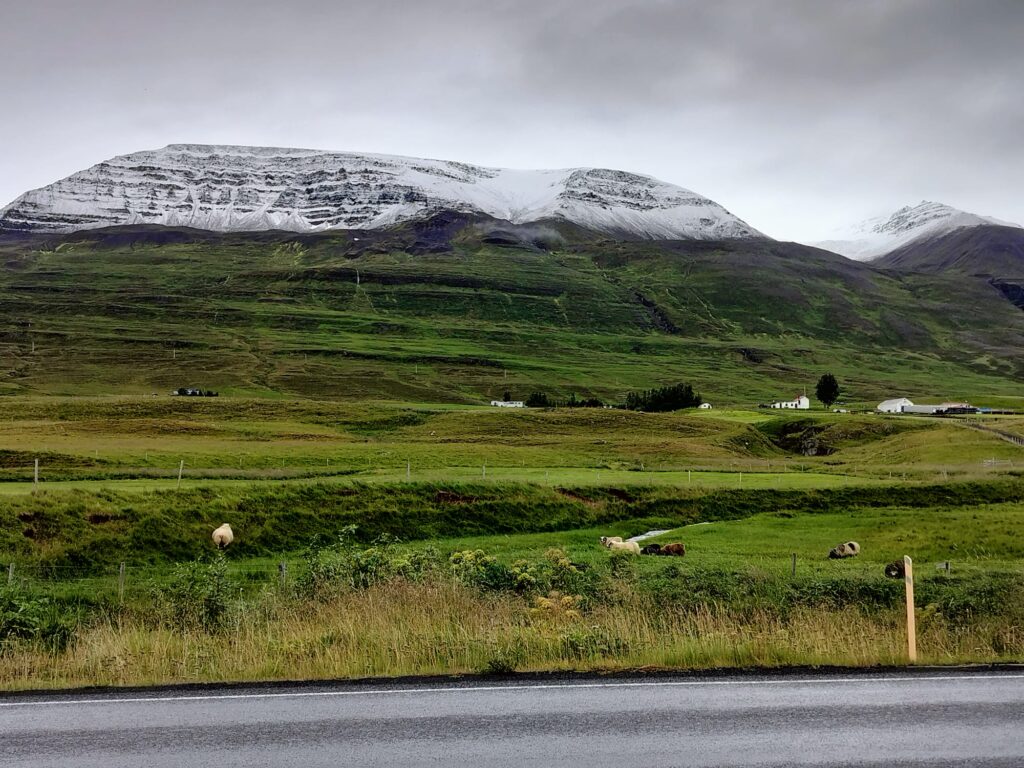
Budir Church is the last attraction of the day. So, having collected our car, we set off for Borgarnes, our chosen stop for the night, which we reach after an hour’s drive. Speaking of the road, it’s worth sharing a few snaps I snapped straight from the car during the day.
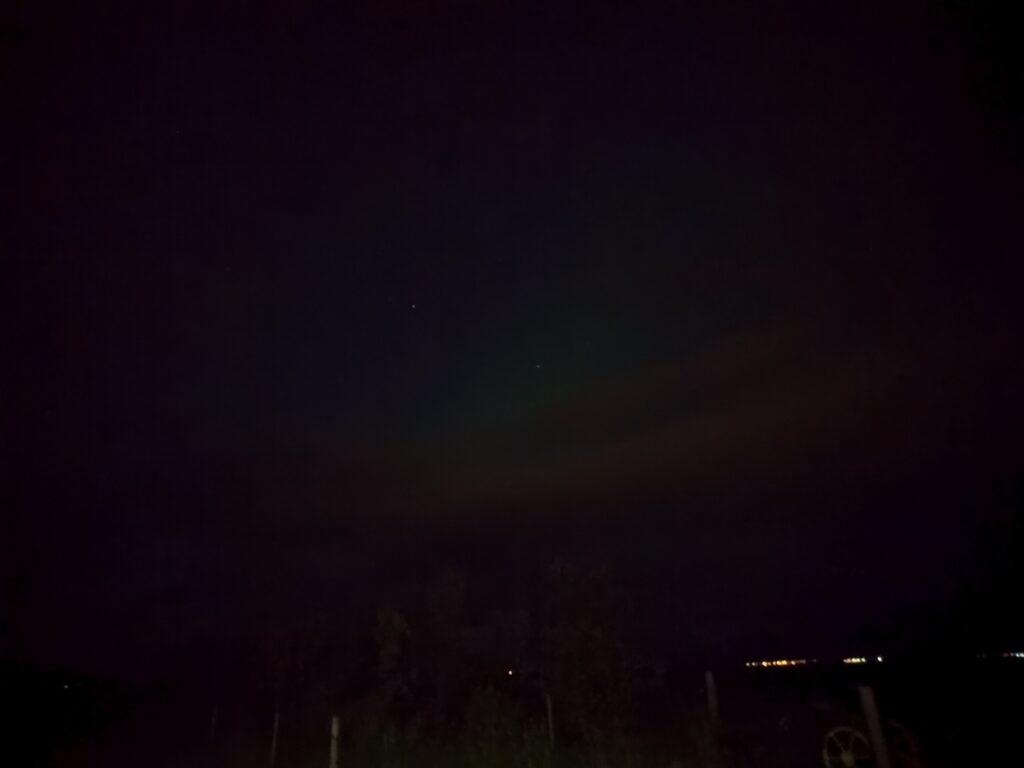
We arrive in Borgarnes in the evening, managing – not without some difficulty – to find the little chalet we’d booked. The place is quite remote and, for once, the sky isn’t completely overcast, which prompts me to go outside at the darkest hour (around midnight/1 am) to try and catch a glimpse of the Northern Lights. Looking up at the sky, I spot a slightly unusual cloud, but nothing particularly exciting. My phone, however, manages to capture a bit more. If, though, you can’t see anything in the photo I’m showing you, don’t worry about your eyesight.
Conclusions
The Snæfellsnes Peninsula was yet another part of Iceland that captivated us with its stunning landscapes, which offer a representative sample of the country as a whole. The day we spent visiting its most iconic spots was one of the most tiring, mainly because of the many kilometres we covered by car.
In my opinion, the most interesting part was Djúpalónssandur beach, which I consider to be no less beautiful than Reynisfjara. Mount Kirkjufell, on the other hand, deserves an honourable second place, although, despite its prominence in tourists’ photo albums, I believe Iceland has more ‘Instagrammable’ locations. I won’t comment on the Northern Lights, however, as they were too faint to be truly awe-inspiring.
Related articles:


