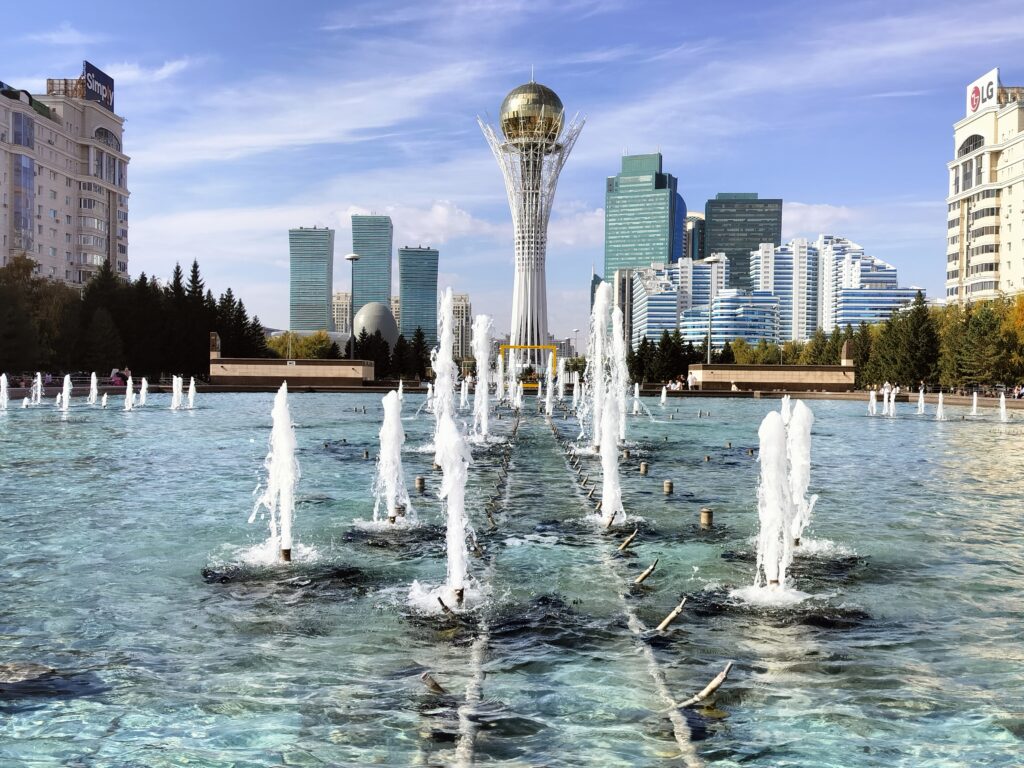
“After a while, the dew evaporated, the air hung motionless, and the deceived steppe took on its despondent summer appearance. The grass wilted, life came to a standstill. The parched hills, a bronzed green that faded into lilac in the distance, with their hues as dull as shadow; the plain with its hazy horizon, and above it all the dome of the sky—which, over the steppe, where there are no woods or high mountains, appears with a frightening depth and transparency—now seemed boundless, numbed by melancholy.”
A. Cechov, The steppe
Table of Contents
- Introduction
- Itinerary in pills
- Day 1: Almaty
- Day 2: Kaindy and Kolsai lakes
- Day 3: Charyn Canyon
- Day 4: Big Almaty Lake and First President Park
- Day 5: Almaty
- Conclusions
Introduction
After the unique new Kazakh capital, the breathtaking spectacle of Mangystau’s wonders and a stopover between Turkistan and Shymkent, here we are at the final chapter of my journey through Kazakhstan, which took place in the Almaty region, the former capital. This is the country’s best-known tourist region, and not just because the Mangystau region has only recently opened to visitors. In the vicinity of the old capital, in fact, you encounter incredible landscapes, travelling in just a few kilometres from the steppe to mountains rising to altitudes of up to 5,000 metres.
For this reason too, the Almaty region is one of the most diverse geographical areas not only in Kazakhstan, but in the whole of Central Asia. It is an area that combines desert landscapes, alpine lakes, glacial mountains and spectacular canyons.
Unlike Mangystau, visiting the Almaty region independently is entirely feasible. The roads linking Almaty to the main natural attractions are of a reasonably good standard (with a few exceptions), whilst the most significant tourist spots can be reached without any particular difficulty (if you’re travelling independently in a hire car, I’d simply recommend downloading offline maps). However, as I was travelling alone, it proved more cost-effective to arrange my transport through local agencies, given the relatively low cost of organised tours.
Tours can easily be booked on the spot a couple of days in advance, although there aren’t a huge number of agencies operating. Among these, I got in touch with Banana Tour, Panda Travel, Steppe Spirit and Mocean Travel, all of which offered very similar packages.
Itinerary in pills
Among the best-known attractions in the Almaty region is, first and foremost, the Charyn Canyon, also known as the ‘Grand Canyon of Kazakhstan’, although the comparison with the majestic American canyon is decidedly far-fetched,. This canyon, which is nonetheless absolutely spectacular, can be reached from the small village of Saty, which is also situated near two other unmissable attractions in the region: the Kolsai and Kaindy lakes. To ensure I had enough time to visit the canyon and the two lakes at a leisurely pace, I chose to join the 2-day, 1-night tour offered by Banana Tour, which fitted best with my schedule.
The attraction that looked most promising to me, however, was Altyn Emel National Park, home to the Aktau Mountains – a sort of ‘rainbow mountain’ formation similar in origin to those I’d visited in Mangystau, the Katutau Mountains, which are bizarrely shaped mountains of volcanic origin – and the Singing Dune, a dune that produces a distinctive sound when the sand is stirred by the wind. To visit this park, situated near the village of Basshi, I turned to Mocean Travel, the only agency offering the chance to visit the park’s three attractions in a single, action-packed day. Unfortunately, the excursion was cancelled the day before departure – which also happened to be my last day in Kazakhstan – so I had to give it up, as I didn’t have time at that point to organise the trip independently.
One place I did explore without joining an organised tour, however, was Big Almaty Lake, a lake of the deepest blue, which took quite a bit of effort to reach, as I’ll explain later in this article. This was also because the cost of organised tours with local agencies was rather high and didn’t suit my needs. Finally, of course, there was Almaty, a city I found beautiful and liveable.
Below is a summary table of my itinerary in the region.
| Day | Itinerary | Night |
|---|---|---|
| 0 | Arrival in Almaty in the evening (domestic flight from Shymkent) | Almaty |
| 1 | Almaty and departure to Saty | Saty |
| 2 | Kaindy and Kolsai lakes (with Banana Tour) | Saty |
| 3 | Charyn Canyon (with Banana Tour) | Almaty |
| 4 | Big Almaty Lake | Almaty |
| 5 | Almaty (due to Altyn Emel cancelation) | Almaty |
| 6 | Return flight, arrival in Italy in the afternoon | – |
Day 1: Almaty
I arrived in Almaty on a domestic flight from Shymkent, a city I had travelled to in order to visit Turkistan, a site of historical importance about a hundred kilometres from Tashkent. The flight lands around half past midnight, so I head straight to the B&B I’d booked, the Sweet Vibe, taking a taxi there (I’d recommend the Yandex app for this – it’s a bit like the Uber of Central Asia).
After waking up and enjoying the extremely protein-packed breakfast provided by the B&B, I headed straight into the city center, once again by taxi, which costs next to nothing (the equivalent of €1.50–2 for a journey lasting about twenty minutes).
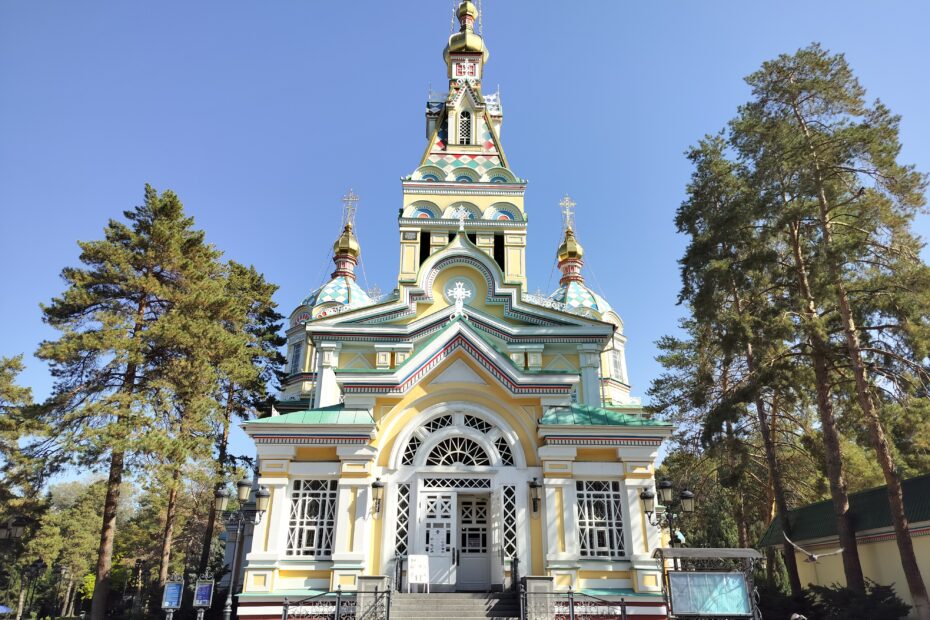
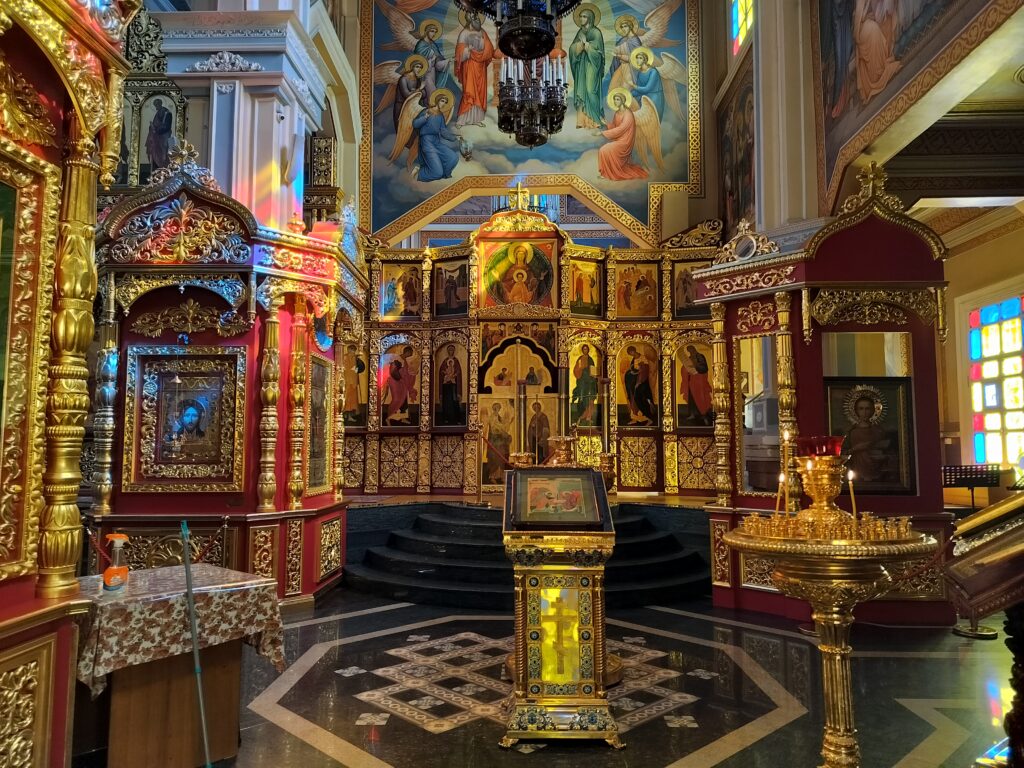
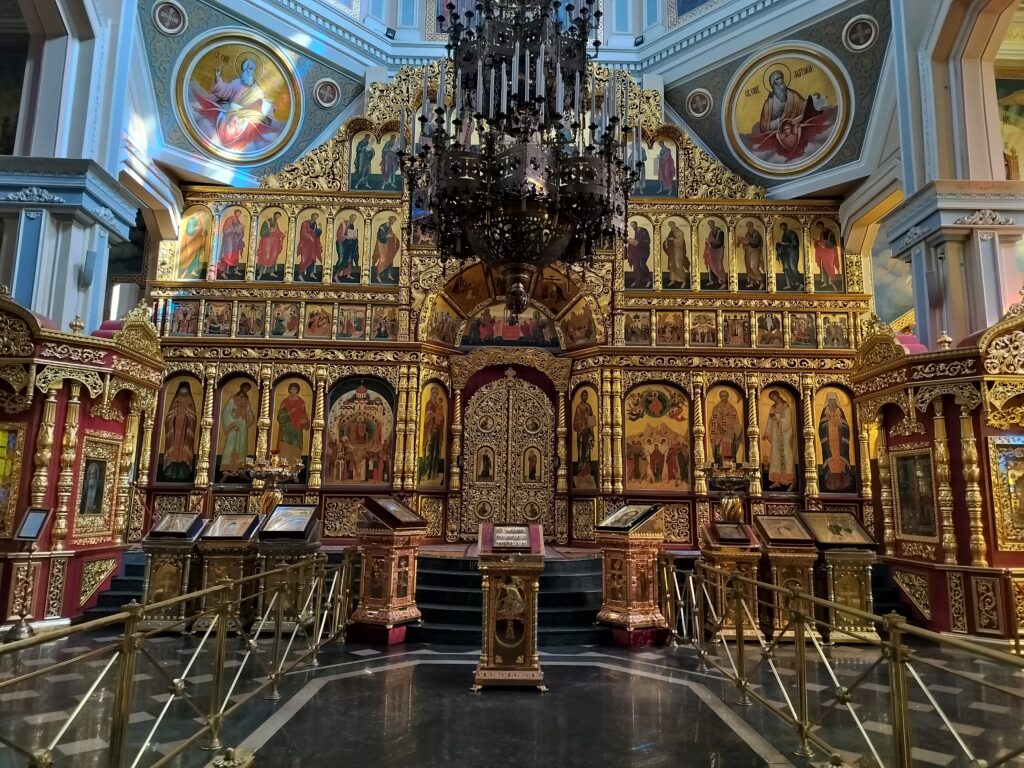
I began my exploration of the city with what is probably its most iconic attraction: the Orthodox Cathedral of the Ascension, also known as Zenkov Cathedral, named after the architect who designed it. The cathedral dates back to the early 20th century and is largely built of wood (it is one of the largest wooden buildings in the world). The building is easily recognisable by its yellow color and its multi-coloured domes. You can visit the interior of the cathedral free of charge. The walls are richly decorated with frescoes and gold detailing. It is particularly evocative to visit the cathedral in broad daylight, so you can admire the play of light through the stained-glass windows.
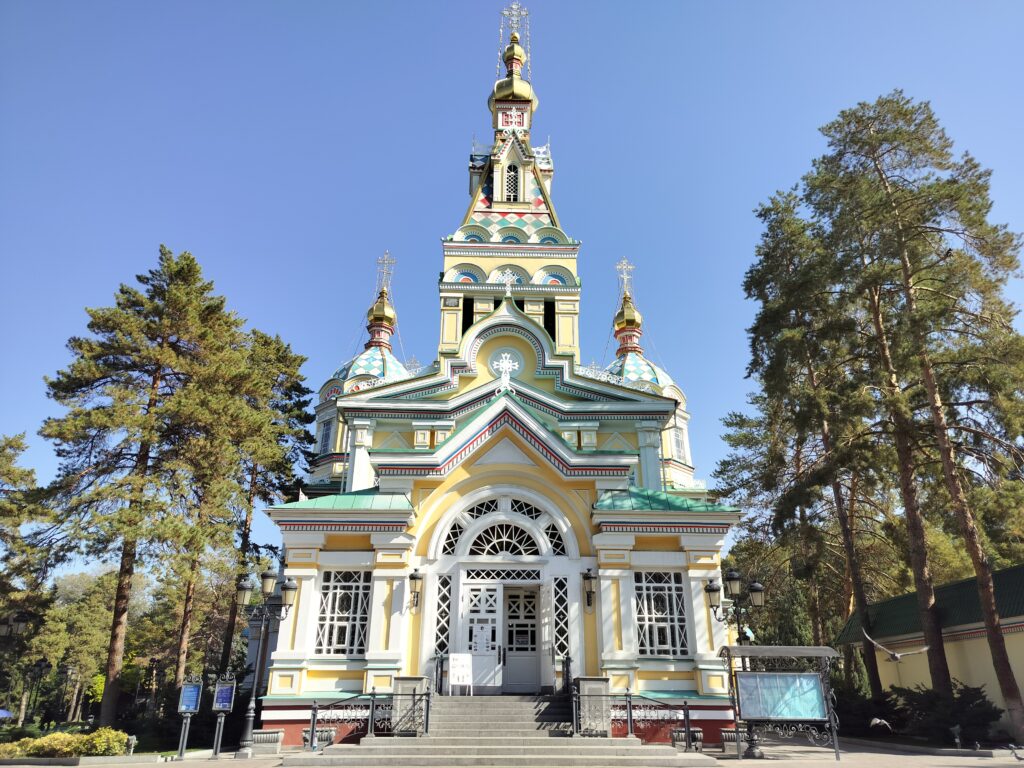
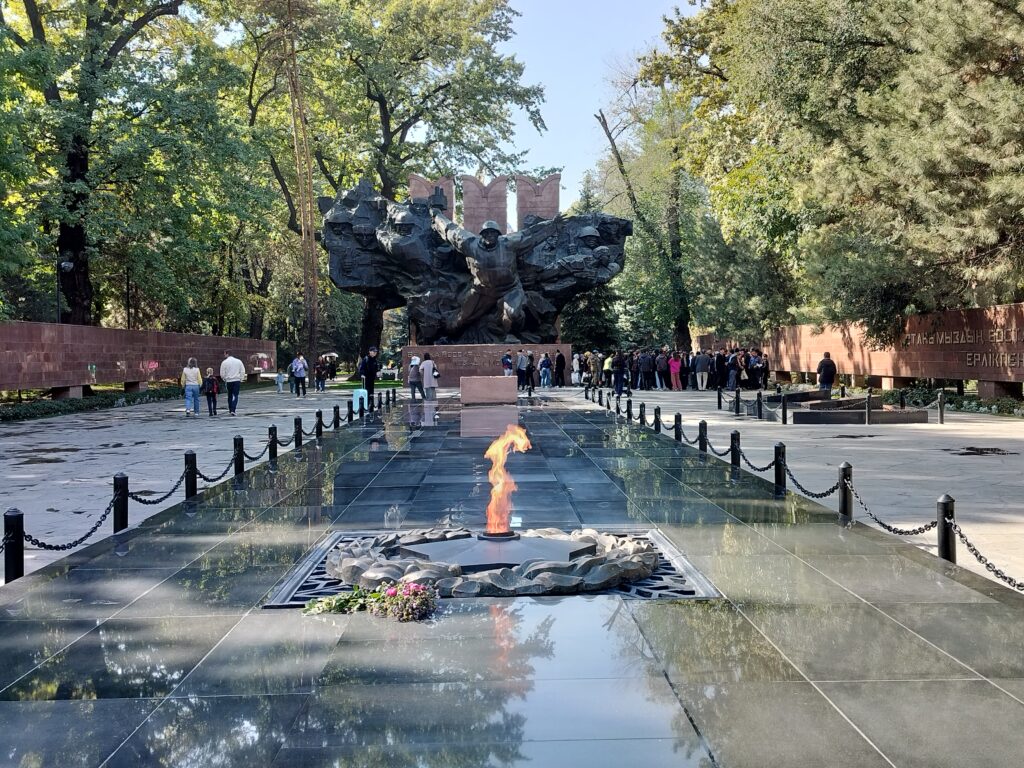
Zenkov Cathedral is situated within the Park of the 28 Panfilov Guardsmen, dedicated to the soldiers of the Division who defended against the Nazi advance on Moscow during the Second World War. The park, however, dates back to the late 19th century; the name by which it is known today is therefore merely the latest name it has been given.
As well as the cathedral, the park is home to several monuments of interest:
- The Memorial to Glory and the Eternal Flame, erected to mark the thirtieth anniversary of victory in the Second World War.
- The Museum of Kazakh Musical Instruments, a wooden building constructed in the early 20th century.
- The Monument to Ivan Panfilov, dedicated to the divisional general.
Many of Almaty’s main attractions are located near the park and the cathedral. These include the Green Bazaar, a huge traditional market where you can find a bit of everything, even at good prices. Don’t expect the charm of Istanbul’s bazaars, though – this is really just a very poor imitation of them!
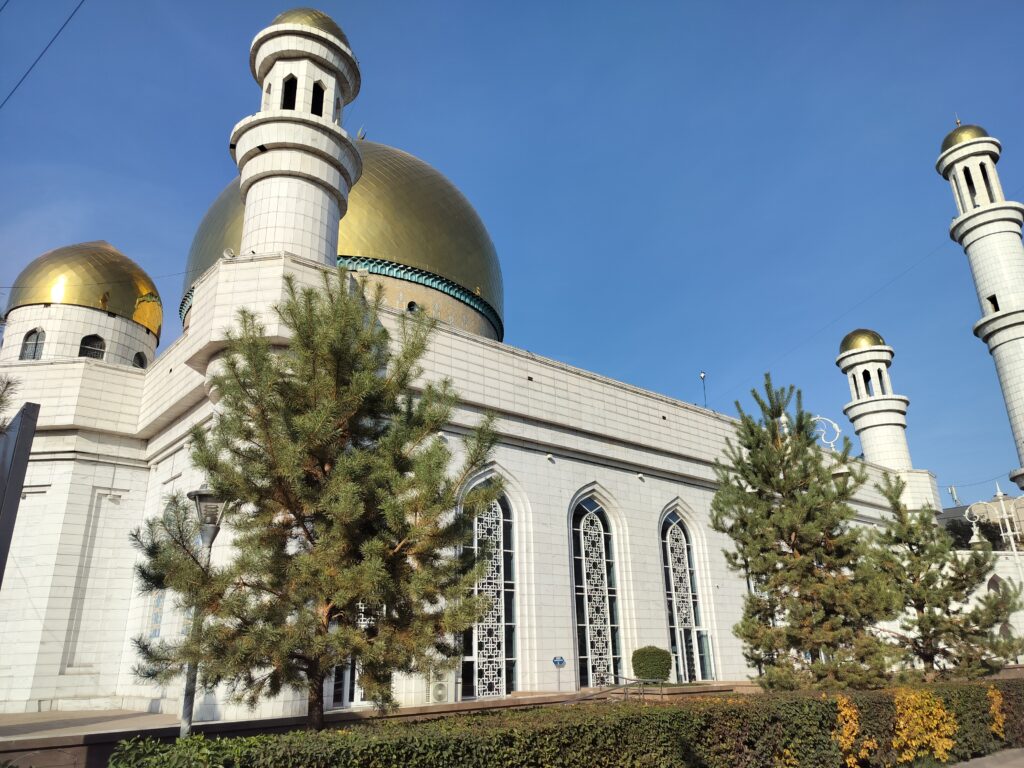
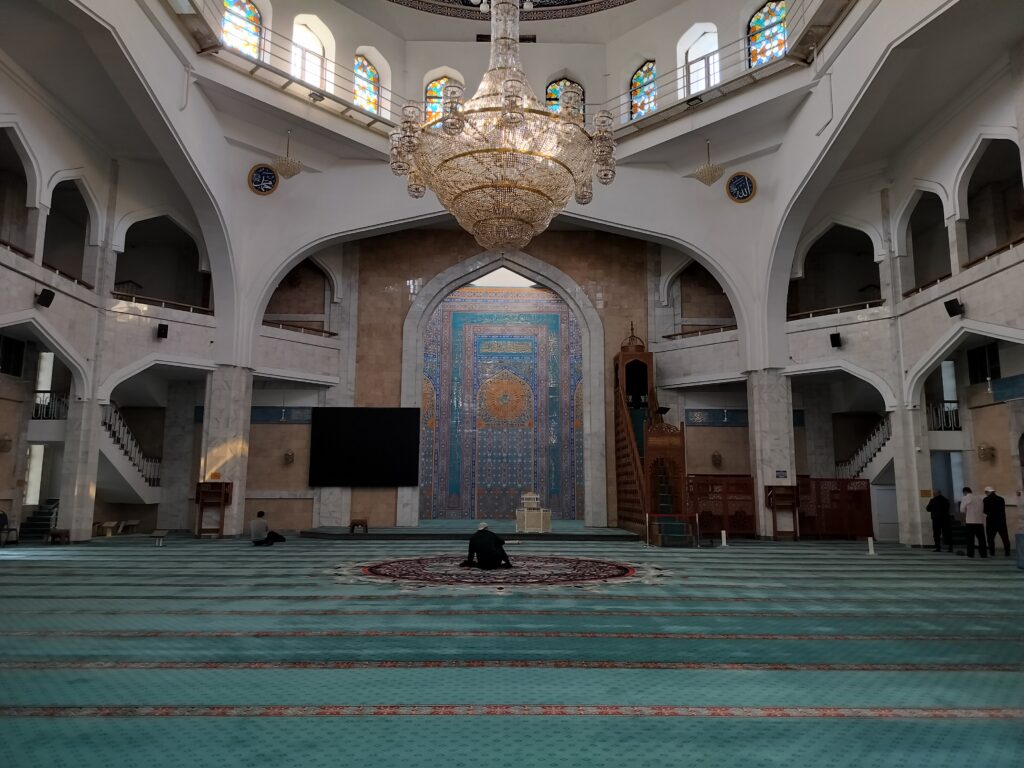
Another major attraction in the city, also easily reached on foot from Panfilov Park, is the Central Mosque, just a short walk from the Green Bazaar. The building is quite large, with white and blue exterior walls, and has five minarets. The interior isn’t particularly impressive; it certainly pales in comparison to the mosques in Astana.
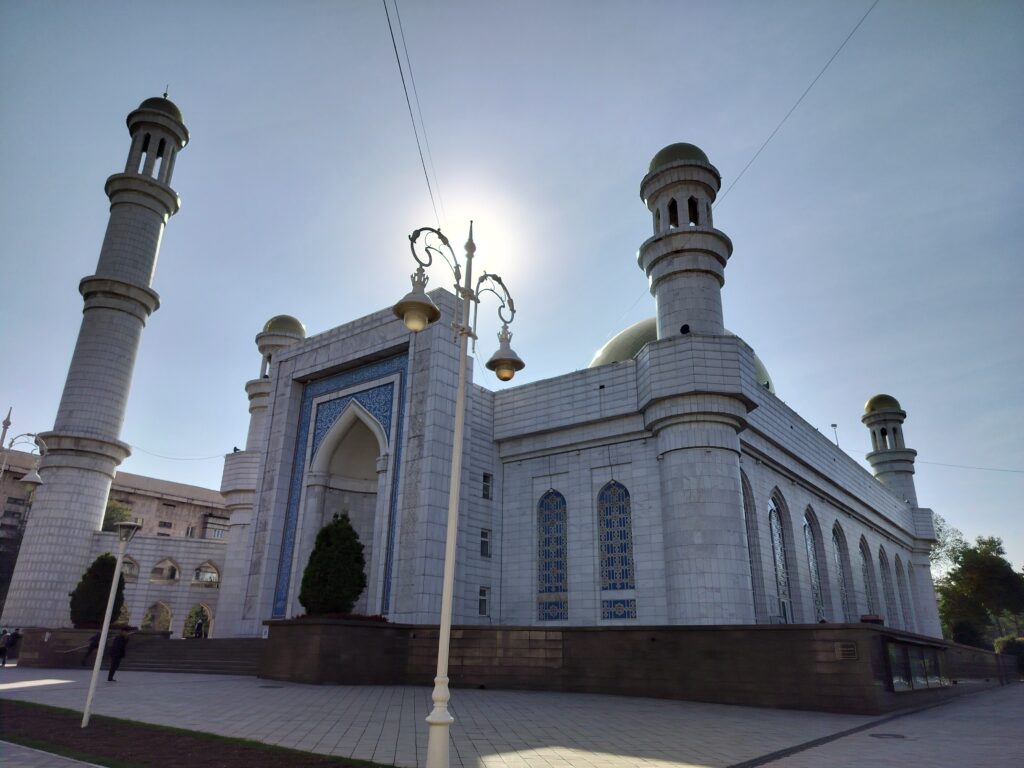
After visiting the mosque, I took another taxi – again booked via Yandex – to the Banana Tour agency office to pay my fee for the two-day tour of Charyn Canyon and the Kaindy and Kolsay lakes, which was due to set off that very evening. The tour costs 32,000 tenge, equivalent to just over €50, and includes meals, two nights in a shared guest house and transport.
The meeting point for the start of the tour is at Abay Square, which can be reached by metro from the agency’s office. It is still daylight and there is still a little while to go before departure, so I decide to take the metro to Republic Square and then walk on to Abay Square (a half-hour stroll). This is because Republic Square is home to a number of interesting sights, including the City Hall and the Monument to Kazakh Independence (declared in 1991), which consists of a 28-metre-high stele topped by the figure of the Golden Man, a warrior riding a winged leopard.
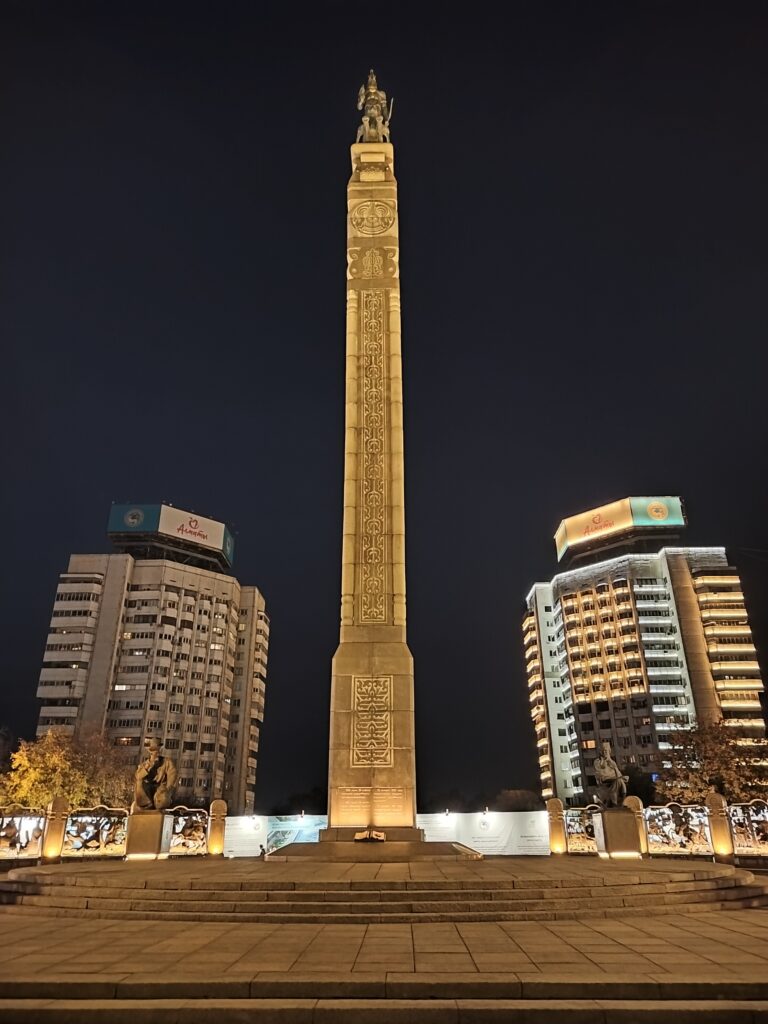
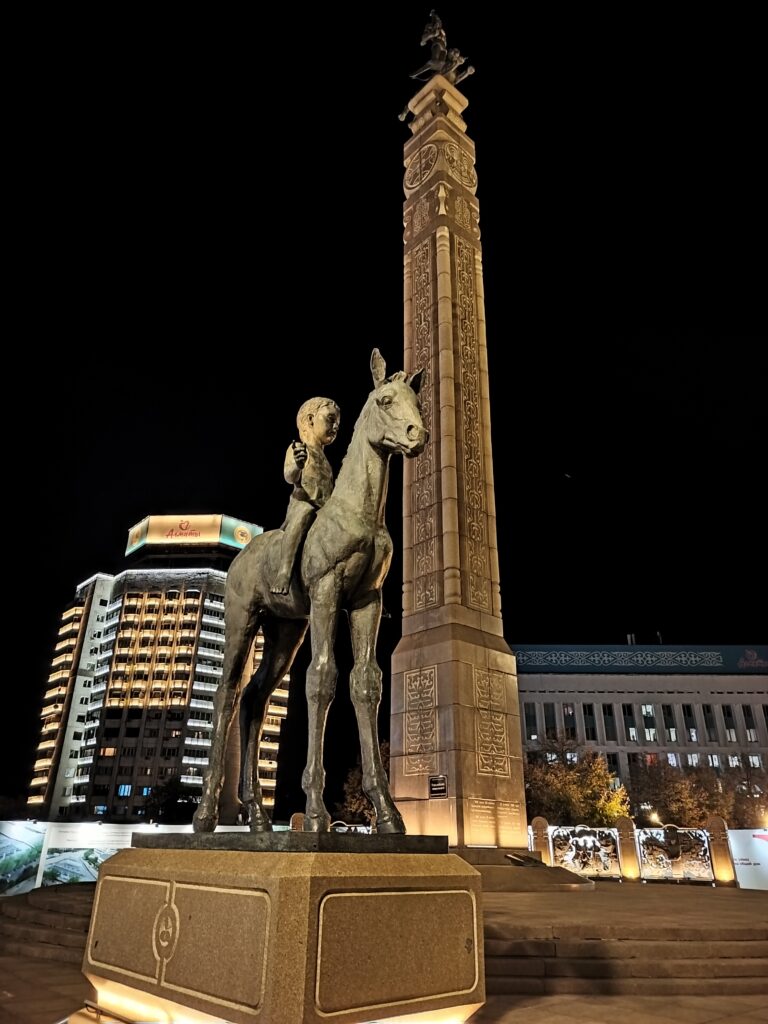
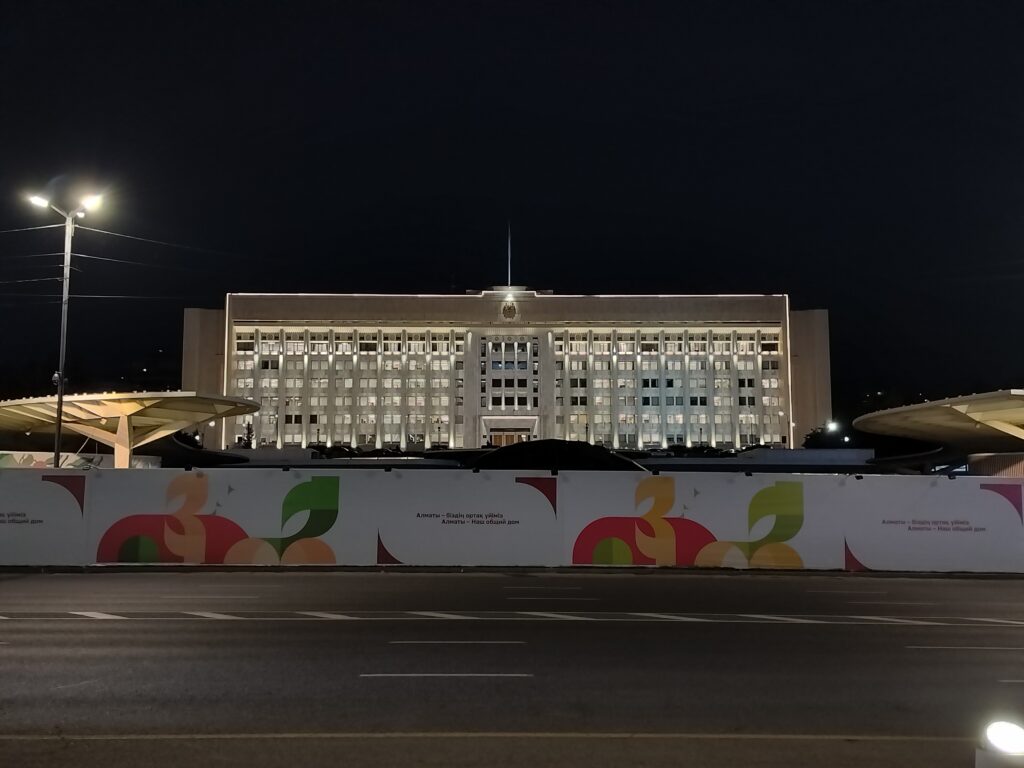
We’re due to meet at Abay Square at 8 pm to set off. Our destination is Saty village, about four and a half hours’ drive away. We’re travelling by coach, which is full, as there’s a group from another agency as well as the Banana Tour group. We arrive at our destination around 1.30 am and go straight to bed. Our accommodation is a guest house that can sleep a dozen people; we’re in shared rooms and there’s just one bathroom.
Day 2: Kaindy and Kolsai lakes
Kaindy lake
The group’s alarm is set for 7.30, but I try to get up before the others so I can use the bathroom in peace. We set off straight after breakfast for the tour’s first destination: Lake Kaindy.
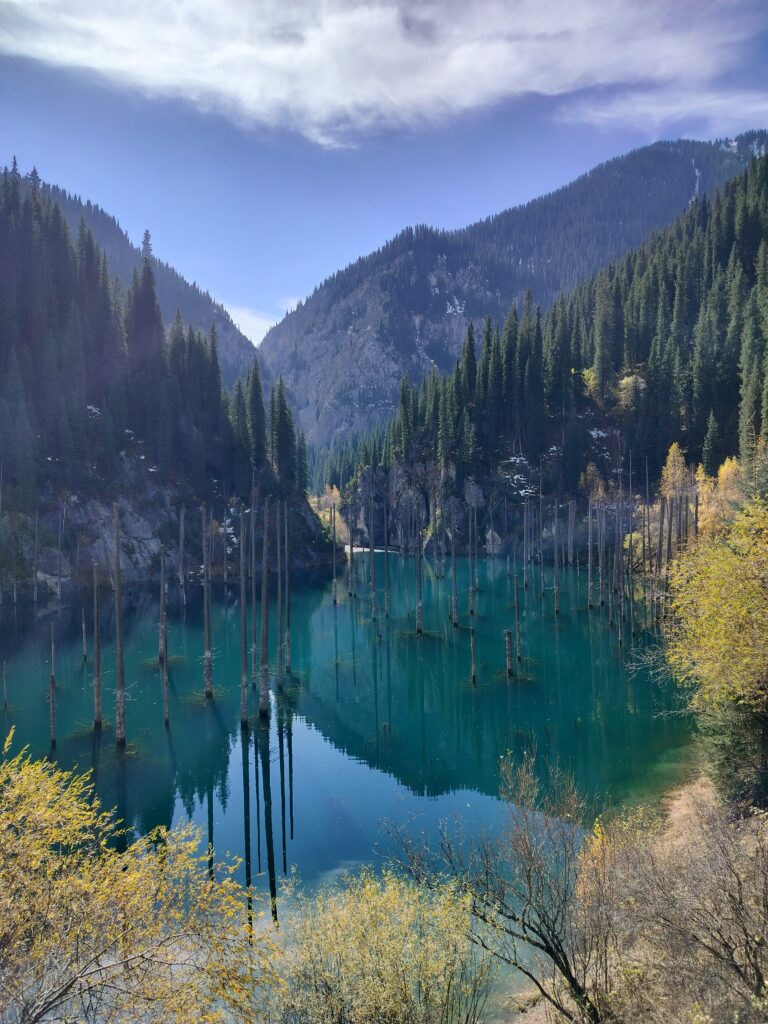
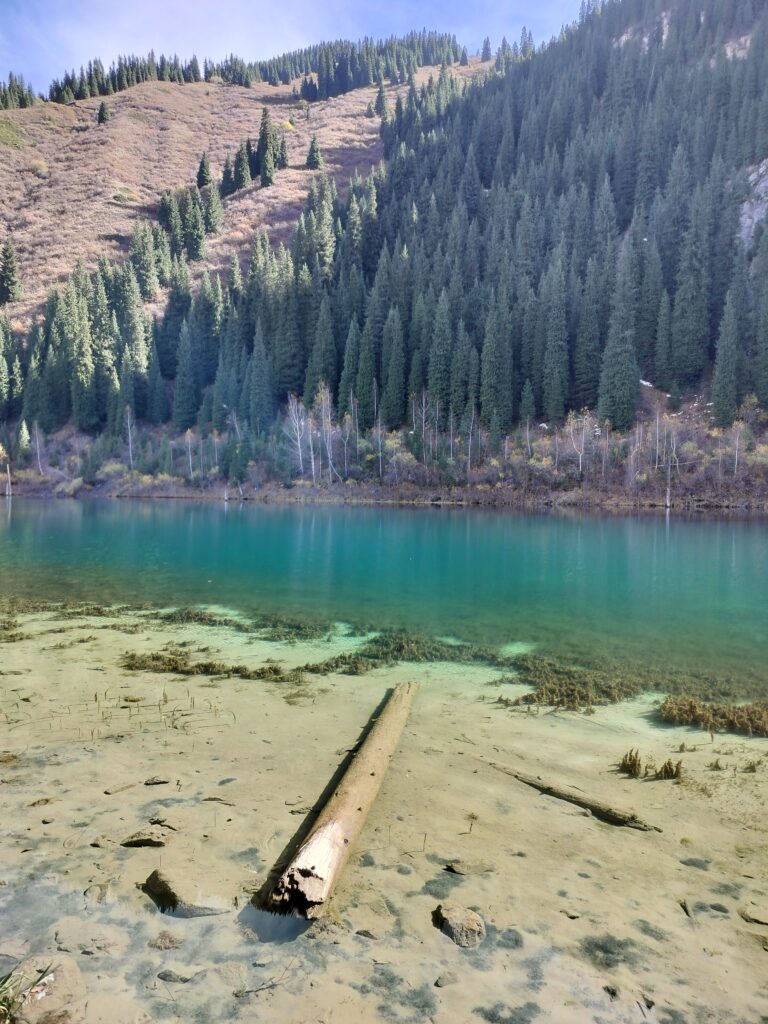
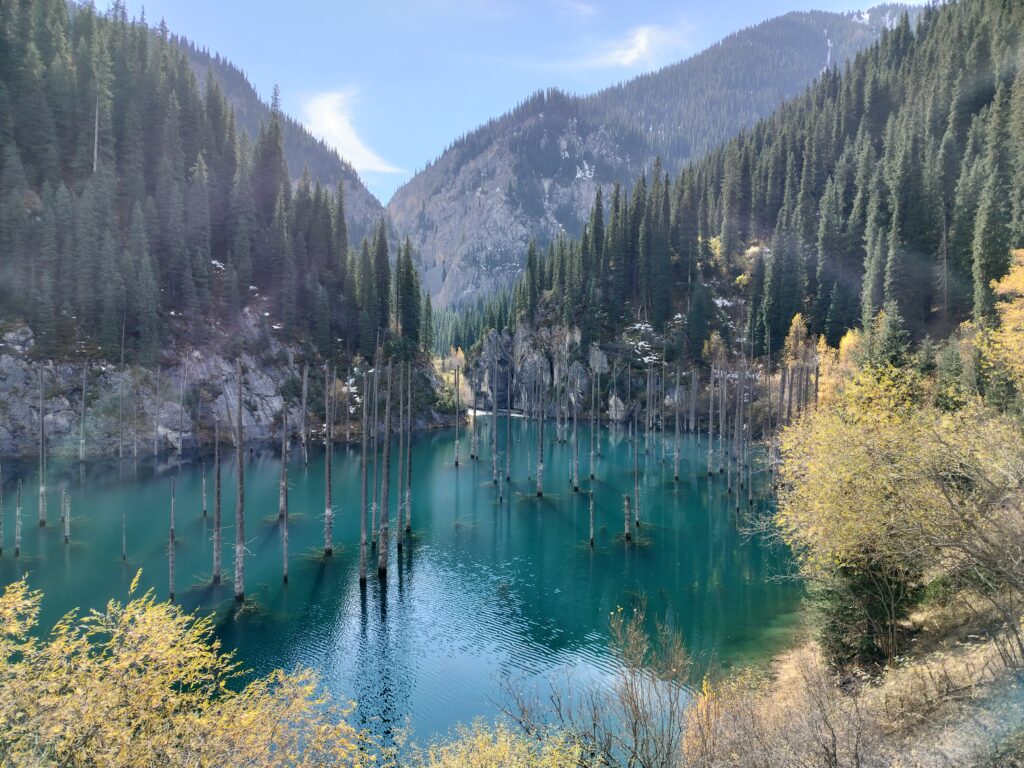
It’s quite a unique place, known mainly for its submerged forest, where you can see the tree trunks both underwater and above the surface. The lake was formed just a century ago, following an earthquake that triggered a landslide, which in turn created a natural dam. The lake lies at an altitude of around 2,000 meters and isn’t very large; in fact, its maximum width is about 400 meters. The tree trunks are well preserved, thanks to the low water temperatures.
The road to Kaindy Lake is particularly challenging. You’ll need to travel along a very rough track, which also features several fairly deep fords, so a 4×4 vehicle is essential, as is being an experienced driver. If you decide to visit the lake without joining an organised tour, you can hire local guides, who can be contacted via your guesthouse in Saty.
Once you arrive at the public car park, there are three options for reaching the lake:
- A half-hour trek, of low difficulty
- Shared taxi, costing 1,500 Tenge each way (around €2.50), following the trekking trail
- Horse ride along the scenic trail (not accessible on foot), costing 8,000 Tenge (around €13–14)
You can also combine the options mentioned. I chose to walk both ways. Once you arrive, the visit is quite relaxed; the agency gives you plenty of time to see the lake from every angle. For anyone wondering, there’s no mobile signal at the lake or along the way.
Kolsai lake
After visiting Lake Kaindy, we head straight to Lake Kolsai, which is also quite close to the village of Saty. In this case, the road leading to the car park is by no means difficult, so I have nothing in particular to point out to anyone wishing to visit it on their own. The mobile data connection works well, too.
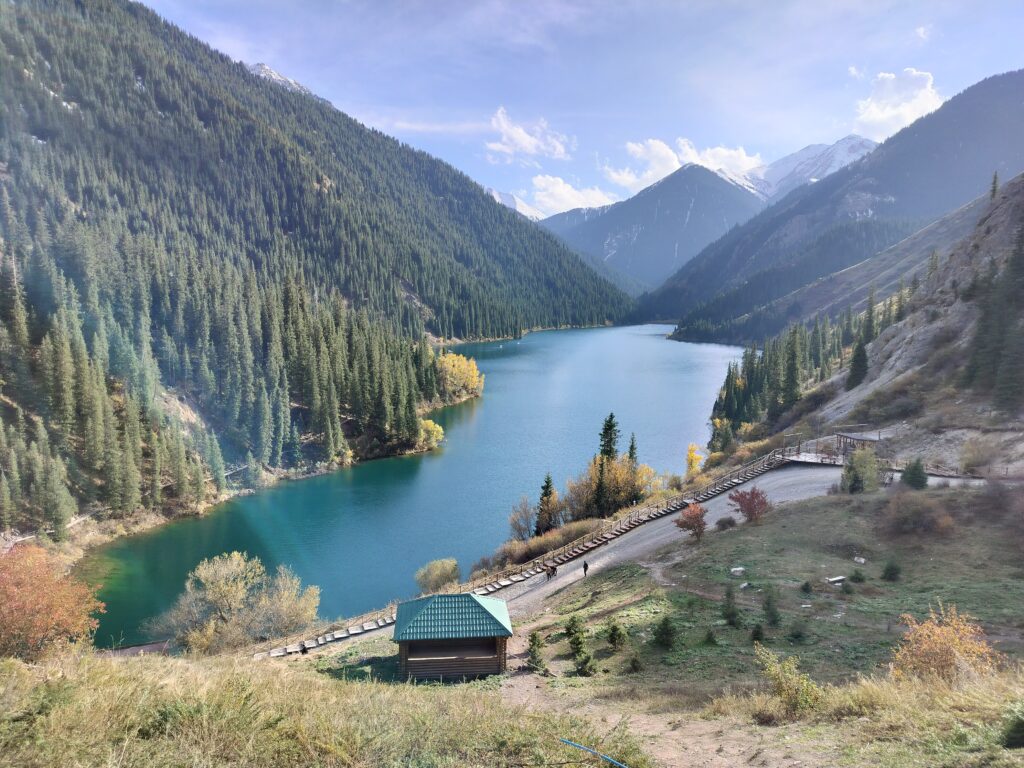
The lake we visit is actually just one of the three Kolsai Lakes – the lowest one, which is also the easiest to reach. The middle and highest lakes can be reached by a 3–4-hour trek or a very challenging hike, suitable for experienced walkers, respectively.
The tour of the lower lake organised by Banana Tour lasts about 3 hours, which is more than enough time to explore every nook and cranny and, for those who wish, to take part in the pedal boat tour (something that didn’t appeal to me, so I gave it a miss). The tour starts at the car park, which offers a stunning panoramic view, before heading down to the water’s edge, where you can walk to the starting point for the pedal boat tours.
The lake is very picturesque, but in my opinion not quite a must-see for those used to seeing mountain lakes of a certain kind. I’ve definitely seen much better ones in the Dolomites, to put it plainly!
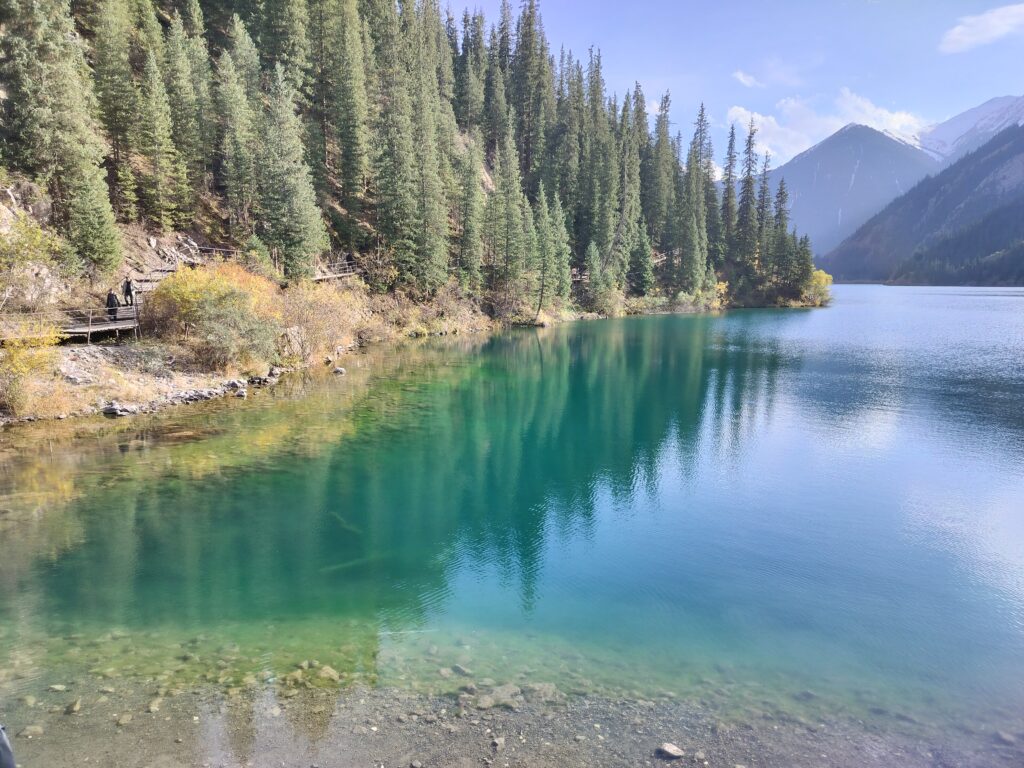
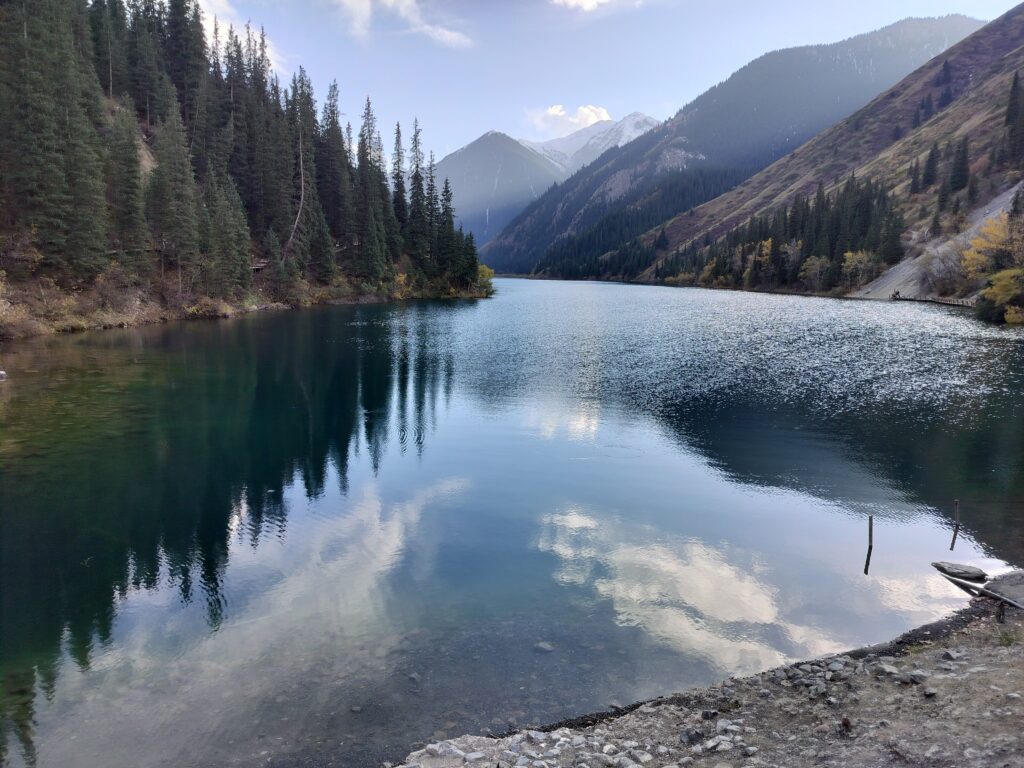
After our visit to Lake Kolsai, we head straight back to our guest house. There’s supposed to be a dance this evening, if anyone fancies it, but I’m careful to steer clear of it.
Day 3: Charyn Canyon
The second (and final) day of the tour is devoted to a visit to Charyn Canyon, the attraction I was most looking forward to. The canyon is over 7 million years old and is the most significant in Kazakhstan. It is quite vast, stretching some 150 km in length and reaching depths of up to 300 meters. Not all of the canyon is accessible to visitors, as one might expect. The tour of the site is divided into three stages, each quite different from the others.
Black Canyon
The first stop is Black Canyon, so named because of the black colour of the rocks that characterise this stretch. In ancient times, Black Canyon was also known as the Valley of Death, as many animals died after falling into the canyon because they could not see the path. Another legend has it that the colour of the rocks is due to the fact that, at night, the canyon disappears, replaced by the flames of hell, which burn the rocks. The stop at Black Canyon lasts a few minutes, just long enough to walk along the marked path and catch a glimpse of the Charyn River, which flows through Charyn Canyon.
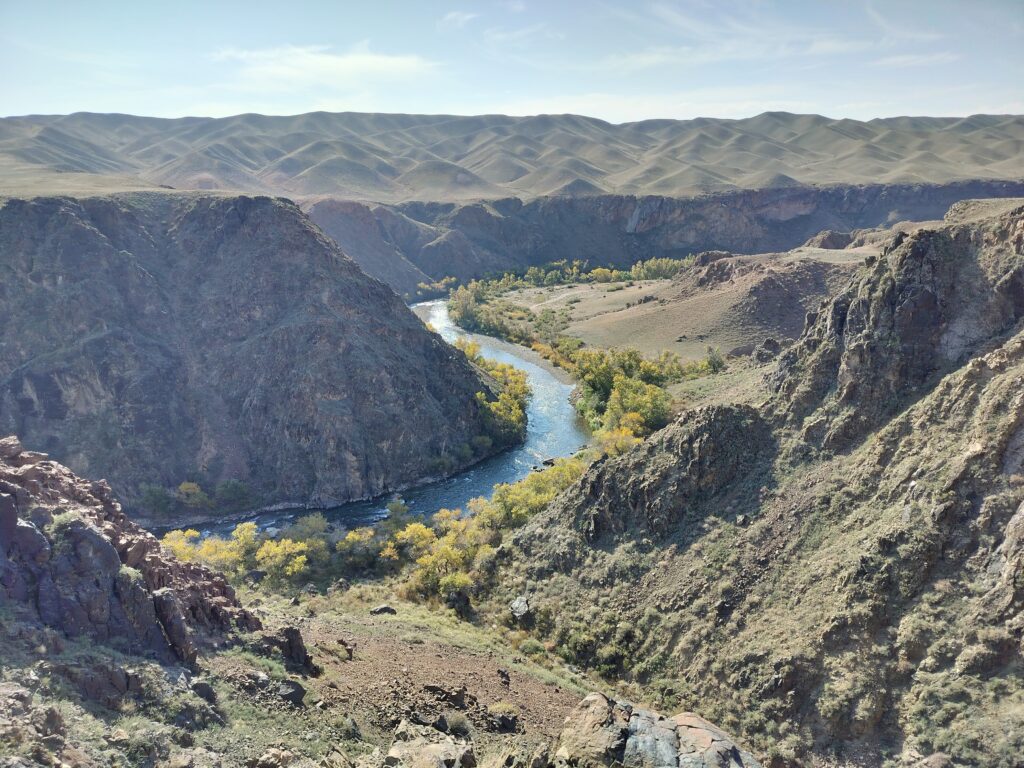
Moon Canyon
The second stop is at Moon Canyon, a name derived from the lunar landscape and the fact that, at night, the rocks reflect the moon. The rocks in this part of Charyn Canyon have a yellowish hue and are mainly composed of clay. The visit to Moon Canyon is also fairly quick, partly because the section open to visitors is quite small.
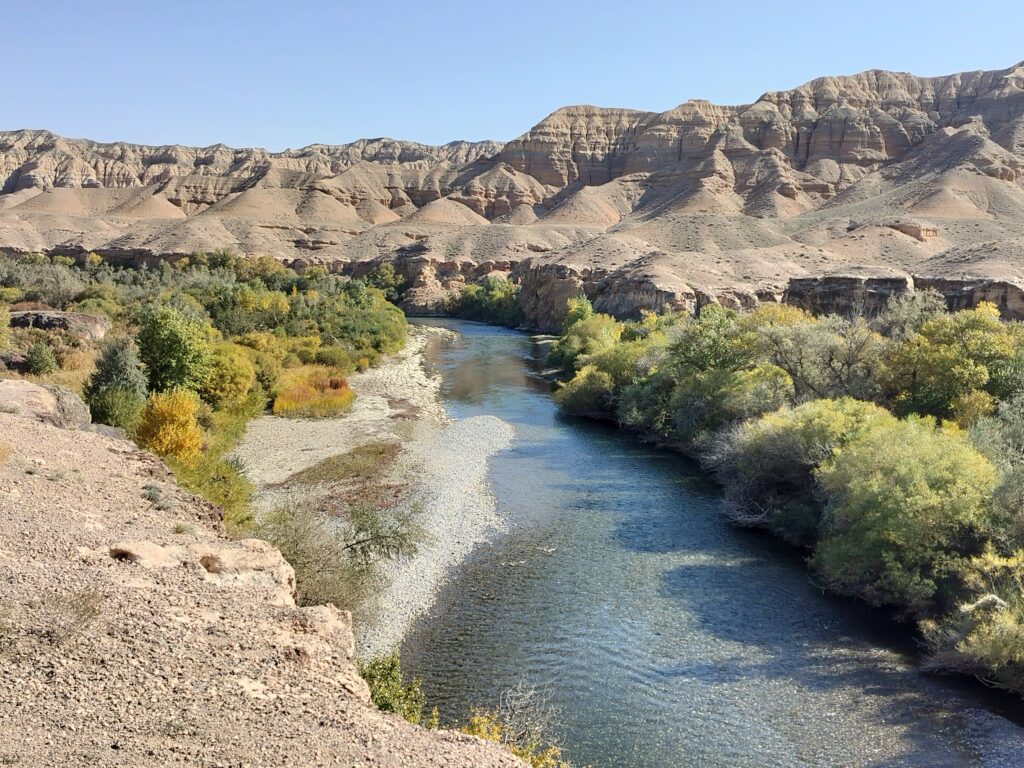
Valley of Castles
The final stage, which is also the longest and most significant, is the Valley of Castles, so named because of the shape of the rocks, which – as was the case in the Mangystau region – were sculpted by the Tethys Ocean. A visit to this part of Charyn Canyon takes a total of 3 hours, divided into two routes. The first, which takes about an hour and a half there and back (5 km in total), allows you to descend into the gorges and explore the lower section. The path is not difficult; it is accessed via a flight of 220 steps, but is otherwise generally flat. There is only one route: you walk down to the Charyn River and then turn back. It is impossible to get lost.
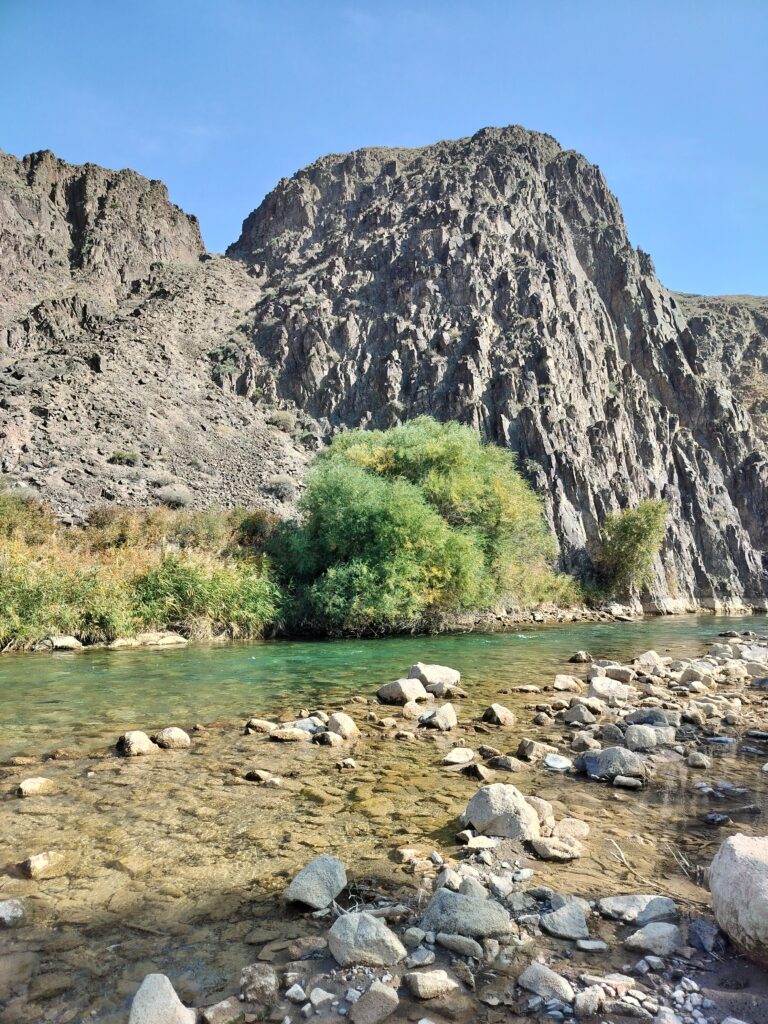
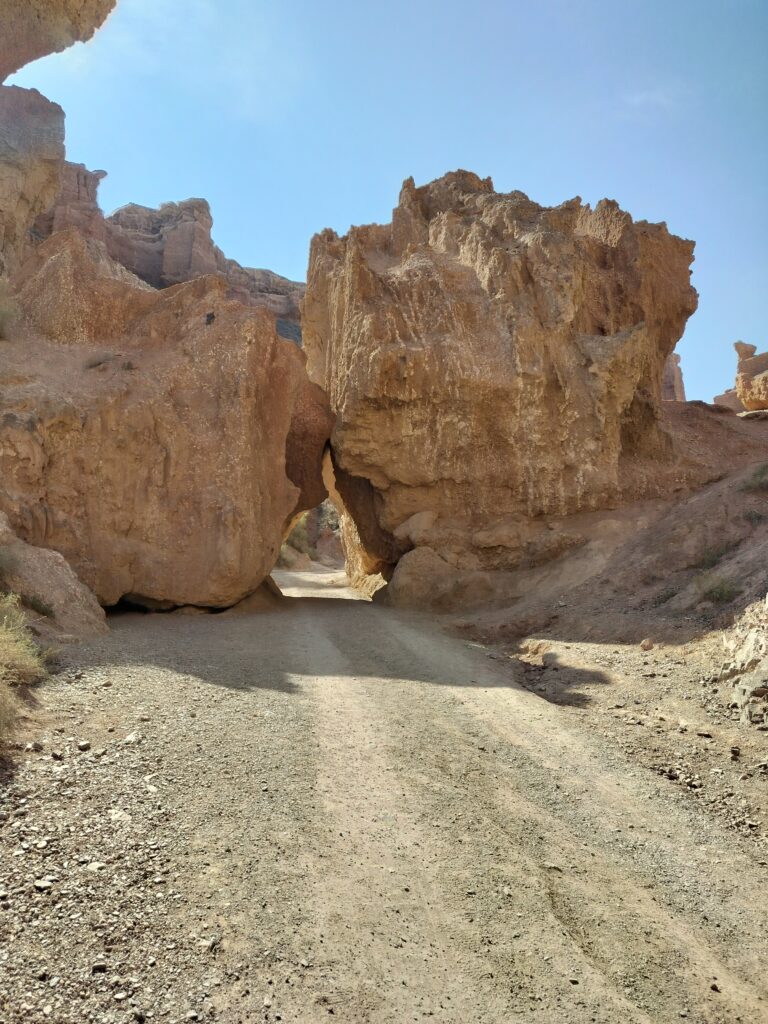
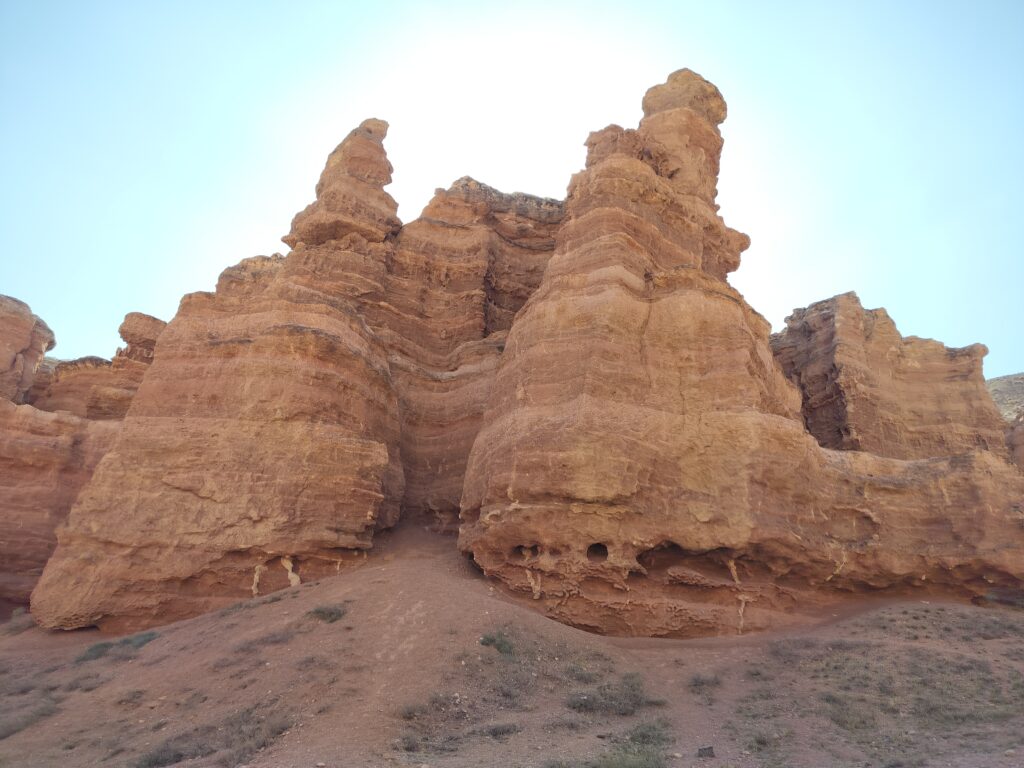
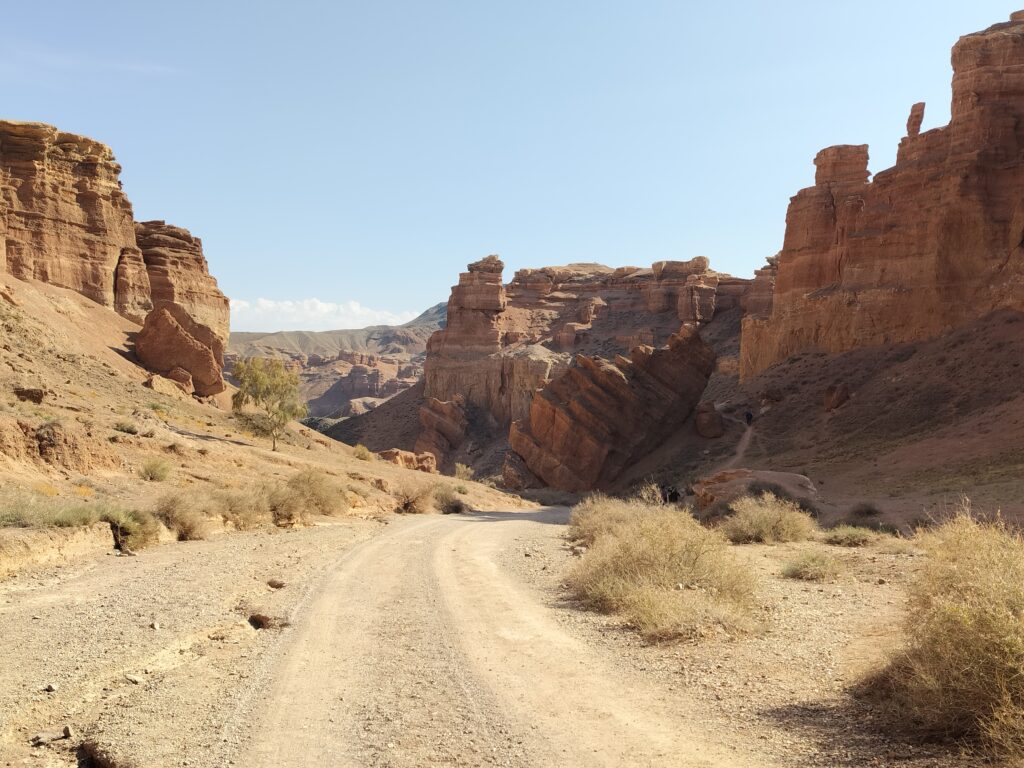
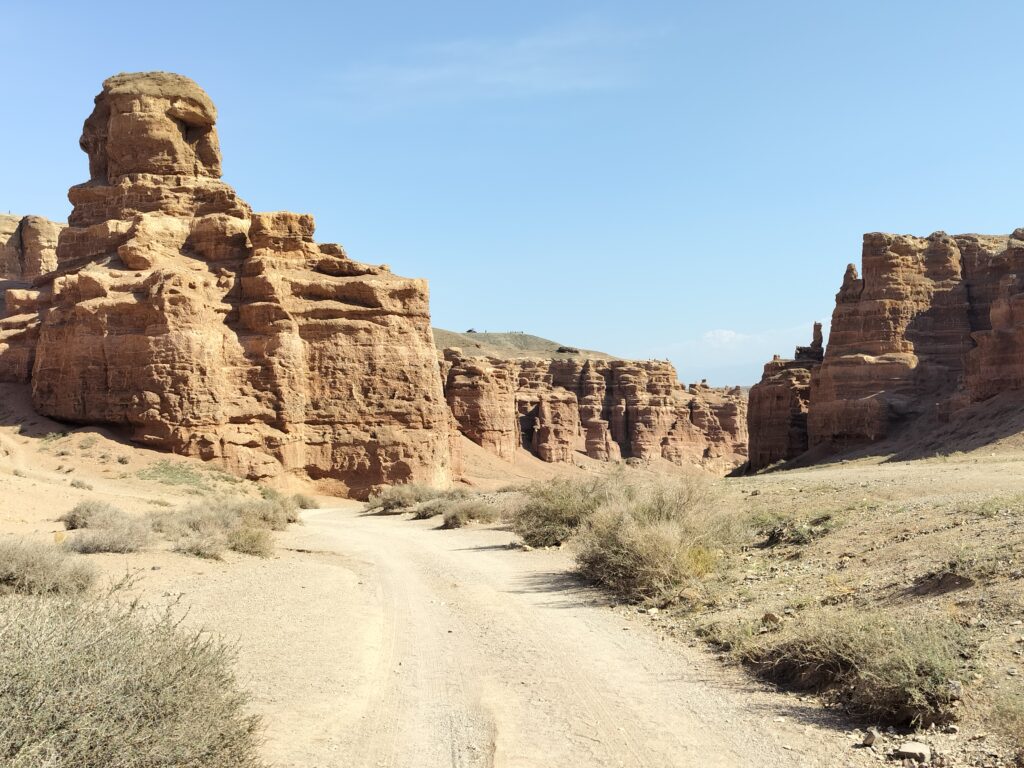
The second route, on the other hand, takes you through the upper part of the canyon and can be completed in around 50 minutes there and back (about 3 km in total). The path starts at the car park, runs alongside the canyon and ends at a spot that is easily recognisable by the word ‘Charyn’, written in large letters.
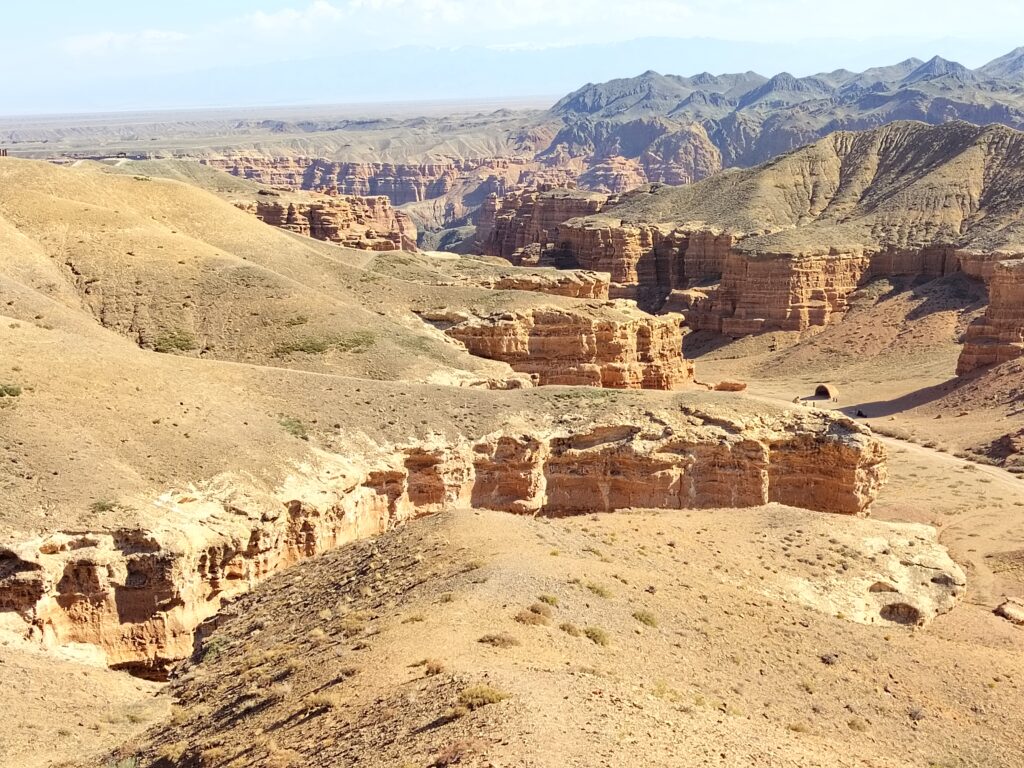
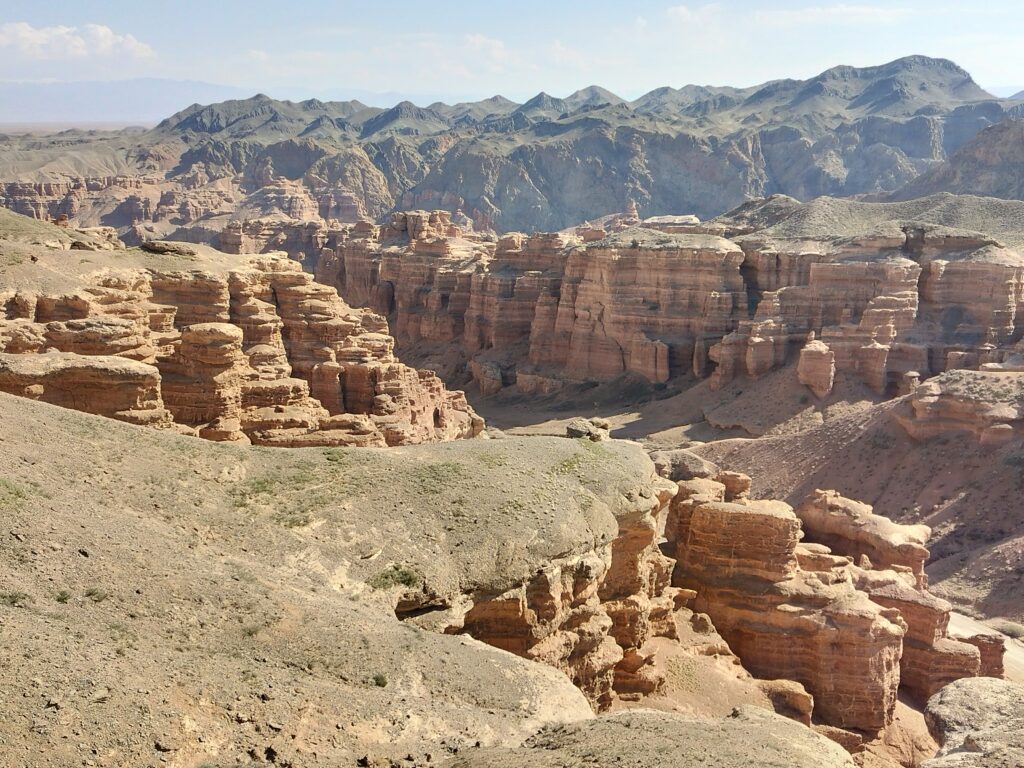
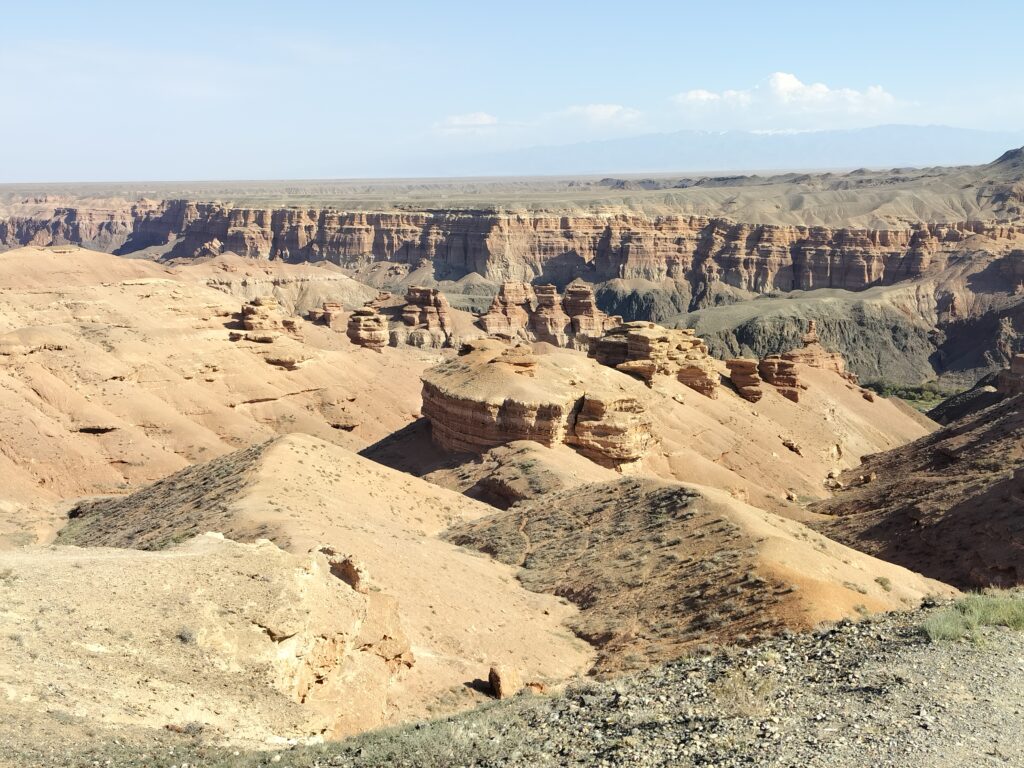
Both routes are very picturesque and well worth a visit, although the comparison with the Grand Canyon – which the Kazakhs are quick to make – is extremely far-fetched. To manage to complete both trails within the time frame set by the tour agency, it is important to keep up a fairly brisk pace, not least because, according to the itinerary, the three-hour timeframe must also include a packed lunch (you stop on the way before arriving to buy something at a partner establishment). Honestly, if I were the travel agency, I’d allow an extra half an hour to let participants take it a bit more at their own pace, but I can confirm that it’s all doable in three hours.
Once the visit to Charyn Canyon is over, we head straight for Almaty, arriving at our destination around 6 pm (about three and a half hours’ drive).
Day 4: Big Almaty Lake and First President Park
The main attraction of the day is Big Almaty Lake, a lake situated not far from Almaty, and therefore not difficult to reach (at least not until you reach the point where the trail begins, which must be covered on foot). There are essentially two options for getting to the start of the trail:
- Direct taxi, departing from Almaty.
- Bus from the center of Almaty + taxi from the bus terminus to the start of the trail.
I chose option 1 for the outward journey and option 2 for the return, for reasons of convenience and, I would say, necessity. This is because getting to the lake by taxi from Almaty is easy (you just need to use Yandex as usual), but the same cannot be said for the return journey. In fact, there’s no mobile signal near Big Almaty Lake, so for the return journey you have to take a shared taxi, which naturally costs more than those bookable via Yandex. As the bus passes through the First President’s Park, which I wanted to visit, on the way back I decided to take a taxi only as far as the bus stop (paying in euros, as I didn’t have enough Tenge left and you couldn’t pay by card), and then into the city center on the bus, for the modest sum of 200 Tenge (or about €0.30).
Until recently, it was possible to drive right up to the lake, but the road has recently been closed to private cars. The path leading to the lake isn’t particularly scenic, but it is quite challenging. You have to walk up alongside an aqueduct (walking next to it, although many people – despite the fact that it’s forbidden, as well as dangerous – walk directly on top of it), with a gradient that gradually increases. Allow 2–3 hours for the ascent (for just about 3 km of climbing!); it took me two and a quarter hours. The descent can be managed in about an hour and a half or two. During the climb, at a couple of points you can use a makeshift metal staircase for support, or hold on to a metal cable.
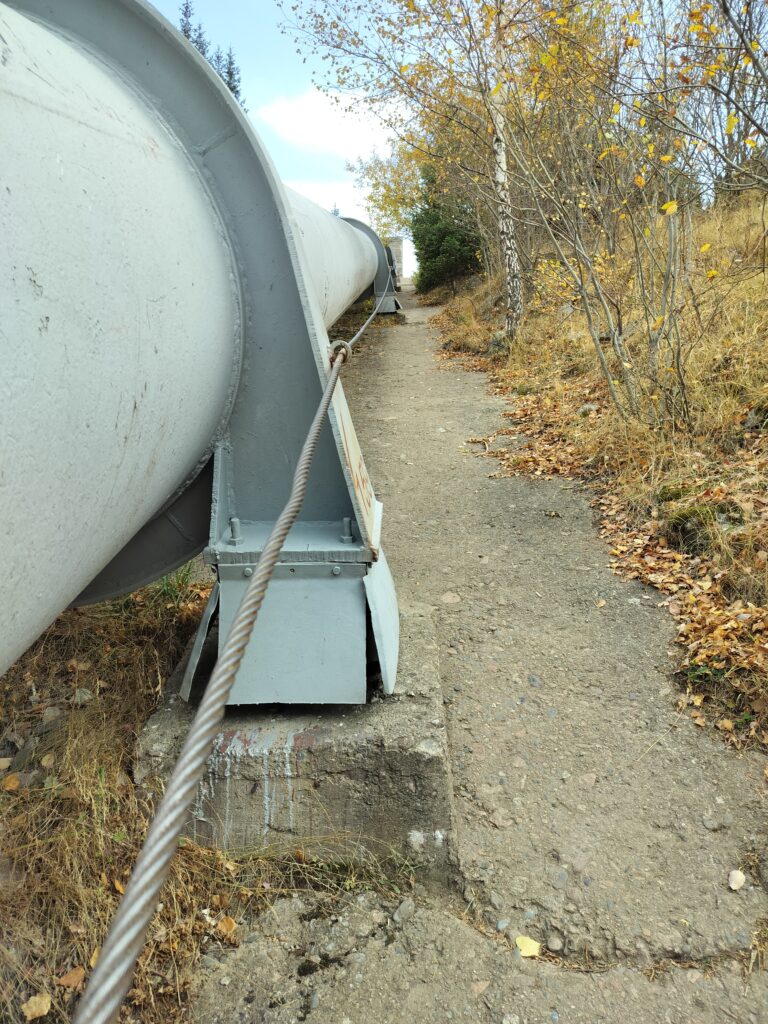
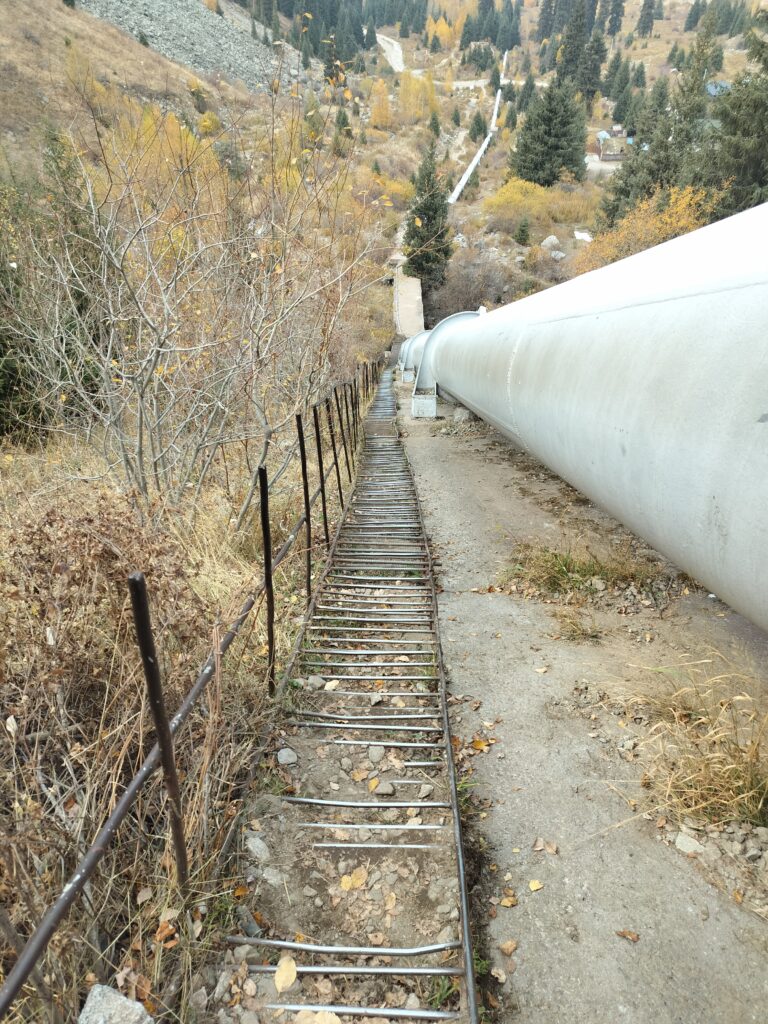
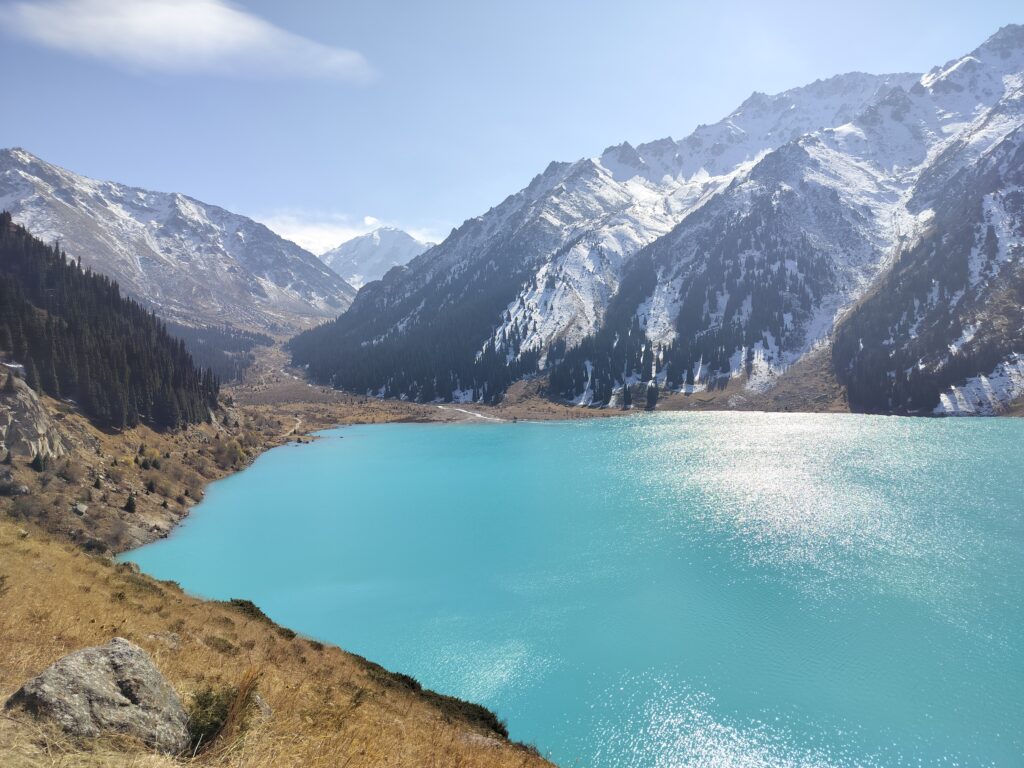
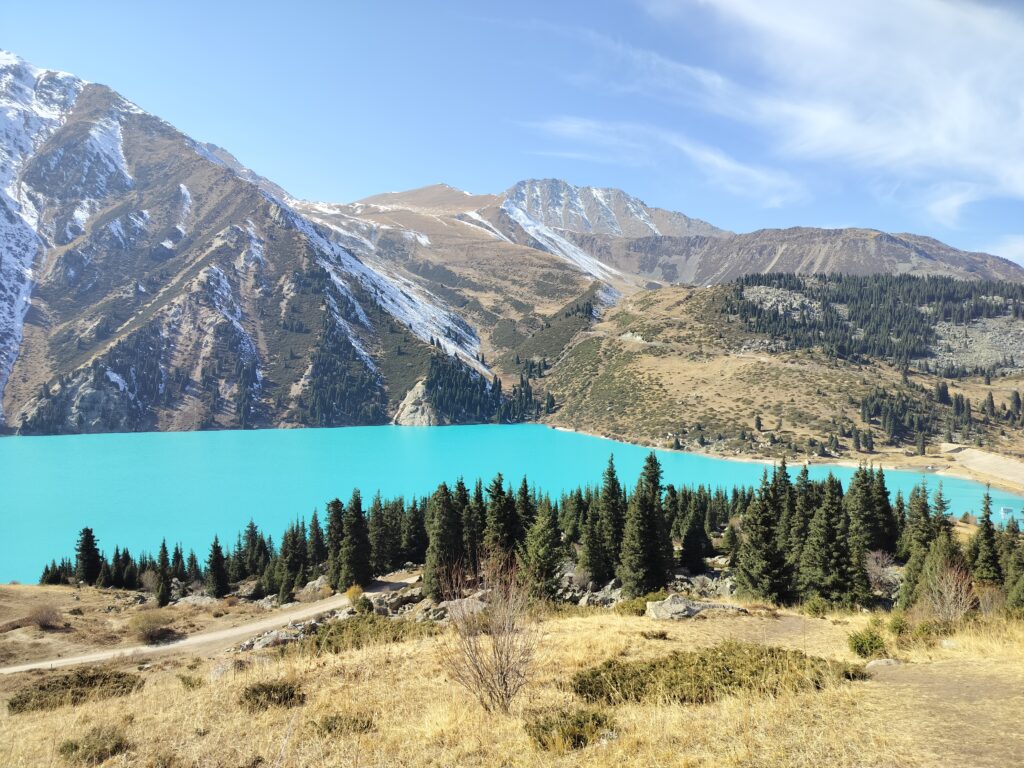
Despite the challenges I’ve just mentioned, I must say that the effort is more than rewarded by the view of the lake. Once at the top, at an altitude of around 2,500 meters, the view is truly spectacular. The lake is a deep blue (somewhat reminiscent of Lake Sorapis in the Dolomites) and the landscape, which I find covered in snow, is enchanting. The best vantage point for the lake, in my opinion, is the one near the top of the aqueduct, but with a ten-minute walk further on, you can reach a higher point which is just as worthwhile.
Of the three lakes I visited in the Almaty region, Big Almaty Lake is the one I enjoyed the most.
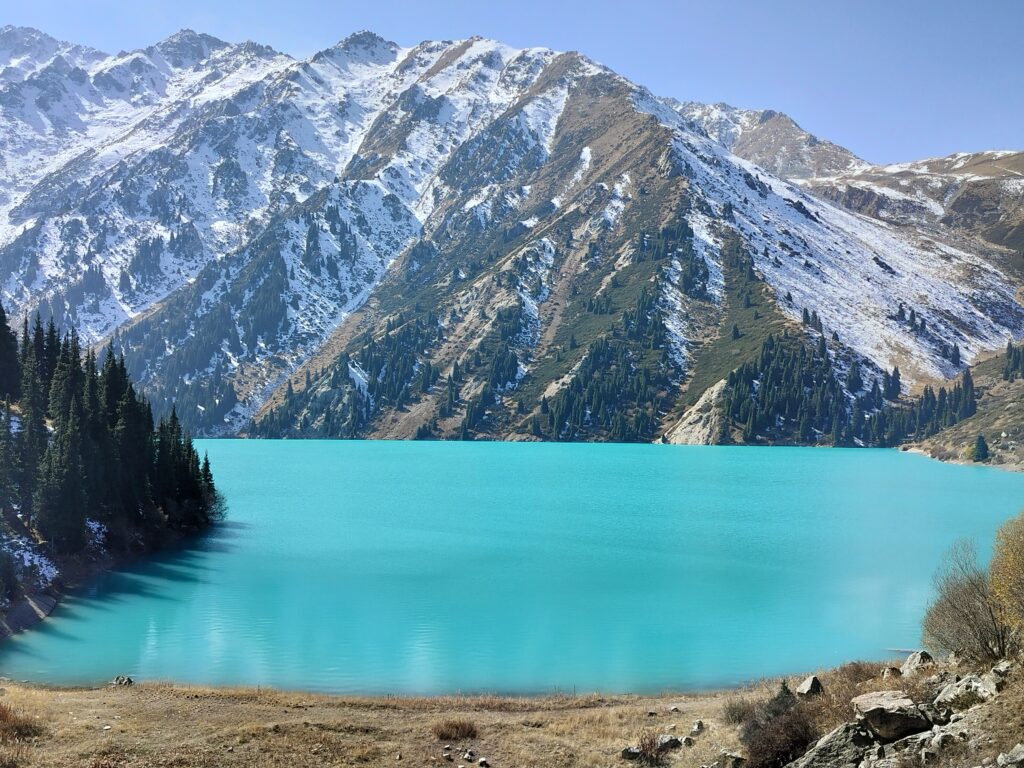
At around 4 pm I’m already at First President Park, and given how exhausted I am from my mad desire to visit Big Almaty Lake, I decide to relax a little on one of the many benches in the park until the sun begins to set. The park is very pretty and peaceful, ideal for a proper break.
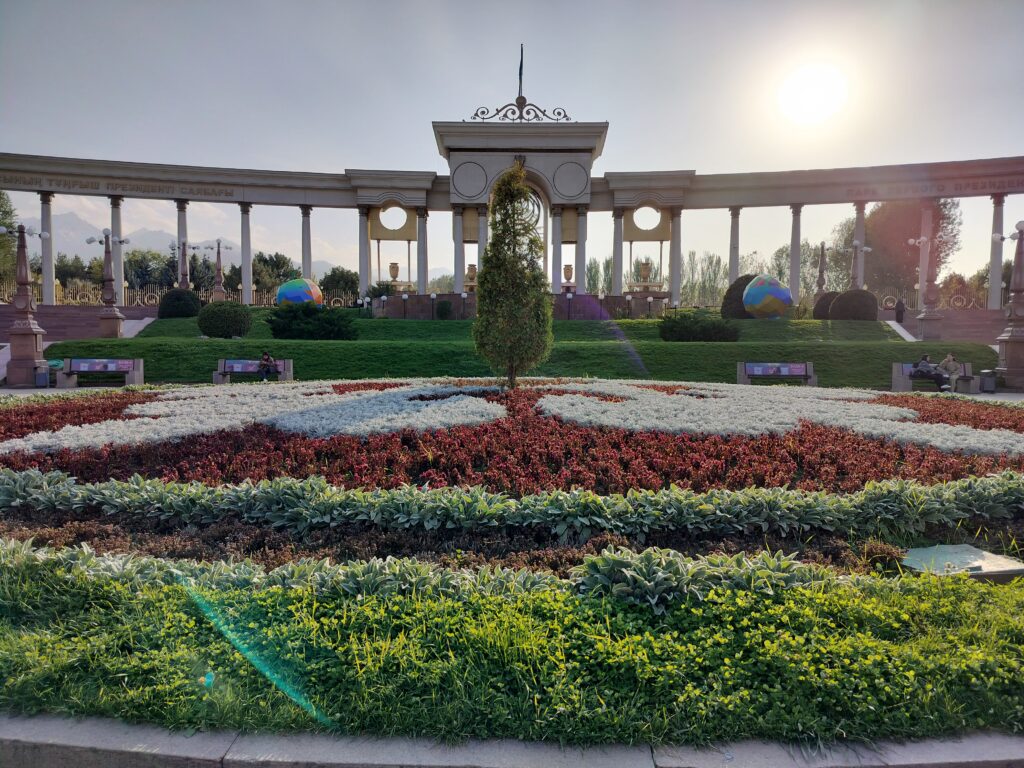
I finally arrived in the city center by taxi, intending to have an early dinner and return straight to the hotel to rest up for the following day – the last of my trip – which would see me taking part in a day trip to Altyn Emel National Park, organised by the local agency Mocean Travel. Of all the attractions in the Almaty region, the visit to Altyn Emel National Park was the one I was most looking forward to before setting off.
You can therefore imagine my disappointment when, at the end of the day, the agency informed me that the excursion would not be going ahead due to the low number of participants. Unfortunately, I was also forced to turn down the alternative proposed by the same agency – a tour covering the same destinations but spread over two days (the second day coincided with my return to Italy) – and I was unable to find any other agencies offering the same day trip. I therefore returned to my hotel, knowing that I would have to go back to Italy without having visited the part of the Almaty region that I was most keen to see.
Day 5: Almaty
Altyn Emel National Park can also be visited independently. The park is not far from the village of Basshi, which is about a 4–5-hour drive from Almaty. As this is my last day before my international flight – scheduled for 5.30 am the following morning – I don’t think it’s a good idea to try venturing out on my own, as any unforeseen circumstances could mean I’d miss my flight. Nor did it seem like a good idea to go by taxi, partly because I wouldn’t have been able to see everything anyway. It’s worth bearing in mind that the day trip organised by Mocean Travel starts at 4.30 am and finishes at 11.30 pm, so the schedule is very tight.
There are essentially three main attractions in Altyn Emel Park. The one I was most interested in would have been the Aktau Mountains – the ‘rainbow mountains’ – which I imagined to be similar to the Tiramisu Canyon in Mangystau. At this location, the Mocean Travel itinerary includes a trek lasting a couple of hours. The second attraction is the Katutau Mountains, volcanic formations with often bizarre shapes, sculpted by the wind and erosion. Finally, there are the Singing Dunes, sand dunes that emit a very distinctive sound when the grains of sand rub against one another, hence the name ‘singing dunes’.
Having shelved the idea of visiting Altyn Emel Park, I decided to look for an alternative. My first idea, which I started organising the previous evening, was to visit Lake Issyk, a greenish-coloured lake not too far from Almaty. However, once again, none of the agencies I consulted were organising a trip on that particular day.
Whilst at this point I’m trying to convince myself that, in the end, the Aktau Mountains can’t really compare to what I’d already seen in Mangystau, I decide to treat myself to a massage at the Arasan Spa, situated in the center of Almaty, which I reach by the usual taxi, booked via Yandex. I opted specifically for the one-hour massage, costing 25,000 Tenge (around €40). The experience was truly magnificent; when I left, I really felt like a different person. I could easily have stayed at the spa all day, making the most of the sauna areas and the swimming pool, but I wasn’t keen on the idea that you couldn’t do so in swimwear, but had to remain naked.
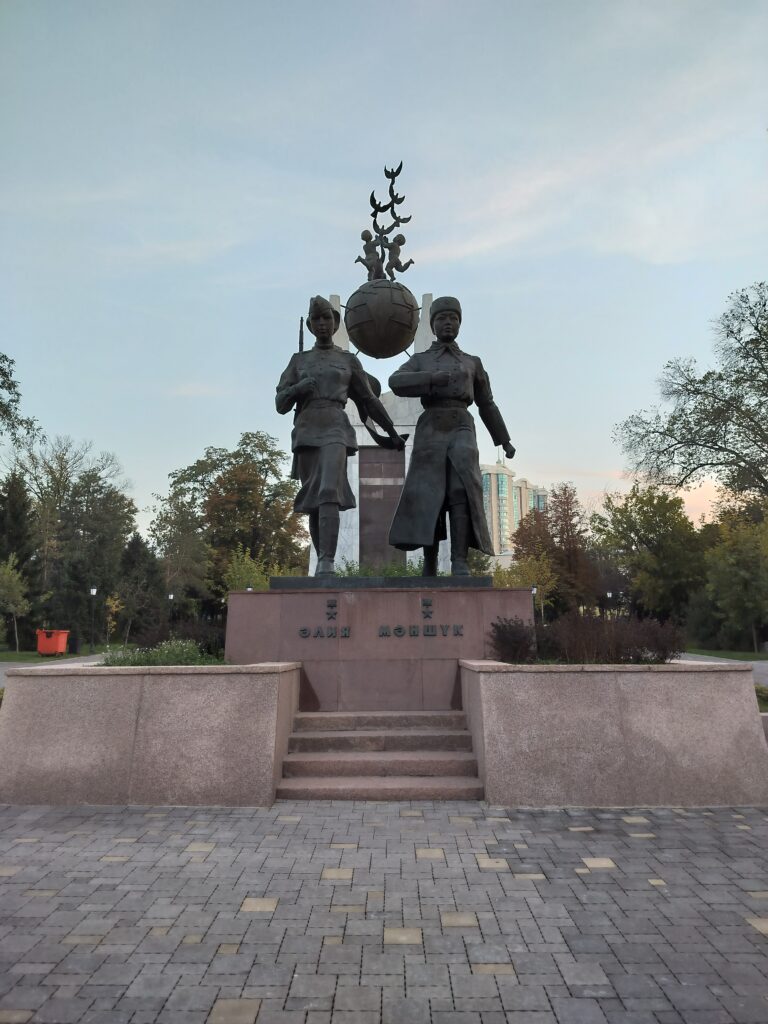
So I spent the final part of the day taking one last stroll around the city, visiting the area around the University. Among the monuments in that area, I came across the one dedicated to the Second World War heroines A. Moldagulova and M. Mametova.
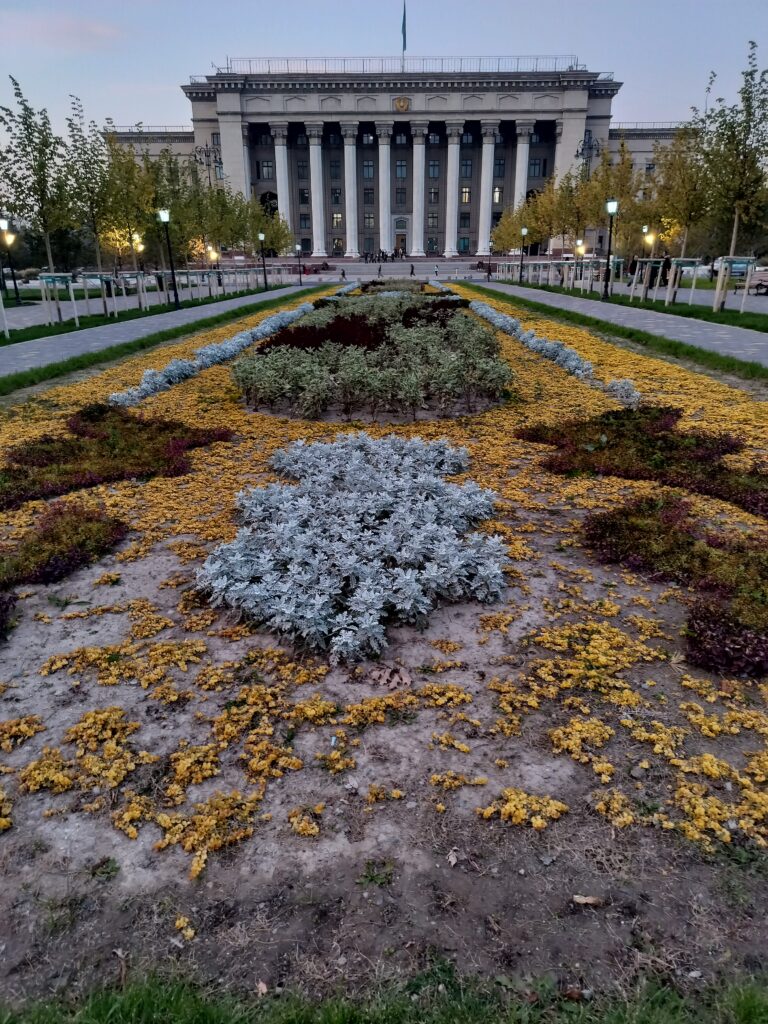
Finally, I bring the day, my tour of Almaty and my trip to Kazakhstan to a close with one last visit to Zenkov Cathedral by night.
Among the sights I glimpsed whilst travelling by taxi, I’d mention the area around the Television Tower (which looks rather picturesque when lit up in the evening, though not a must-see) and the Almaty Museum of Arts. I deliberately chose not to visit the Shymbulak ski resort or take the cable car up to Kok Tobe, the viewpoint from which you can see Almaty from above.
Conclusions
Although, in my opinion, it doesn’t even come close to Mangystau (a real highlight of the trip), I really enjoyed the Almaty region, even though I had to skip a visit to Altyn Emel Park, an attraction that seemed more promising to me.
The attraction that impressed me most was probably Charyn Canyon, although it doesn’t hold a candle to other similar canyons I’ve visited around the world (from the canyons in Utah and Arizona to Namibia’s Fish River Canyon). Big Almaty Lake was also very beautiful, thanks to its deep blue color and the surrounding landscape of snow-capped mountains, despite the incredible effort it took me to reach my destination. Finally, the Kaindy and Kolsai lakes, with their beautiful colors and stunning backdrops, didn’t strike me as particularly unique, however.
I also found the city of Almaty very pleasant; I preferred it to Astana and found it quite liveable. The Orthodox Cathedral is definitely not to be missed.
As for costs, everything seemed to be in line with what I’ve found elsewhere. Both taxi journeys (using the invaluable Yandex) and accommodation and food are extremely cheap, as are the prices of excursions. Regarding the latter, however, I recommend using the agencies mentioned in this article; online, you’ll also find tour operators offering packages that are unreasonably expensive.