

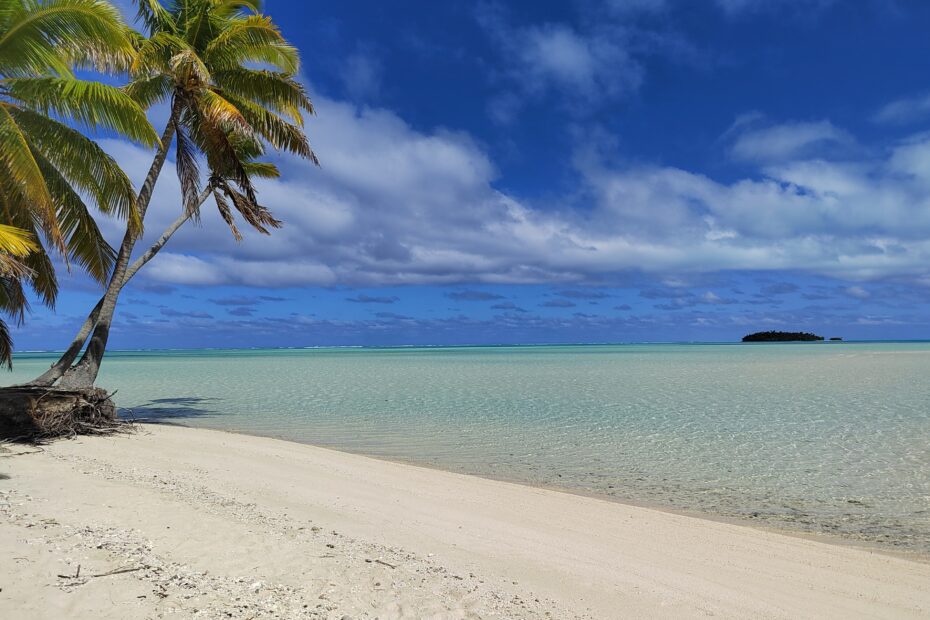
“Ambition takes me not only further than any man has gone before me, but as far as I think a man can go.”
J. Cook
Table of Contents
- Introduction
- Itinerary in pills
- Day 1: Rarotonga, Muri Lagoon
- Day 2: Rarotonga, Titikaveka district
- Day 3: Aitutaki, Amuri
- Day 4: Aitutaki, motu tour
- Day 5: Aitutaki, Ootu Beach
- Day 6: Aitutaki, Amuri
- Day 7: Rarotonga, Aroa Beach
- Day 8: Rarotonga, Avarua and flight back
- Conclusions
Introduction
You don’t have to die to go to heaven. In fact, you can go there and feel more alive than ever. That’s what I thought, and still think today, after spending just over a week in the Cook Islands. A place where peace reigns and nature gives its best, making even the most skeptical believe that it is guided by a supernatural entity.
The Cook Islands are a group of 15 islets belonging to New Zealand Polynesia located in the middle of the Pacific Ocean, which together have a total area equivalent to that of a medium-sized Italian city. Visiting the Cook Islands, therefore, does not require many days. The only problem is that the time you spend there is directly proportional to your desire to set fire to your passport so that you are forced to stay.
Due to their remote location, reaching the Cook Islands is not easy, especially if you are coming from Europe. They are not only a long way from the major cities connected to the main island by international flights, such as Sydney or Auckland, but also from other islands that are better equipped for tourism, such as those of French Polynesia. For this reason, together with the small overall size of the archipelago, those arriving from Europe generally choose to combine a trip to the Cook Islands with some other destination. In my case, I chose Eastern Australia.
My trip between Eastern Australia and the Cook Islands took place in August 2023. The month of August, and in general the months of our summer, are favorable both for visiting certain attractions in Australia, such as the Red Center and the Great Barrier Reef, and for visiting the Cook Islands, although in those parts you always have to be prepared to tolerate some short-lived rain. We were quite lucky.
Itinerary in pills
Not all of the islands that make up the Cook Islands are inhabited. In fact, most of the population lives on the largest island, Rarotonga, which is also the only island in the archipelago with an international airport (RAR). Rarotonga is therefore a mandatory stop for anyone arriving from any country.
In addition to being difficult to reach, the islands are not very well connected to each other. For this reason, travelers usually focus on the two most famous islands, namely Rarotonga and Aitutaki, the latter considered by many to be the most beautiful lagoon in the world.
Aitutaki also has a very small airport (AIT), but it is only connected by domestic flights to and from Rarotonga. Some people add Atiu to these two islands, but we did not, preferring to focus on the first two mentioned. I have never read or heard of anyone visiting other islands in the archipelago besides these three.
We arrived in Rarotonga from Sydney (SYD), the city where our Eastern Australia itinerary ended, and we left a week later, having traveled around the world (a statement not so far from reality). Below is a recap of the various stops.
| Day | Location | Notes |
|---|---|---|
| 1 | Sydney – Rarotonga | evening flight SYD-RAR arrival in RAR in the morning |
| 1 | Rarotonga, Muri lagoon | Night in Rarotonga |
| 2 | Rarotonga, Titikaveka | Night in Rarotonga |
| 3 | Aitutaki, Amuri | morning flight RAR-AIT. Night in Aitutaki |
| 4 | Aitutaki, motu tour | Night in Aitutaki |
| 5 | Aitutaki, Ootu beach | Night in Aitutaki |
| 6 | Aitutaki, Amuri | Night in Aitutaki |
| 7 | Rarotonga, Aroa beach | morning flight AIT-RAR. Night in Rarotonga |
| 8 | Avarua + flight | evening flight, connections in ACK, LAX and LHR |
| 10 | Flight + London | arrival at LHR in the morning. Night in London |
| 11 | home | morning flight STN-VCE |
Note: The fact that day 1 appears twice in the table and day 9 is skipped is not an error! In fact, Australia is one of the first countries where the new day begins, while the Cook Islands are one of the last countries where it ends, so when traveling from Sydney to Rarotonga by plane, which takes about 5 hours, you go from a time zone that is +8 hours (referring to Italy) to one that is -12 hours behind. This means that you basically experience the same day twice. The opposite happens in the opposite direction, so you basically skip a day. A real journey through time, and without a DeLorean.
Day 1: Rarotonga, Muri Lagoon
Our flight from Sydney departs around 9 p.m., after a busy day in which we had the opportunity to visit the city in record time. We land in Rarotonga after about a 5-hour flight. It is 7 a.m. on the same day, which will be the longest day of our lives!
Sherri, the owner of the B&B where we had decided to stay, picks us up at the airport. We immediately understand the atmosphere of the place when we make a move to put on our seat belts, which we are forbidden to do because “here we drive slowly and they are not necessary.” Cars travel at a maximum speed of 30 km/h, and total tranquility reigns on the island. There are very few tourists and very little to do, so much so that the only other “foreigners” we meet complain about the lack of anywhere to spend money.
Among the features of the island that fascinate us are the houses, each with its own private cemetery visible from the road, and the massive presence of roosters and hens, which roam freely around the island and on the beaches.
The location we visit on the first day of our adventure in the Cook Islands is Muri Lagoon, probably the most famous part of Rarotonga, which we easily reach on foot from our B&B.
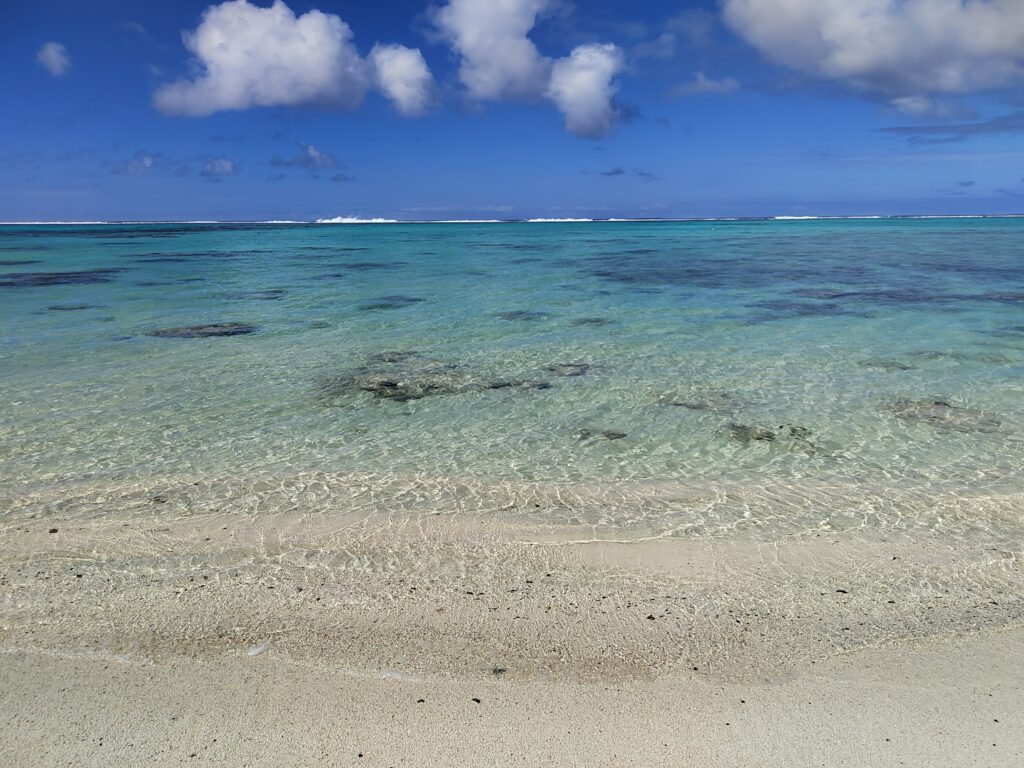
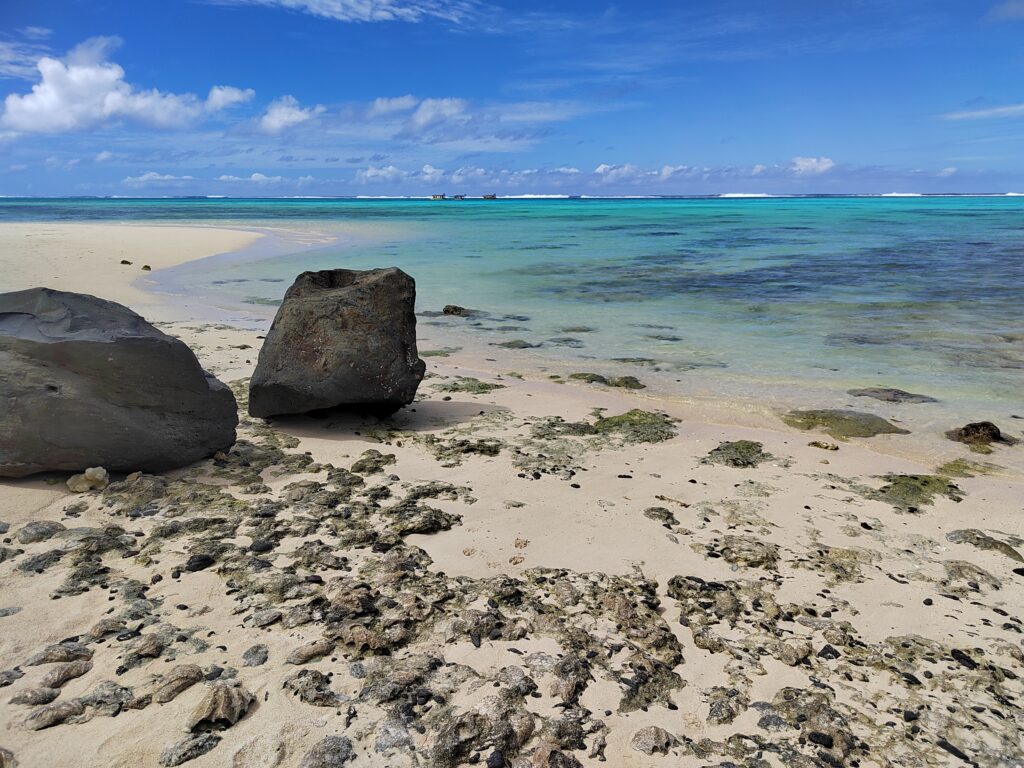
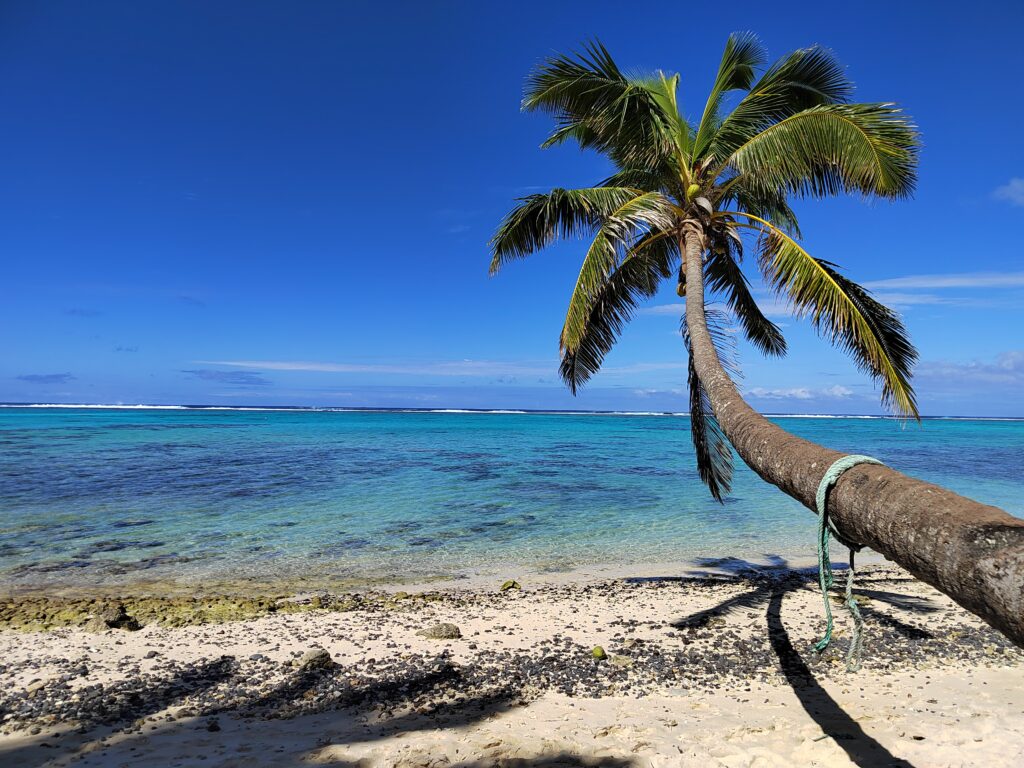
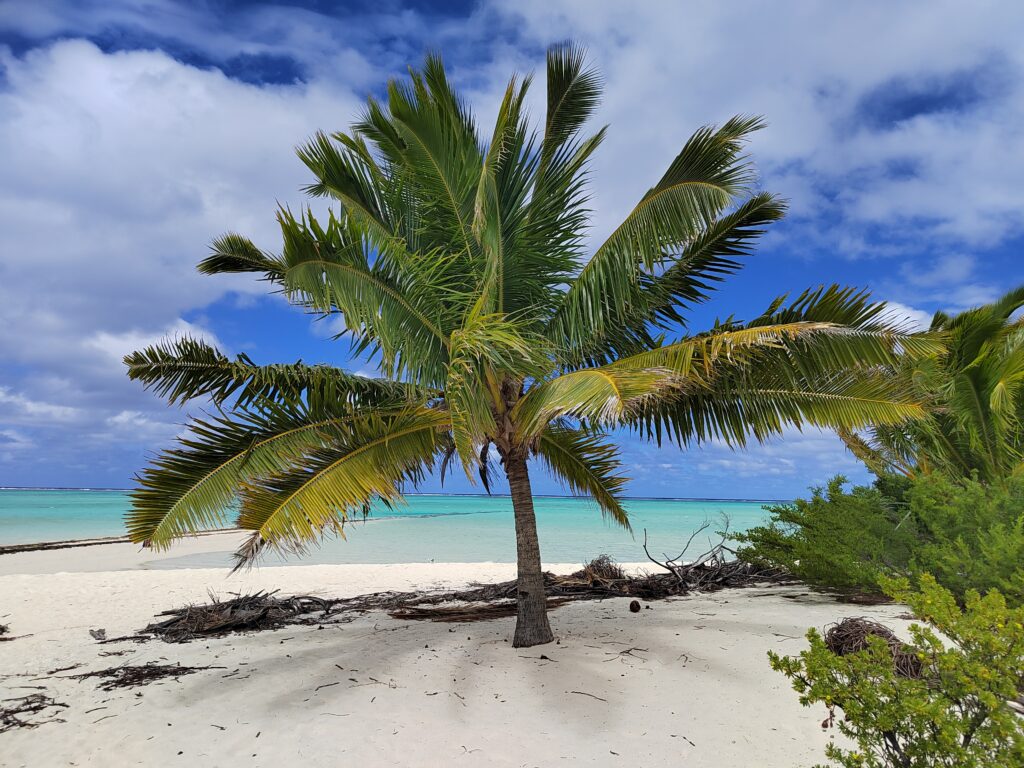
We are officially in paradise as soon as we set foot on the sand, which is as fine and white as in our dreams. The colors of the sea are nothing short of spectacular. We stay on the beach until sunset, sheltering in the shade of the palm trees.
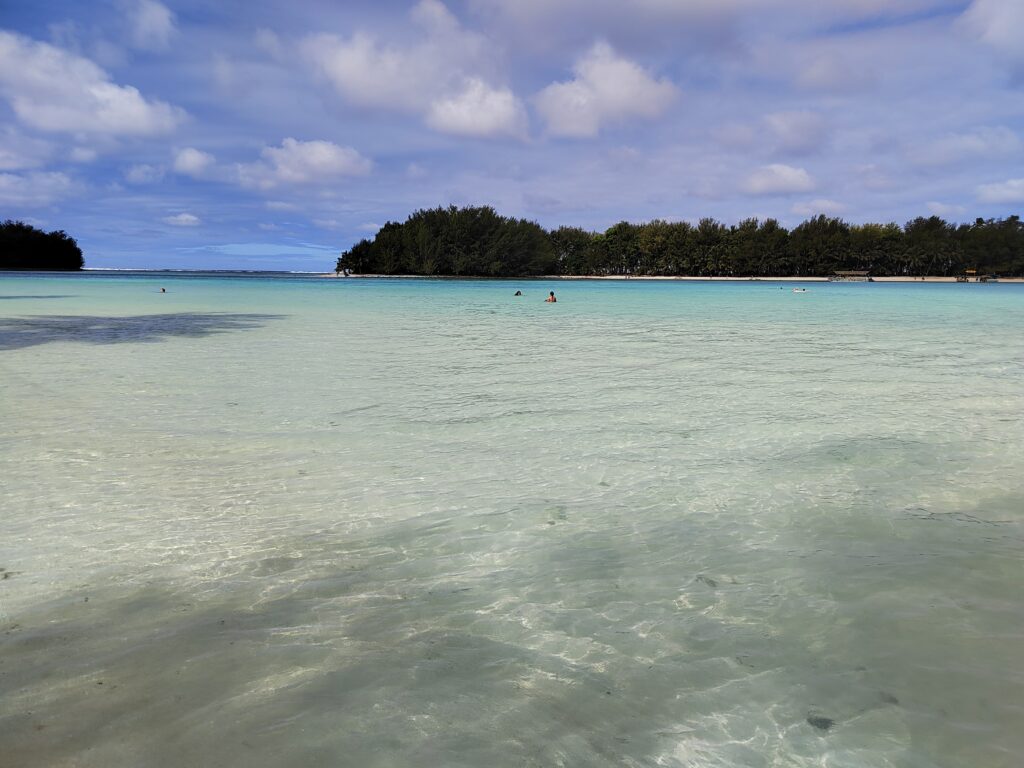
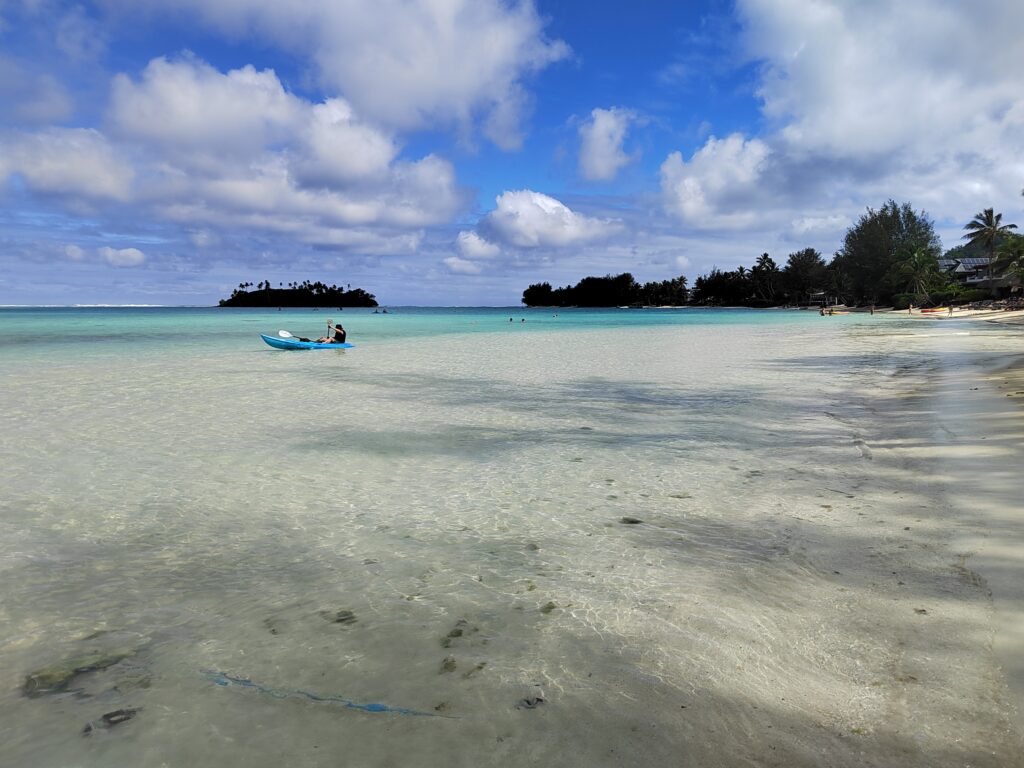
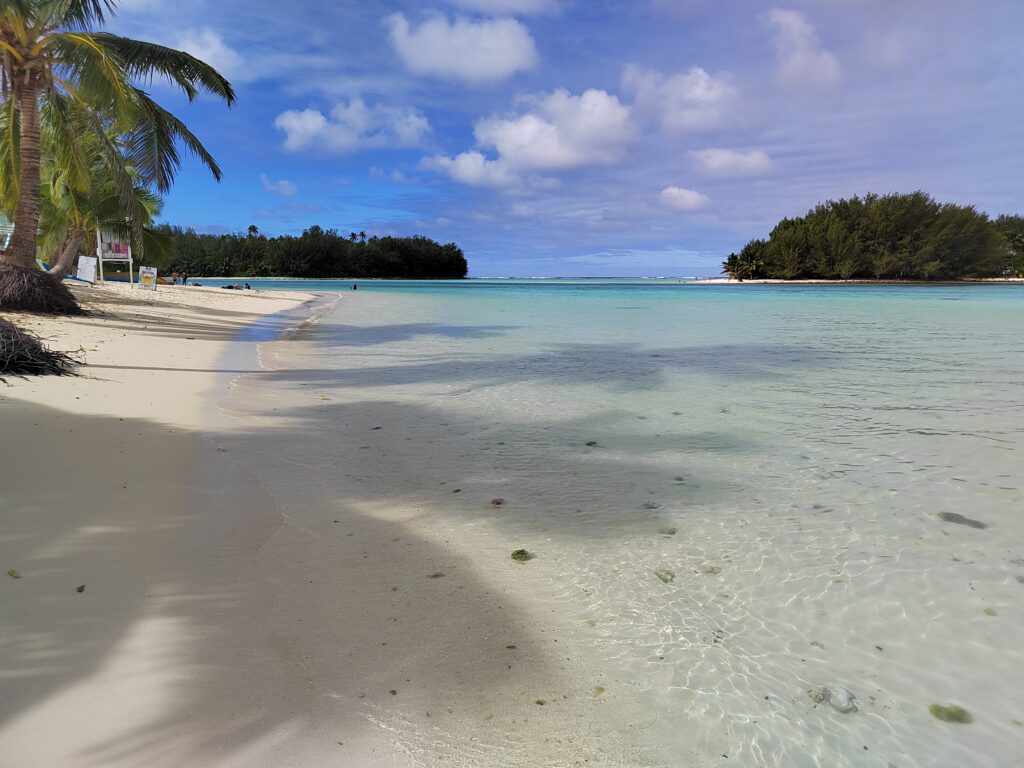
Finally, we return to our B&B to rest after a very long day, dining on a fish burger picked up at the only place in the area that served food, a small kiosk located near the beach, which closed in the late afternoon.
Day 2: Rarotonga, Titikaveka district
We dedicate our second day to the district of Titikaveka, adjacent to Muri Lagoon, which we reach by bus. Taking the bus in Rarotonga is a pleasant experience. There are two lines that circle the island, one clockwise and the other counterclockwise, which are imaginatively named clockwise and counterclockwise (you can’t really go wrong). This website provides approximate bus timetables from the main hotels on the island, but in reality there are no actual bus stops. To get on the bus, you simply stand in the middle of the road and flag it down when you see it passing. The same applies when getting off: just ask the driver to stop and he will oblige. Buses run approximately every hour until late afternoon and also pass through the airport. Of course, if you happen to wait much longer than expected, don’t worry about it.
Following Sherri’s suggestion, we get off near a beach known as Fruits of Rarotonga, considered an excellent snorkeling spot. The beach is another masterpiece of nature and is practically isolated, apart from a small bar where we stop for a drink. The water is quite cold, but it would be a crime not to go for a swim.
We return to the B&B in time for the last bus and to get food from our hamburger dealer.
Day 3: Aitutaki, Amuri
Our flight to Aitutaki is scheduled for the morning, and we arrive at the airport accompanied once again by Sherri, because the buses are not yet running at the designated time. During the flight, we begin to understand why the Aitutaki lagoon is described in such glowing terms.
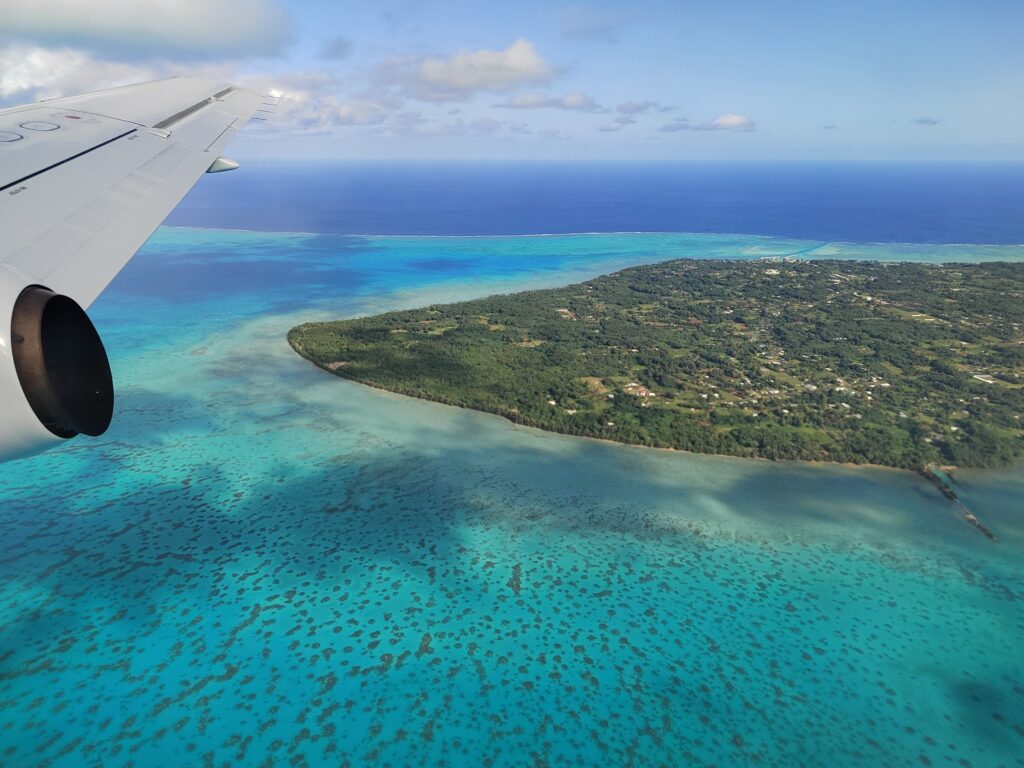
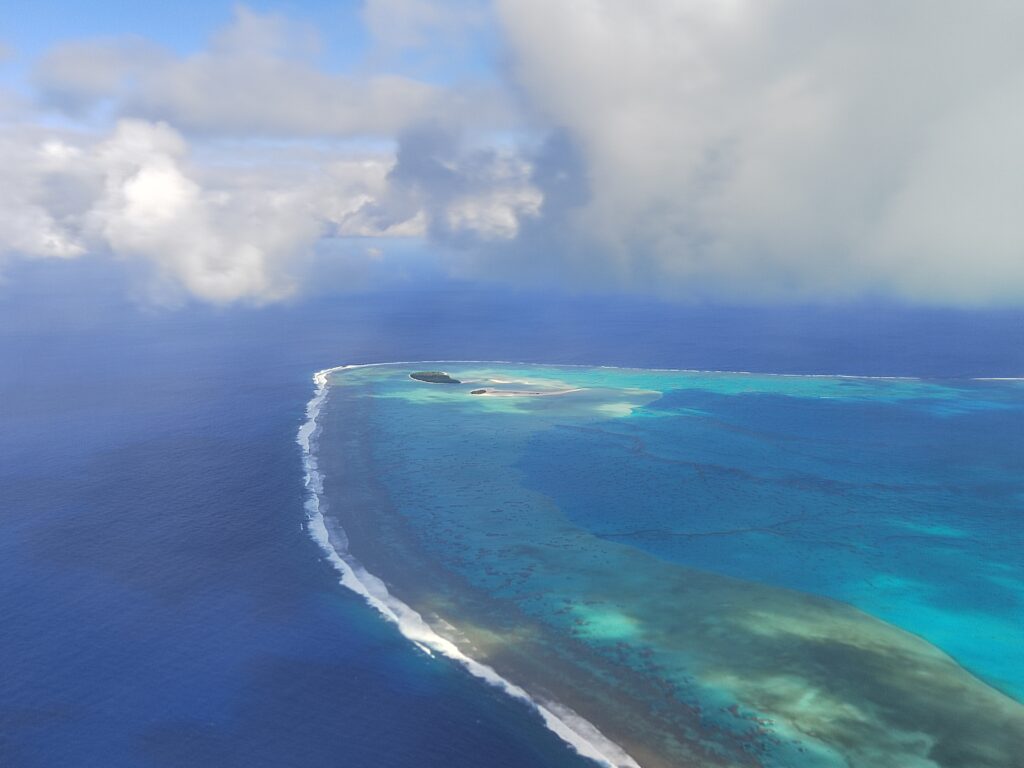
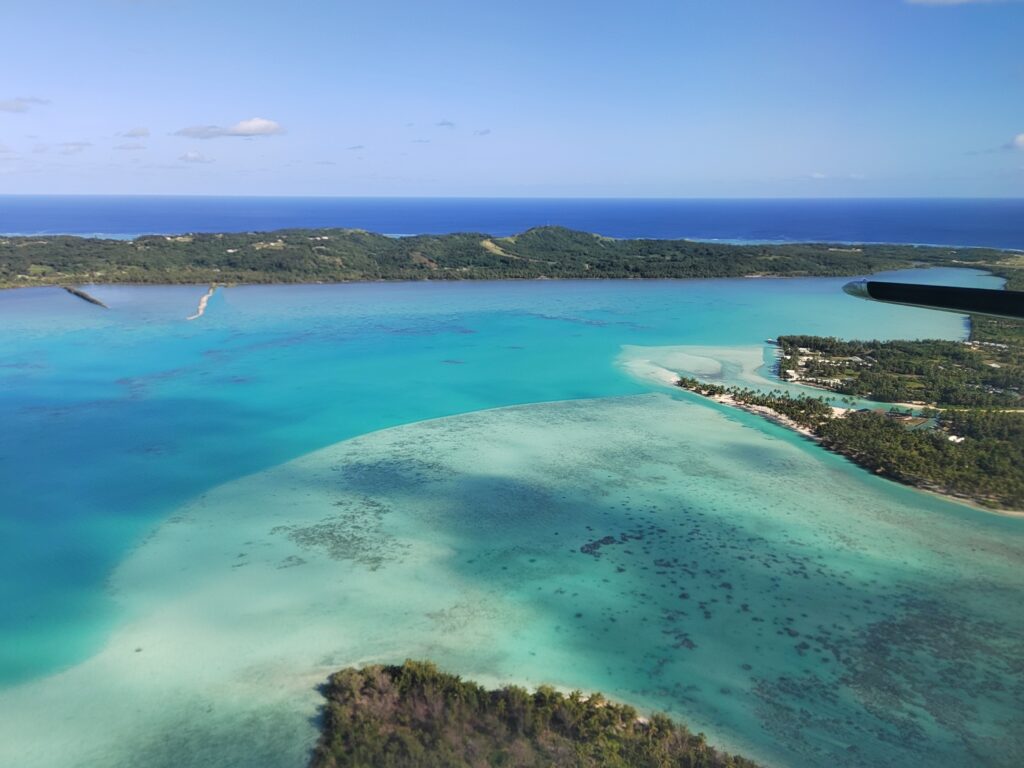
Once we land, we are picked up by a girl from the staff of the lodge where we have chosen to stay, Paradise Cove, who welcomes us with a flower necklace in perfect Polynesian style, while a middle-aged man sings a local song accompanied by a mandolin.
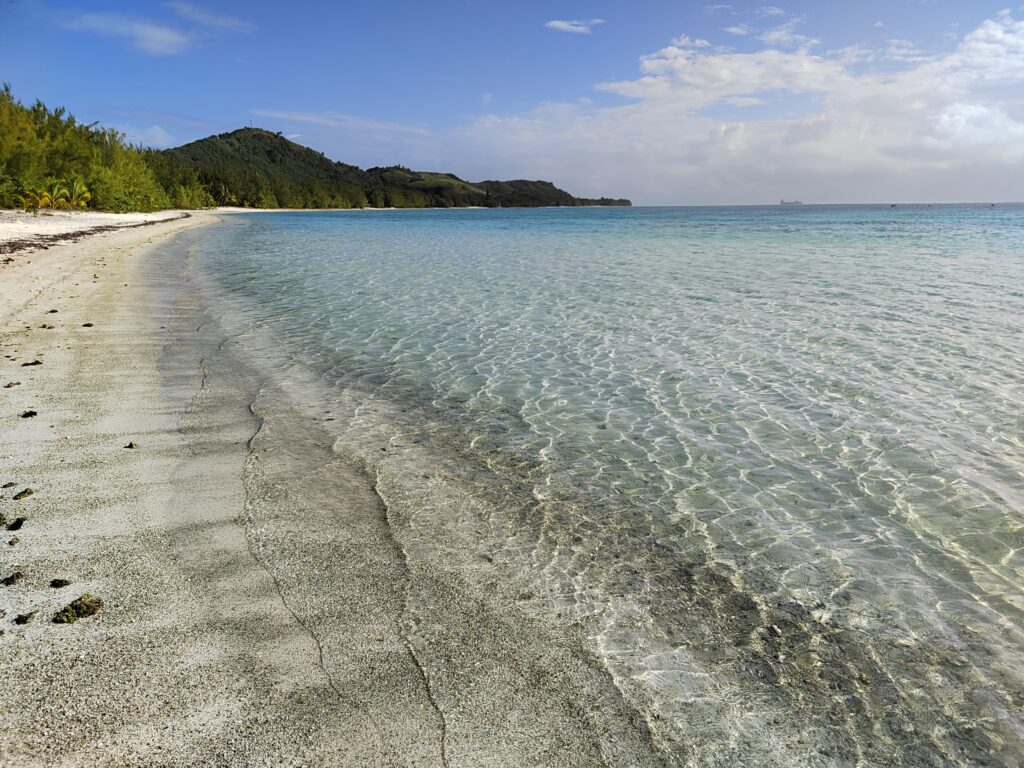
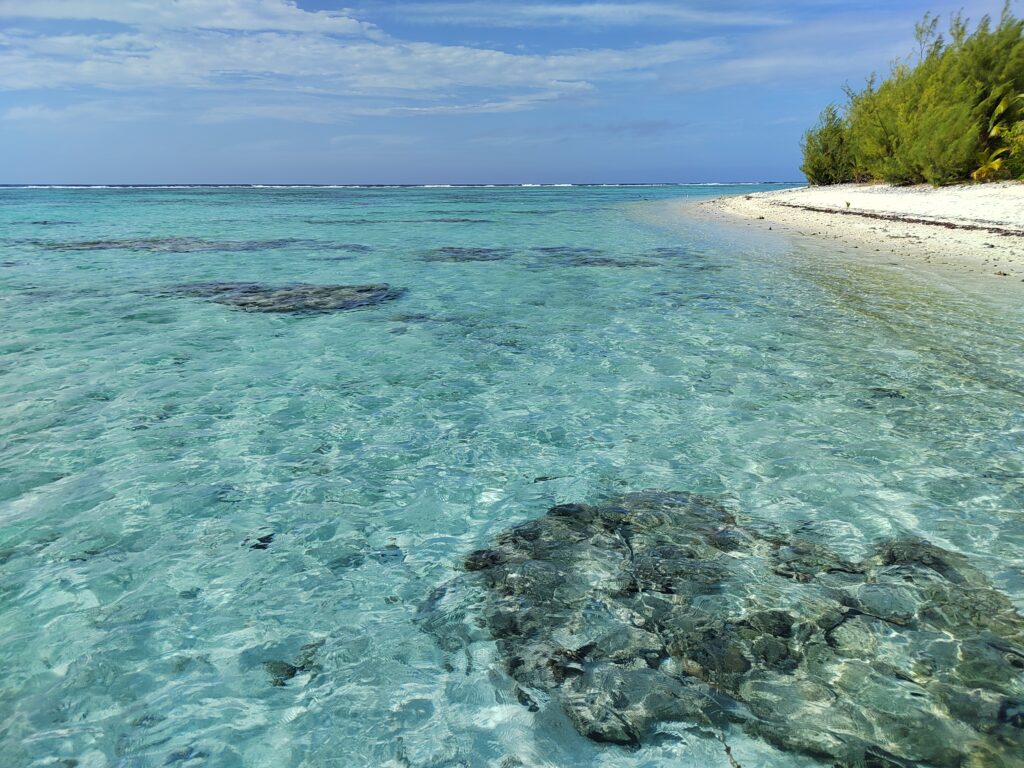
Aitutaki is a very small lagoon, so it only takes us a few minutes to reach the lodge. The day is a bit gloomy, so we decide to stay close to the lodge, located in the Amuri area, west of the island. We still manage to visit the beach and even take a dip in the sun.
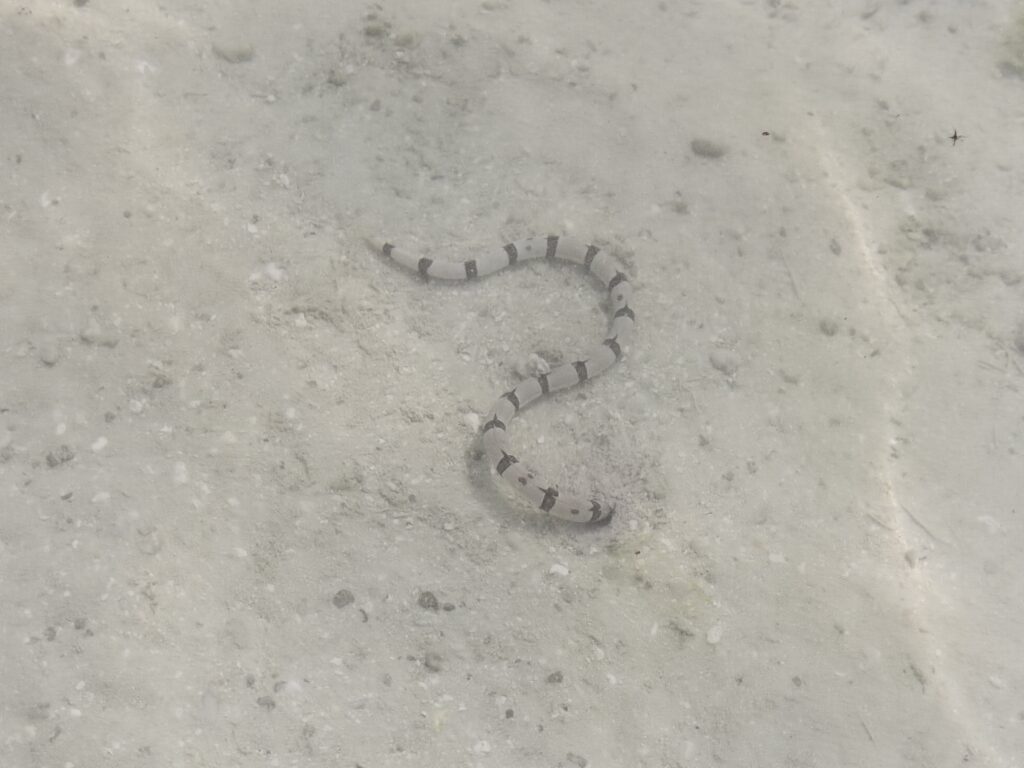
The visibility of the corals is not optimal due to the rain that preceded our arrival, but I still manage to see a stingray passing a few centimeters from my abdomen, and then a cute sea snake swimming next to my wife’s ankle as we walk along the shore. The colors of the sea, despite the sky not being very clear… need I say more?
For dinner, we head to Tamanu Lodge, which is about a 20-minute walk away and which I definitely recommend. Paradise Cove does not have (or at least did not have at the time) its own restaurant, and Tamanu was our closest option. In general, keep in mind that in the evening, as during the day, the Cook Islands are not exactly Rio Carnival. After all, there must be a reason why the Cook Islands are one of the very few countries in the world that Covid has not even managed to reach.
Day 4: Aitutaki, motu tour
The most eagerly awaited day of our trip to the Cook Islands has arrived, dedicated to touring the motu (small islands) of Aitutaki. We strategically choose to go on the excursion on Sunday, as the only agency we decided to use, Kia Orana Cruise, operates on that day of the week, so we expect to find very few people there. Among the other agencies we consulted, I would mention Vaka Cruise, Bishop’s Cruise and Teking Tours. We paid NZD 140 per person (about €75) for the excursion, including hotel pick-up and lunch. The price may seem high in some ways, but I have rarely spent my money better. We shared the trip with two other couples and a dear old lady who was traveling alone.
Our skipper, who is also the cook and the guy who came to pick us up, takes us straight to Motu Rakoa, our first stop. The motu is an absolute gem that leaves us speechless, but we don’t stay long because our skipper tells us that the next stops will be even more memorable. However, we are the only ones on the motu.
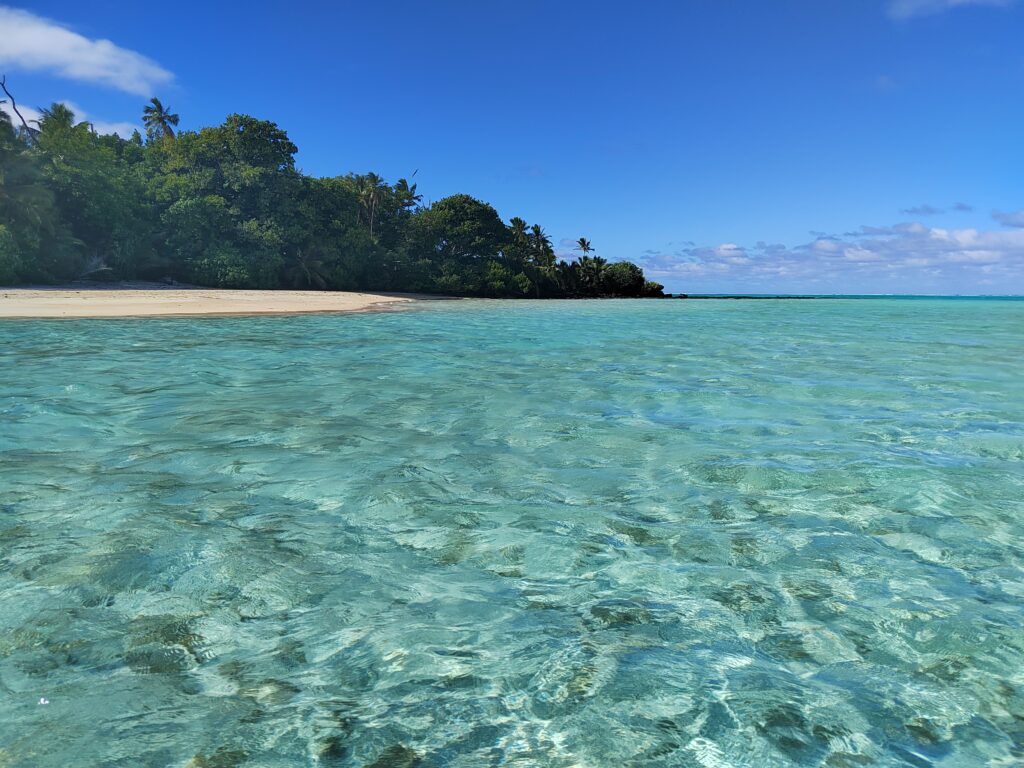
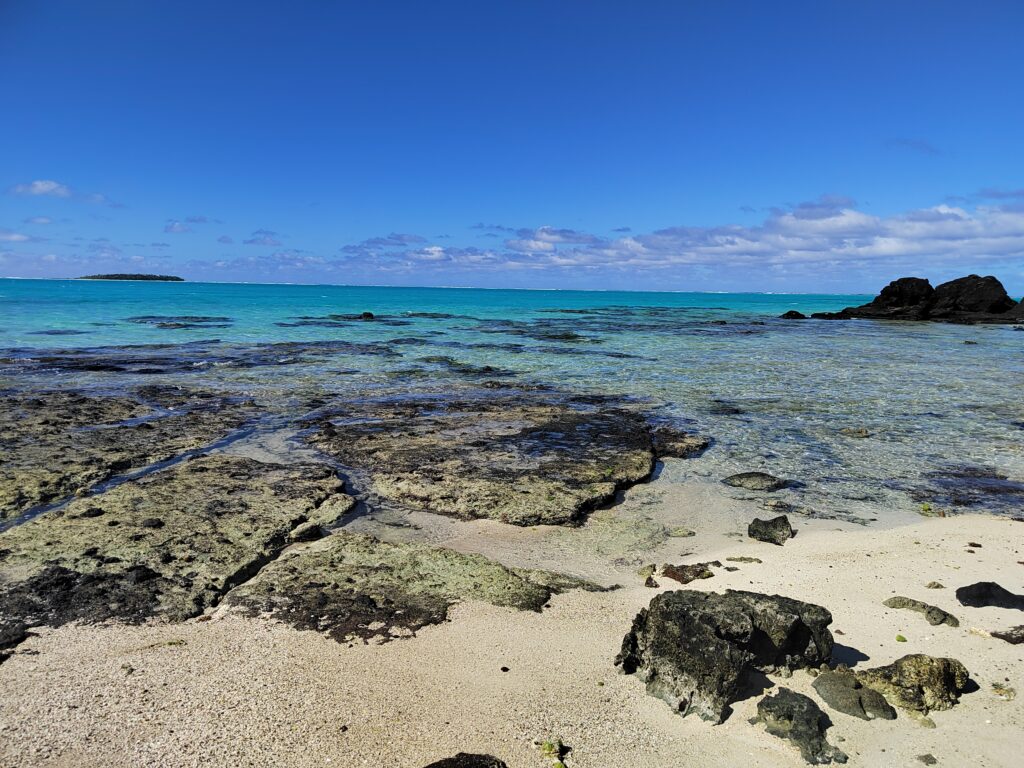
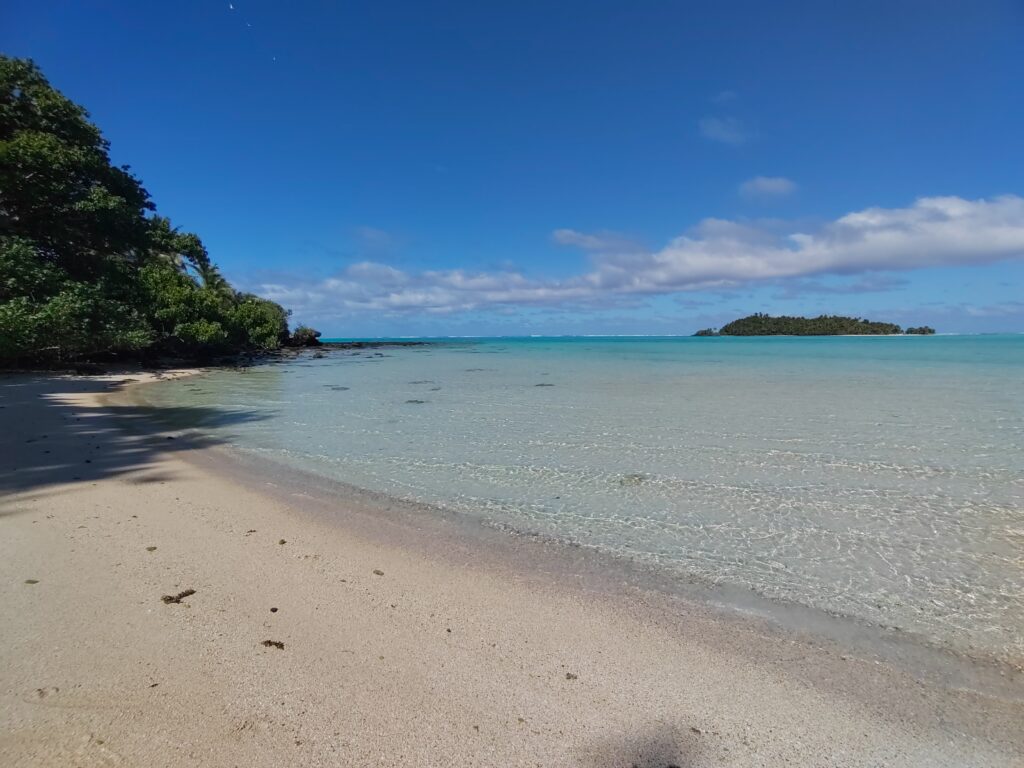
We set off again fairly quickly to reach our second destination, One Foot Island, and even before stepping off the boat, we understand what our skipper meant. The beauty of this place is truly indescribable, the colors of the sea are like nothing I’ve ever seen before (and fortunately, I’ve seen many picture-perfect beaches), and the sand is blindingly white. Despite its tiny size, the island even has a post office that stamps your passport with a foot-shaped stamp if you ask for it, an opportunity we didn’t want to miss.
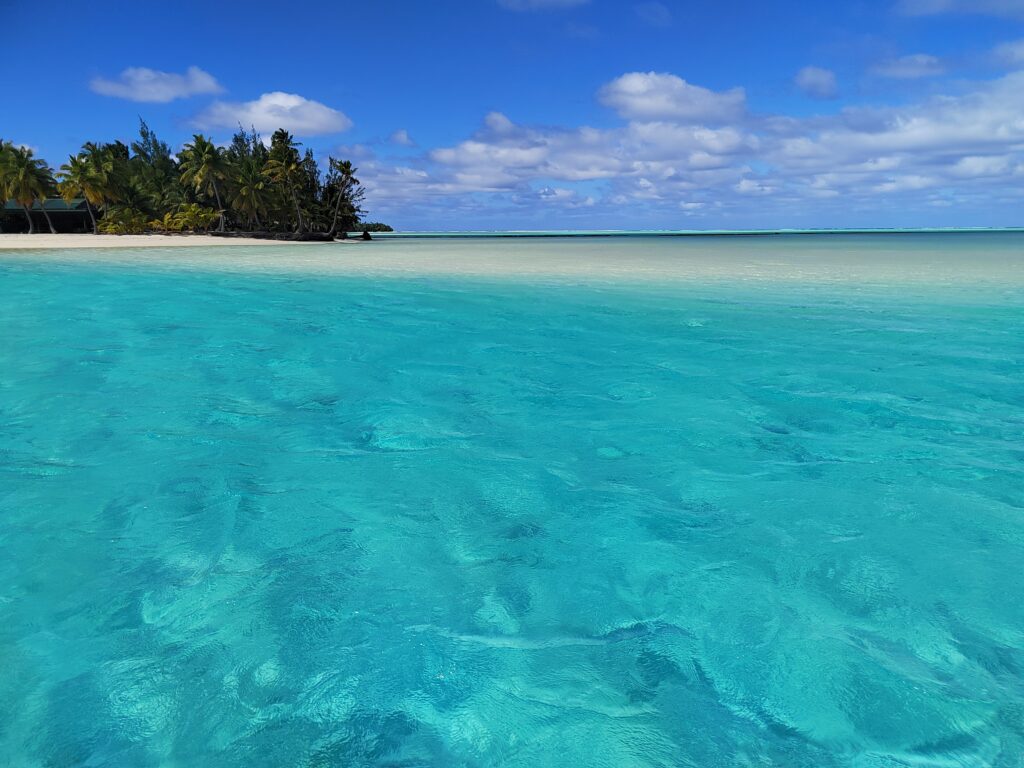
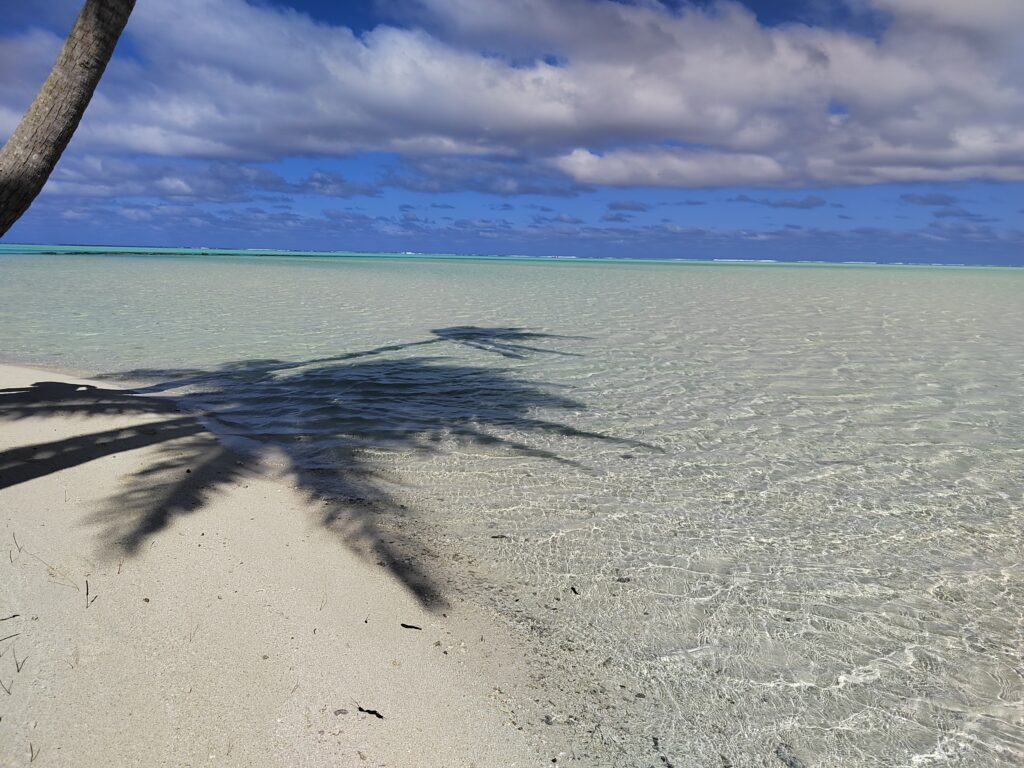
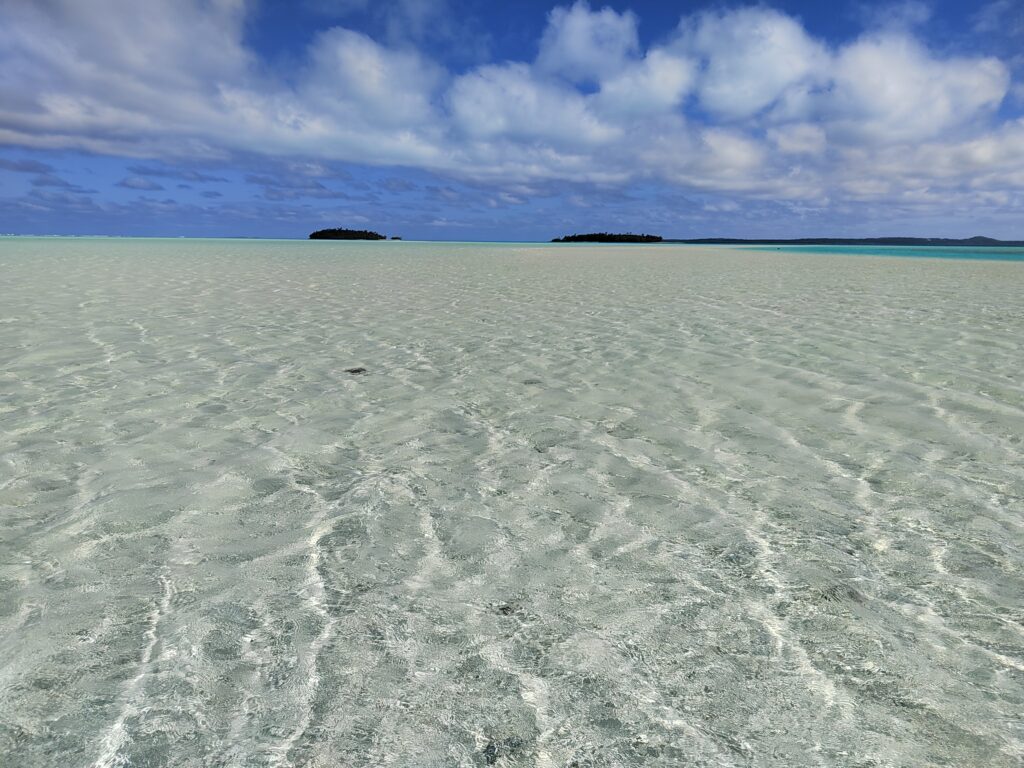
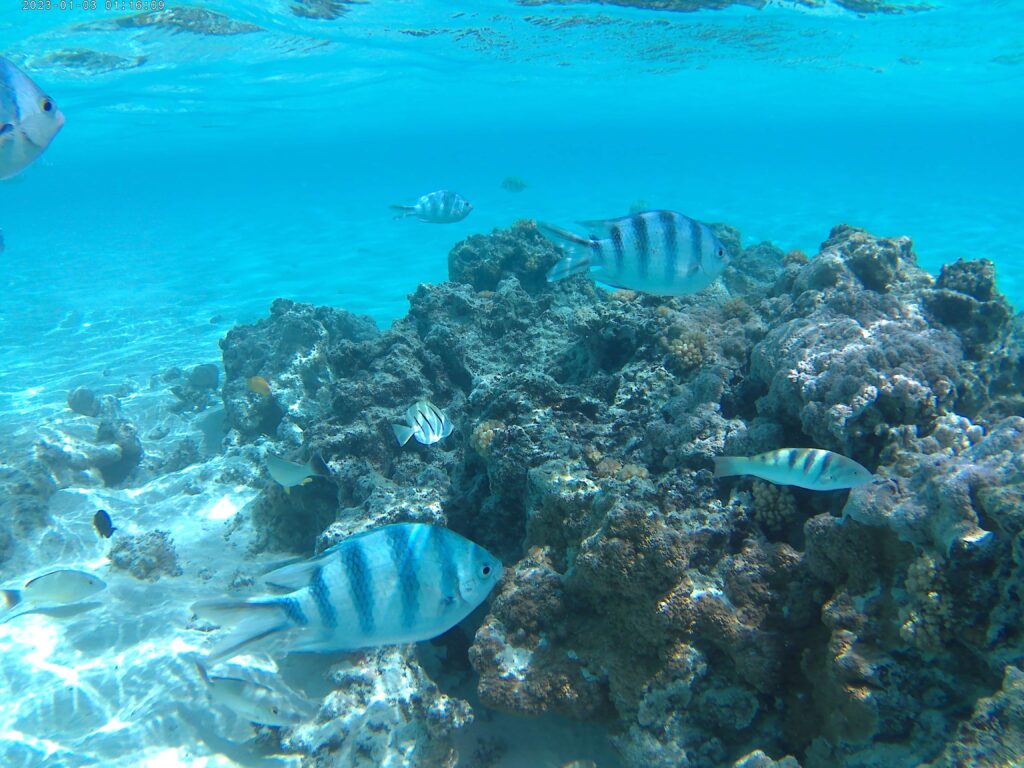
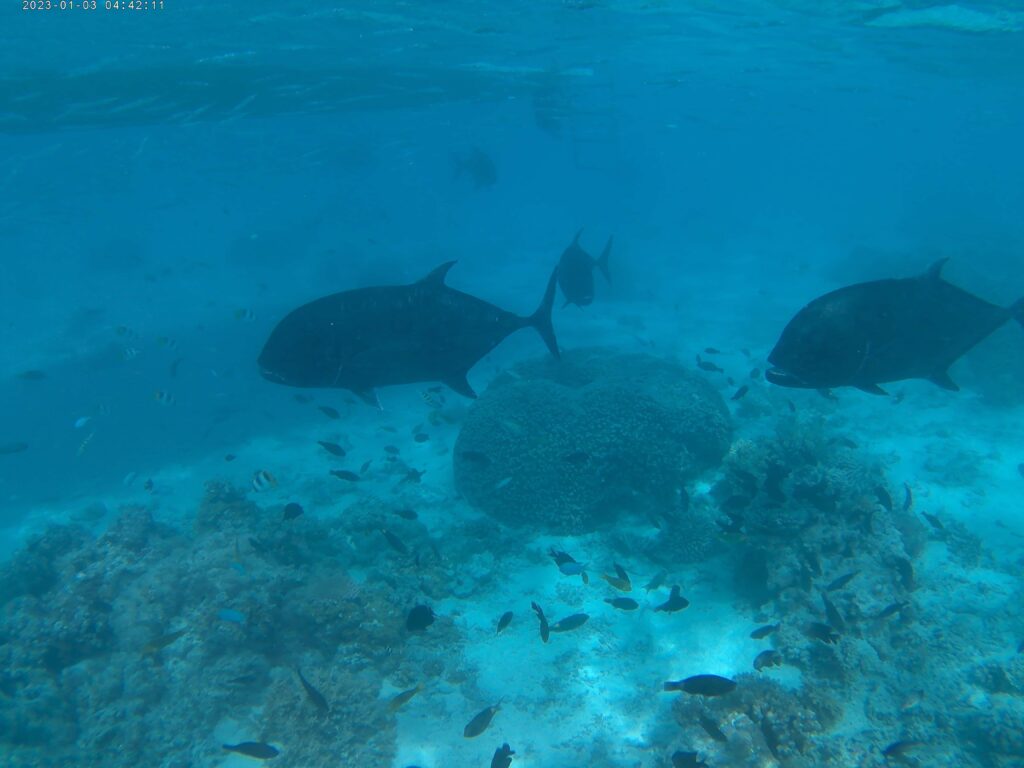
The stop at One Foot Island lasts less than we hoped, but unfortunately, good things often come to an end. Before heading to the last motu, Honeymoon Island, we make a quick stop to snorkel in the middle of the sea, surrounded by huge fish in crystal clear water!
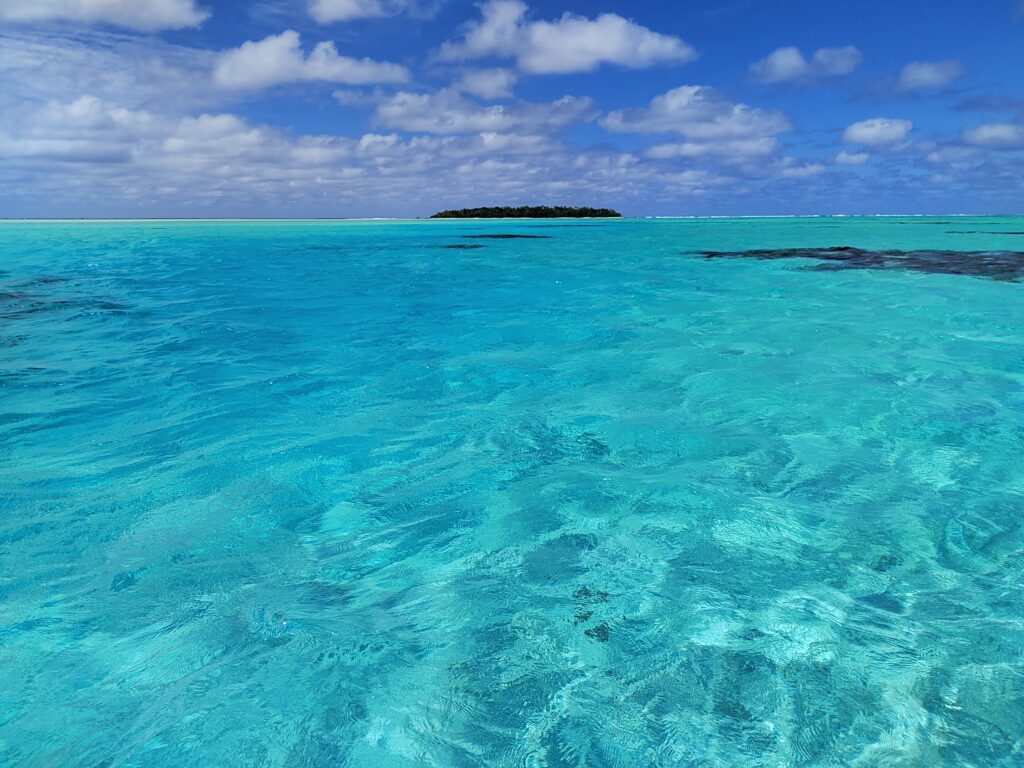
Finally, we reach Honeymoon Island, our last motu, where lunch is also planned. I can’t say whether this motu is even more enchanting than One Foot Island, but I find it hard to believe that there could be more heavenly places in the world than these two islets. To date, the only island that rivals them, as far as I’m concerned, is Onuk Island in the Philippines. Otherwise, I loved Honeymoon Island and One Foot Island more than other enchanting places scattered throughout the Maldives, the Caribbean, Zanzibar, Australia, or Sardinia. Let me just say that at a certain point, I couldn’t understand anything anymore (not that I’m usually any better at it, come to think of it!), and above all, I didn’t know if it was reality or if I was dreaming. Truly indescribable.
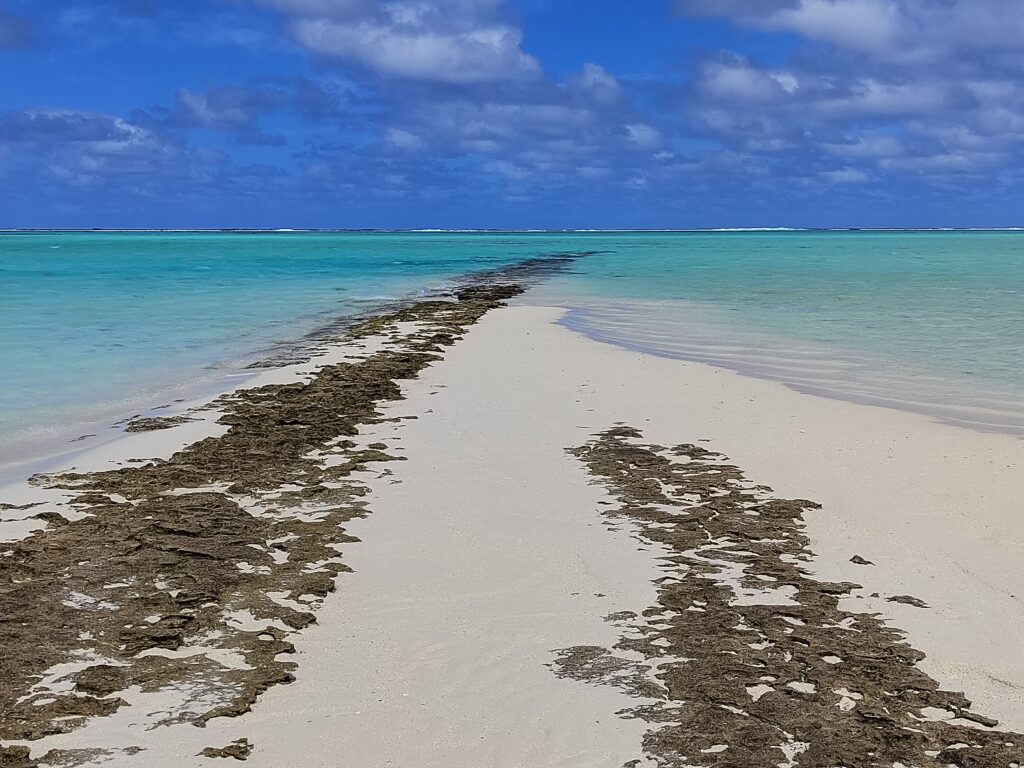
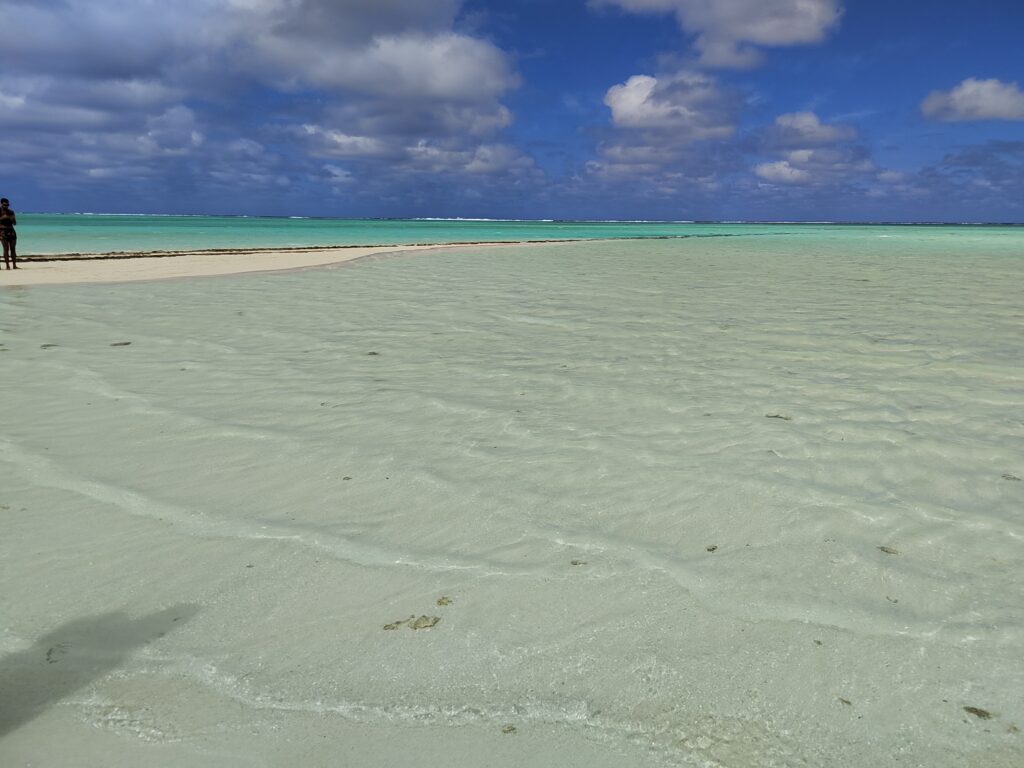
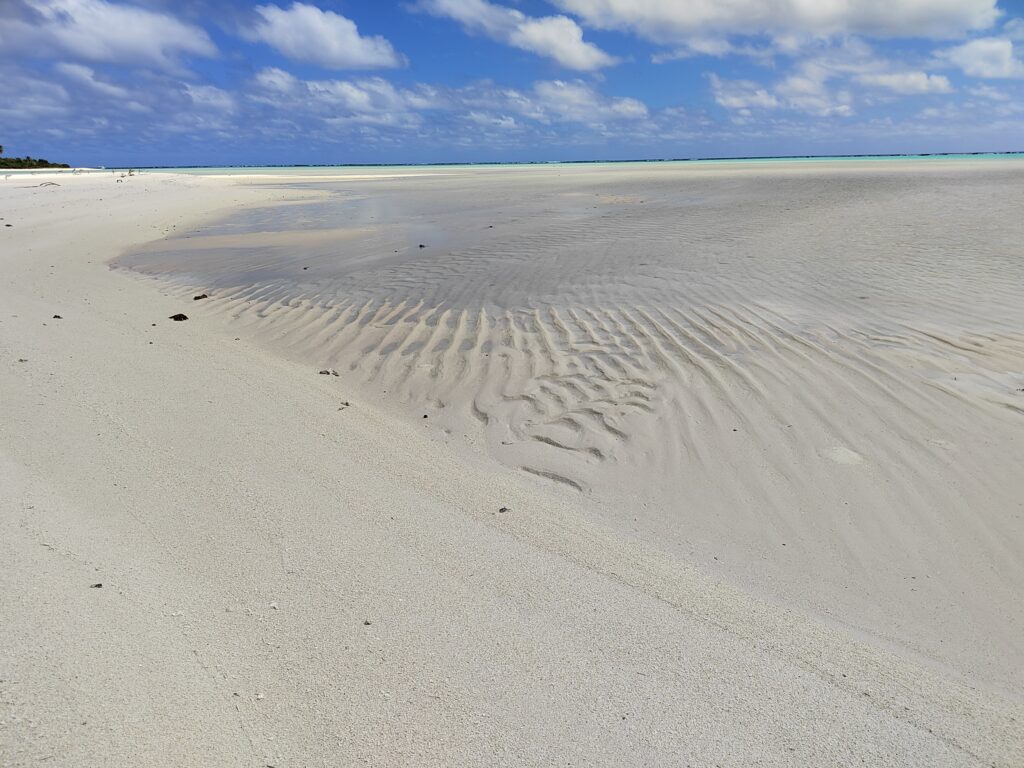
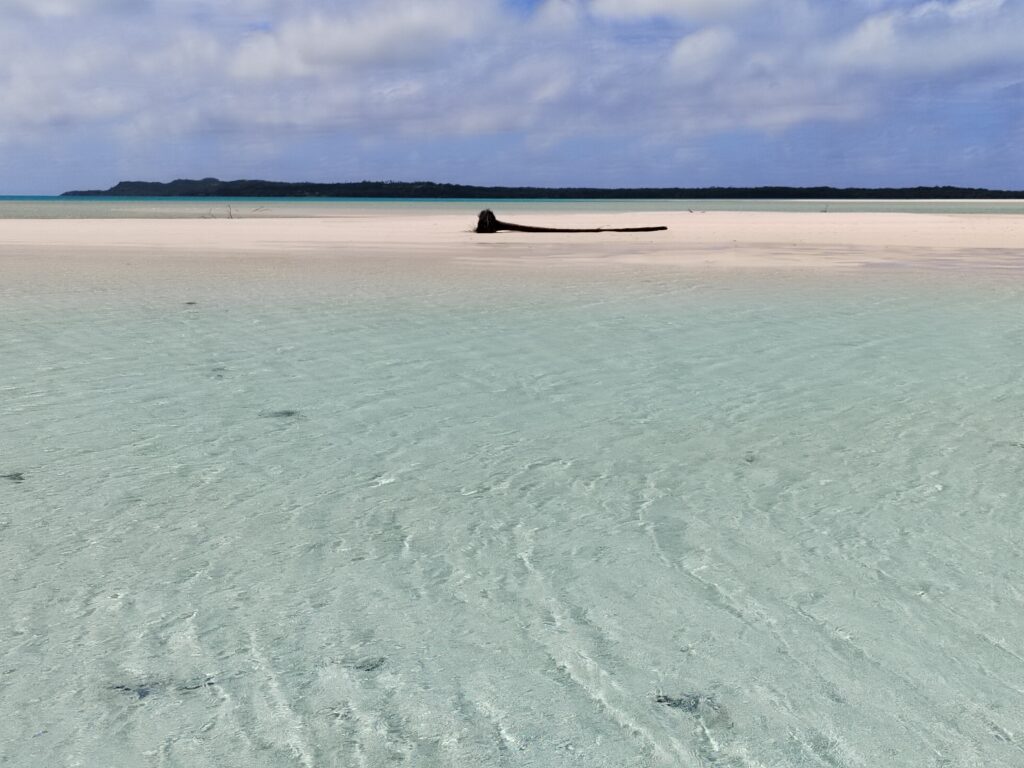
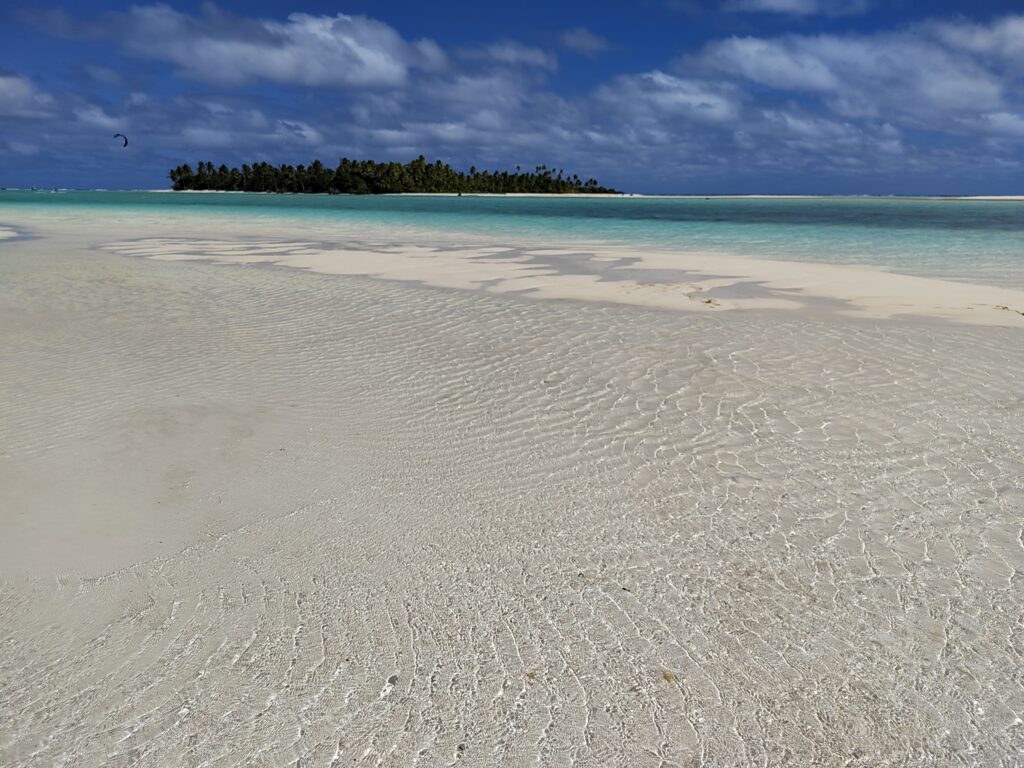
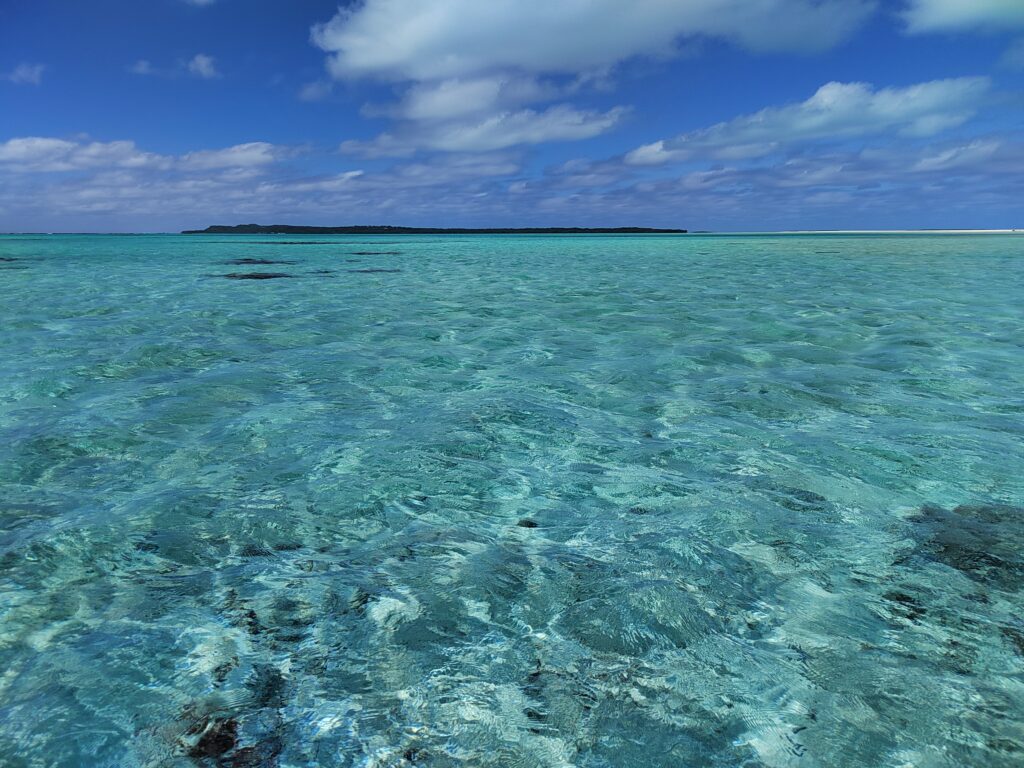
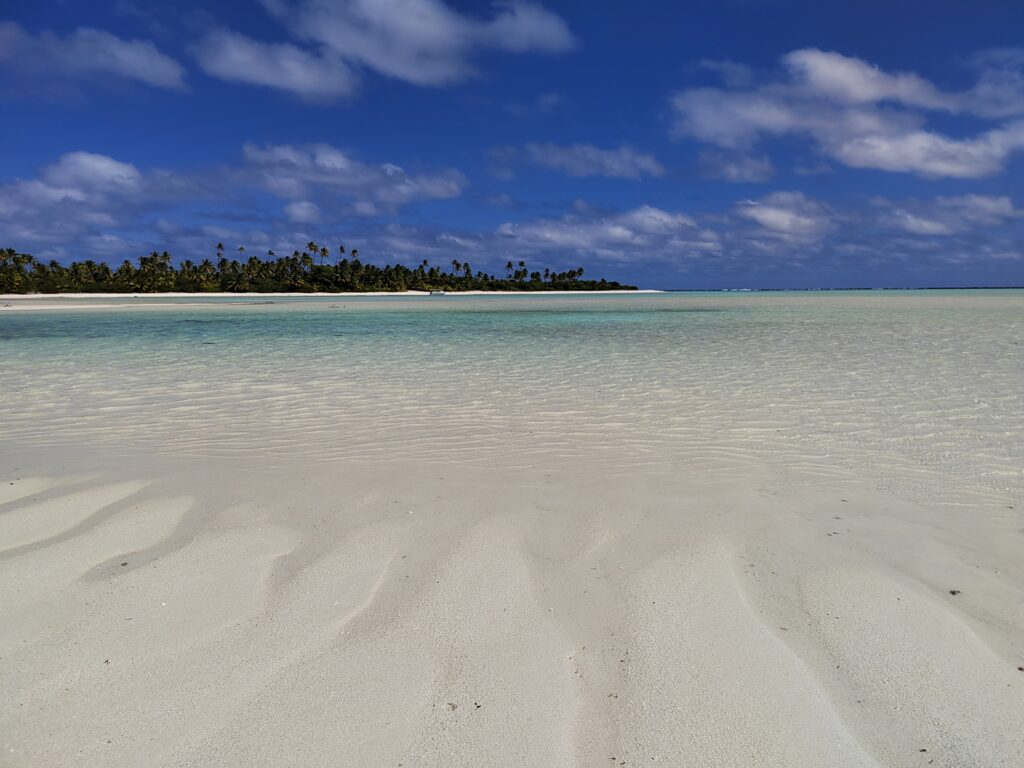
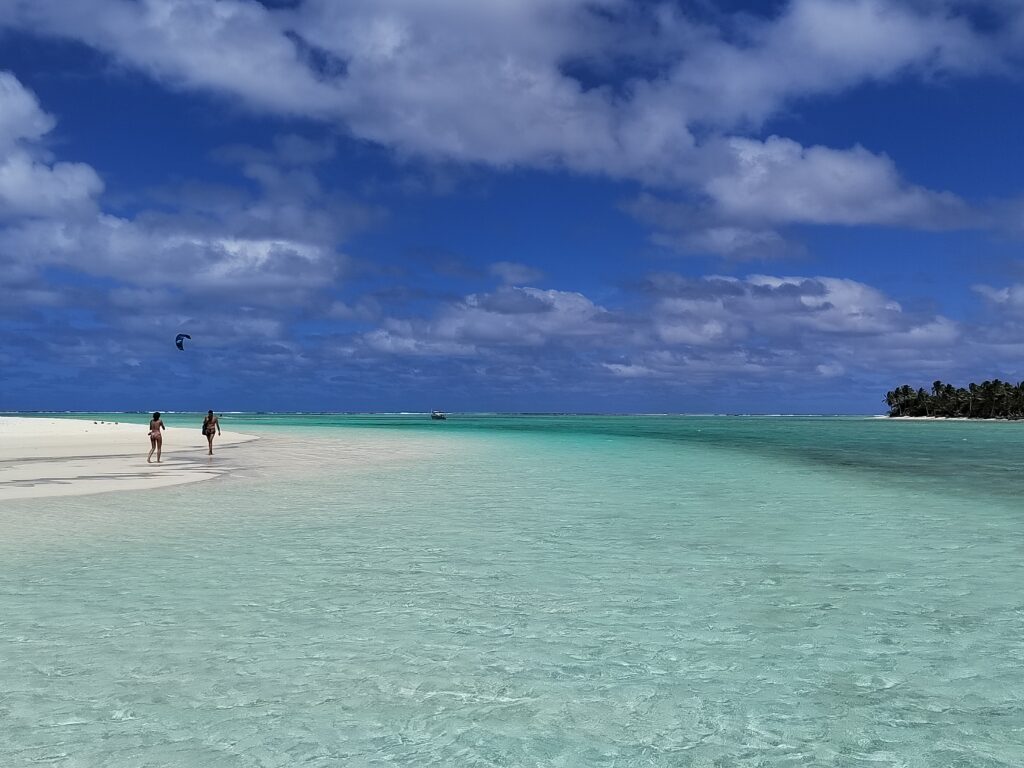
After our stop at Honeymoon Island, we sadly return to base, which makes me think that our skipper was a bad person.
Day 5: Aitutaki, Ootu Beach
Our third day in the Aitutaki lagoon is dedicated to Ootu Beach, located on the east side of the island and one of the most famous beaches in the Cook Islands. The beach is a bit far from our lodge, so we take a local taxi to get there. As soon as I see the sea, I start to think that the water is artificially colored, or that my eyesight is failing me, because I find it hard to believe that the colors I see are real. In addition, there are sandbars everywhere.
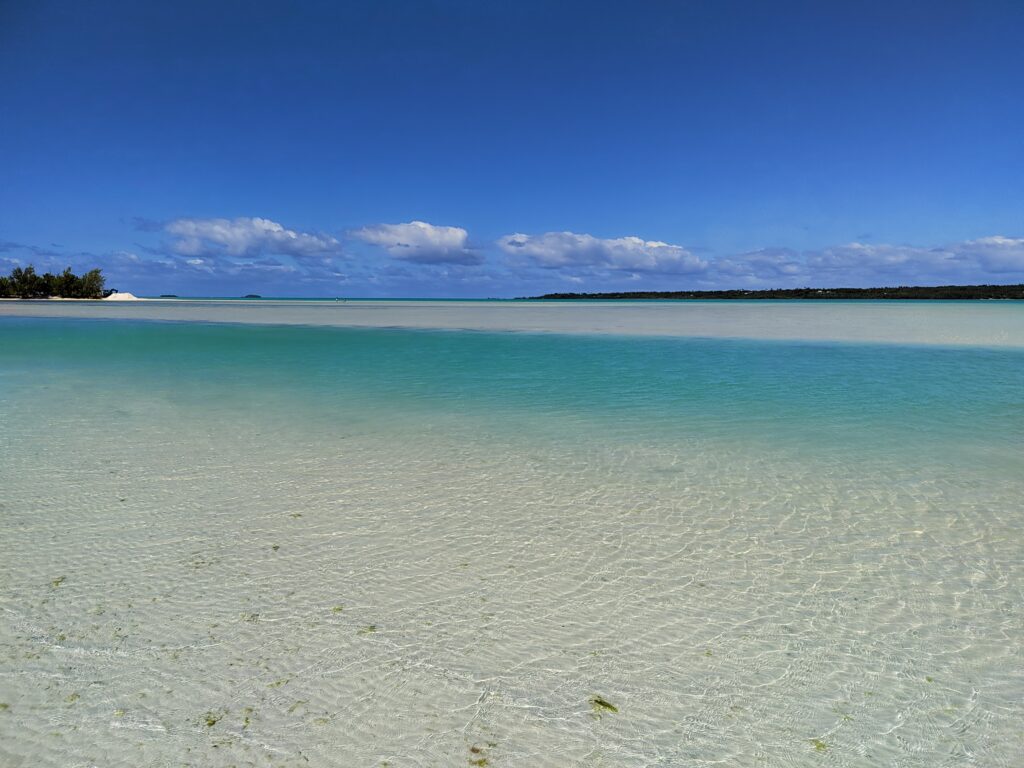
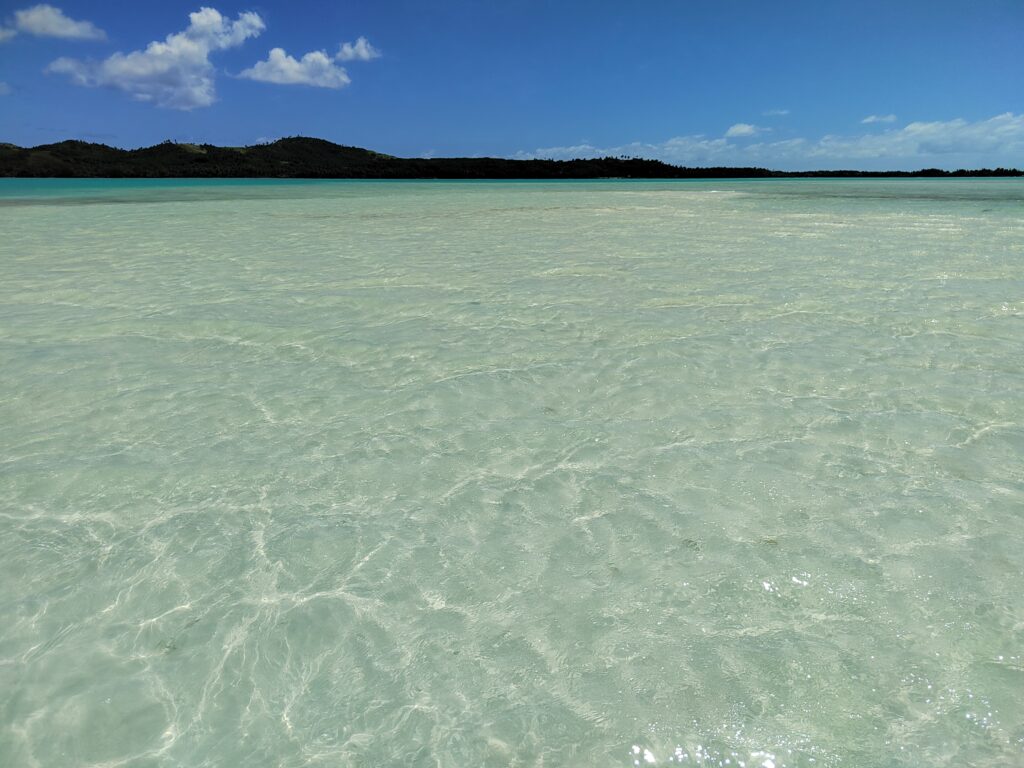
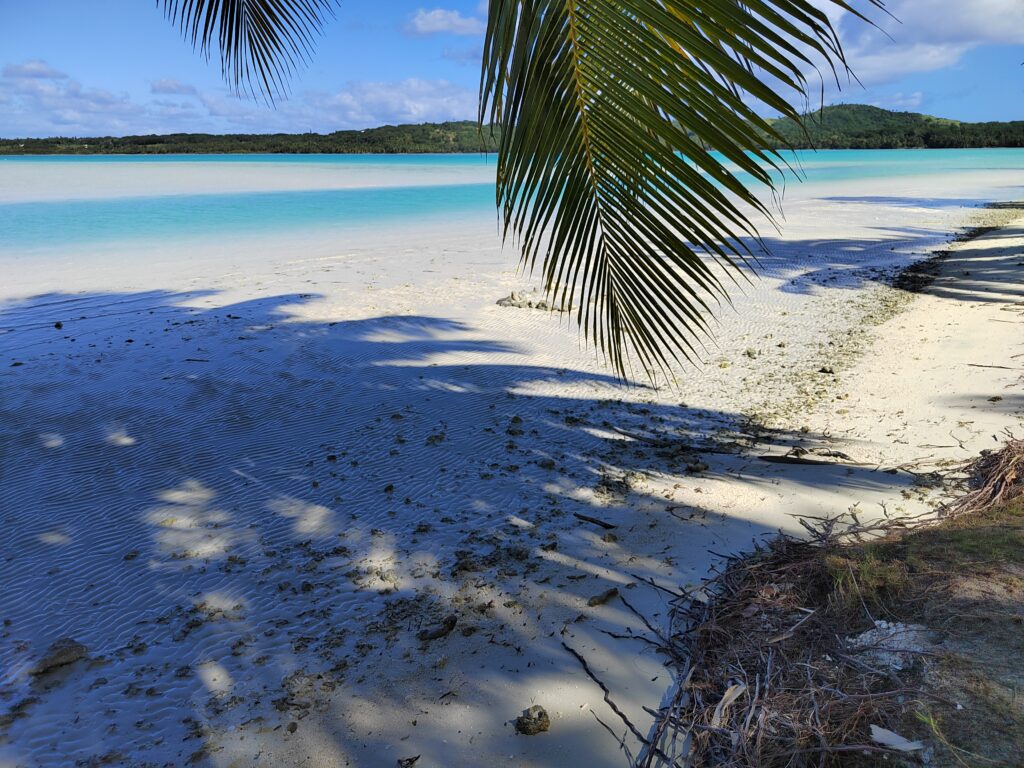
We stay on the beach all day, finally returning to our lodge by taxi.
Day 6: Aitutaki, Amuri
For our last day in Aitutaki, we decide to relax near our lodge, partly because we have already seen practically everything we wanted to see. We also take the opportunity to take a kayak tour of the lagoon, which turns out to be quite exciting. In fact, we have to walk the kayak back to shore to avoid getting caught in the coral and damaging it due to the sudden drop in the tide.
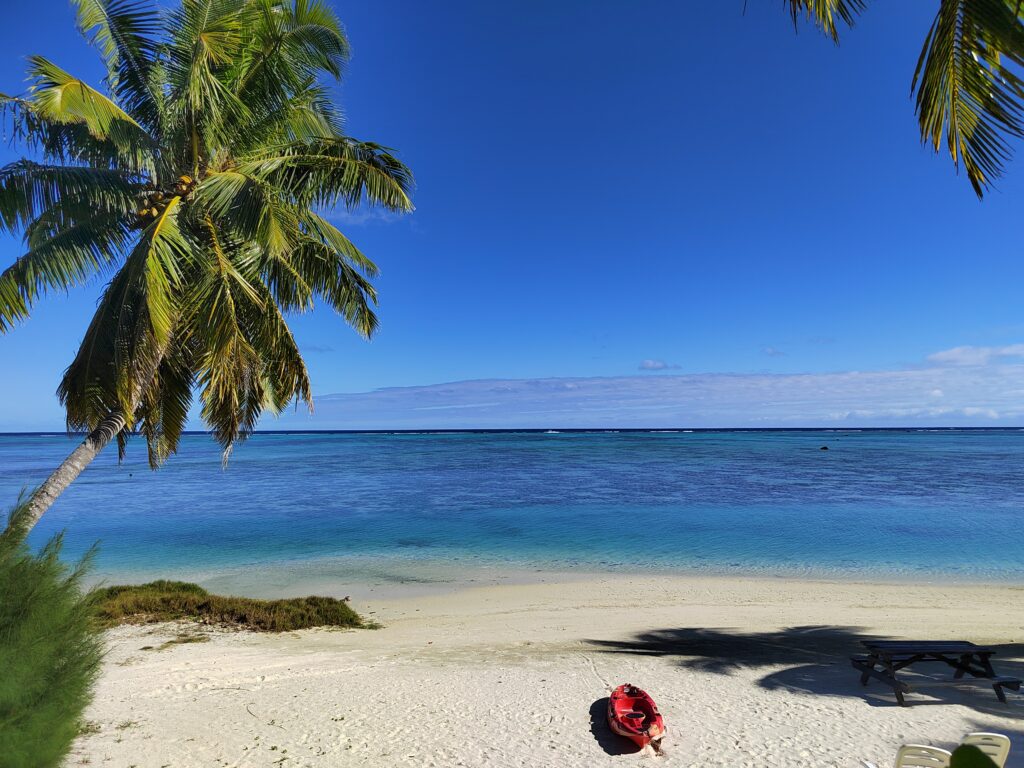
Day 7: Rarotonga, Aroa Beach
We take the morning flight from Aitutaki back to Rarotonga, where we spend our last full day of the trip. There are a few roosters at the boarding gate, but we’re used to them by now, and anyway, it’s great fun to see them accompanying the tourists queuing up. It’s a beautiful day, so we enjoy the view from the plane again during the flight.
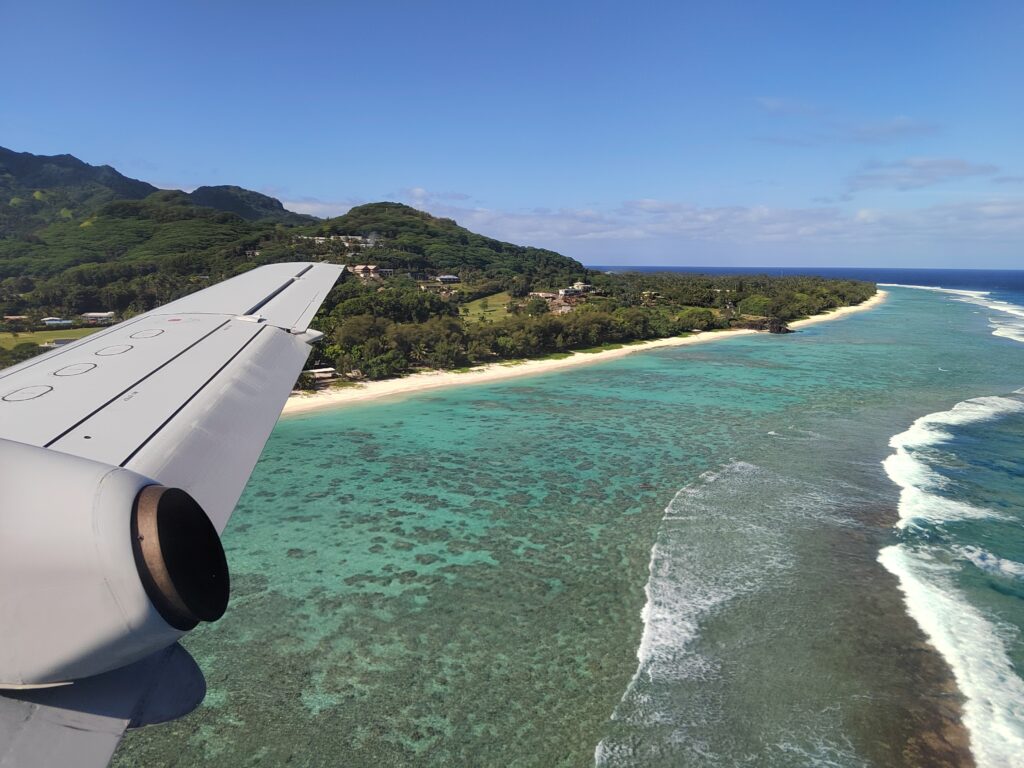
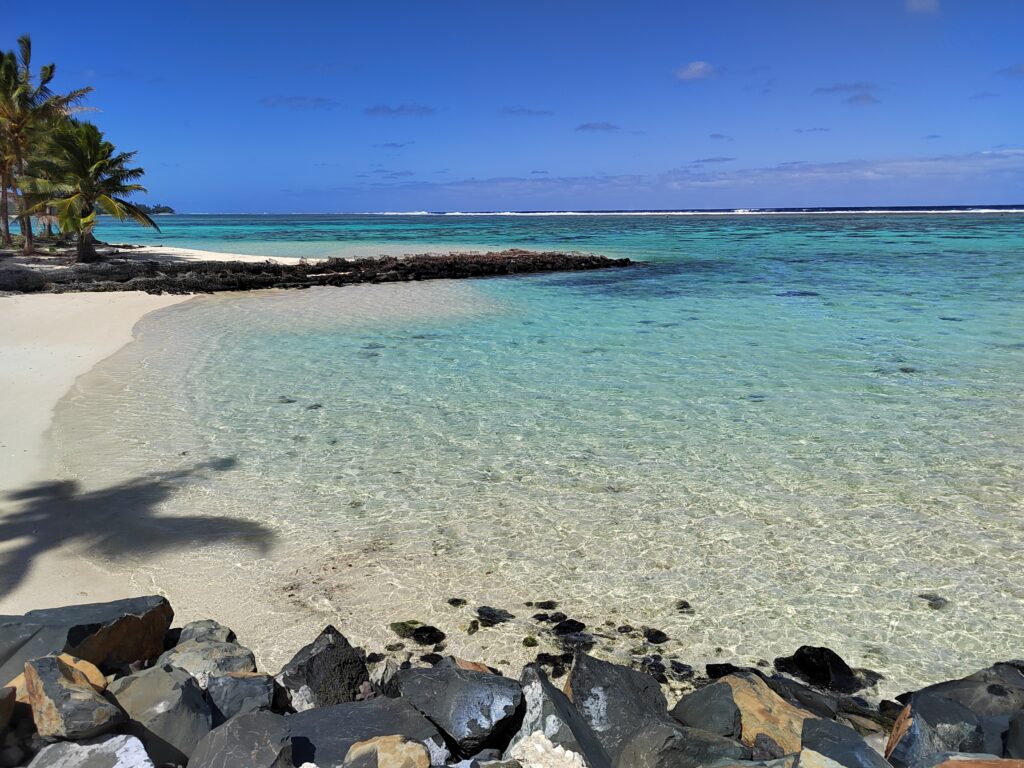
After landing in Rarotonga, we take a bus to our lodge, the Black Pearl, which we have booked in the Arorangi district this time. On the recommendation of the owners, we decide to take our last swim at Aroa Beach, another dream beach. It is quite windy and we don’t really feel like diving in, but we are intrigued by the people we see swimming with masks and fins, so in the end we give in. And thank goodness we did…
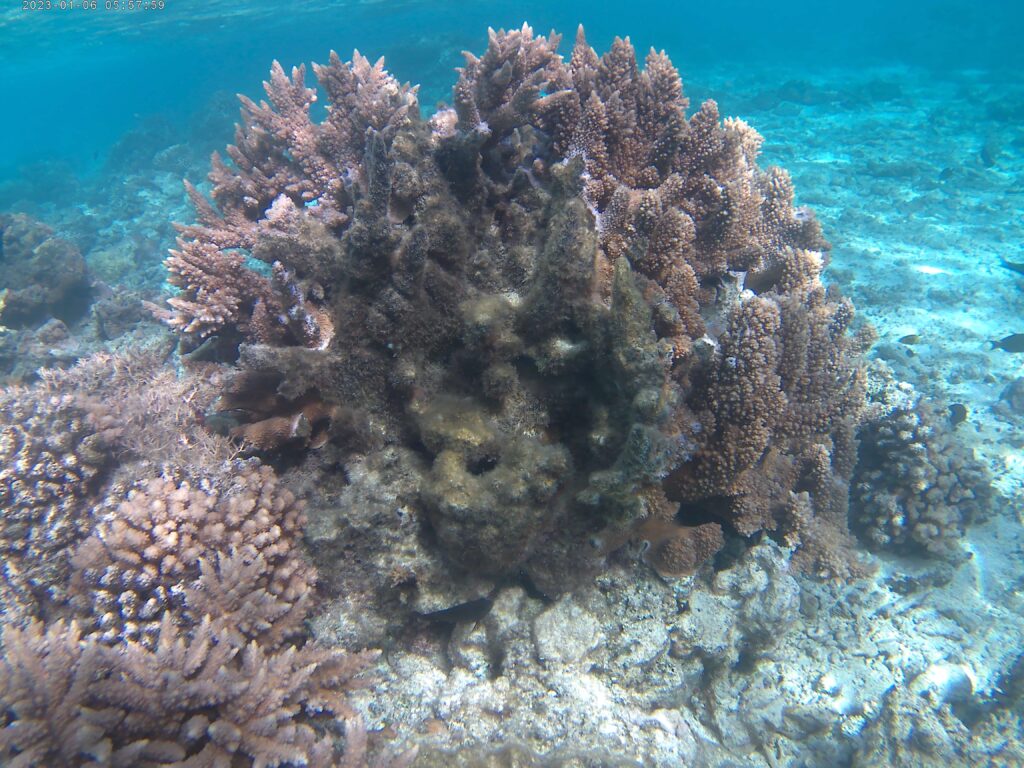
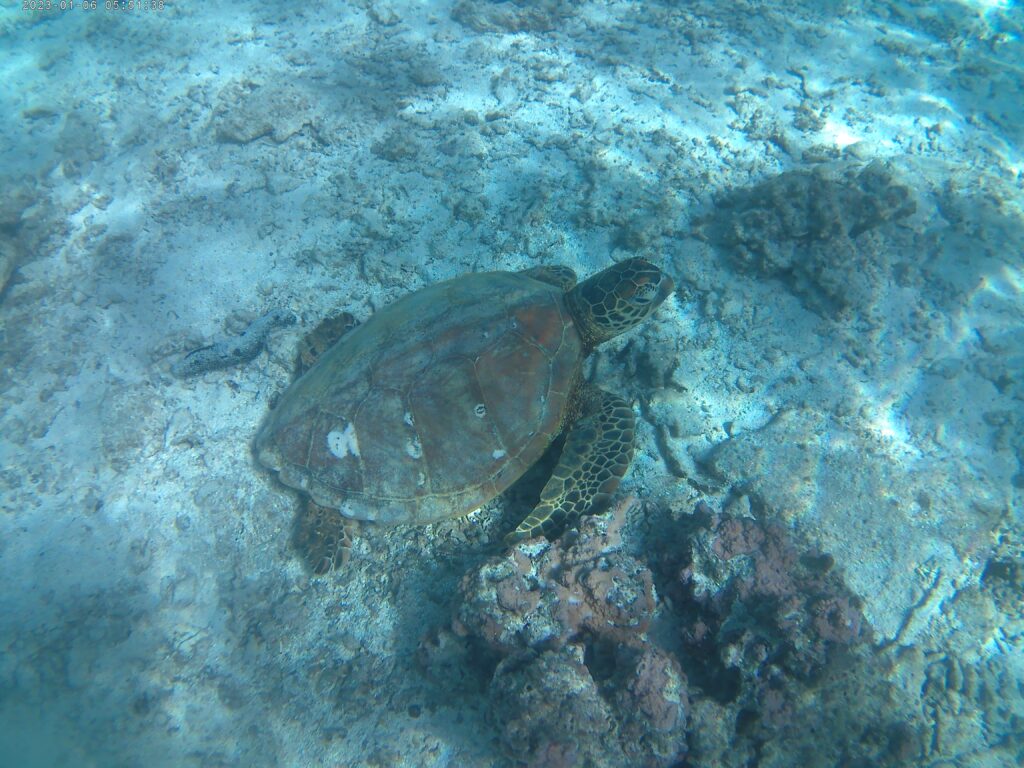
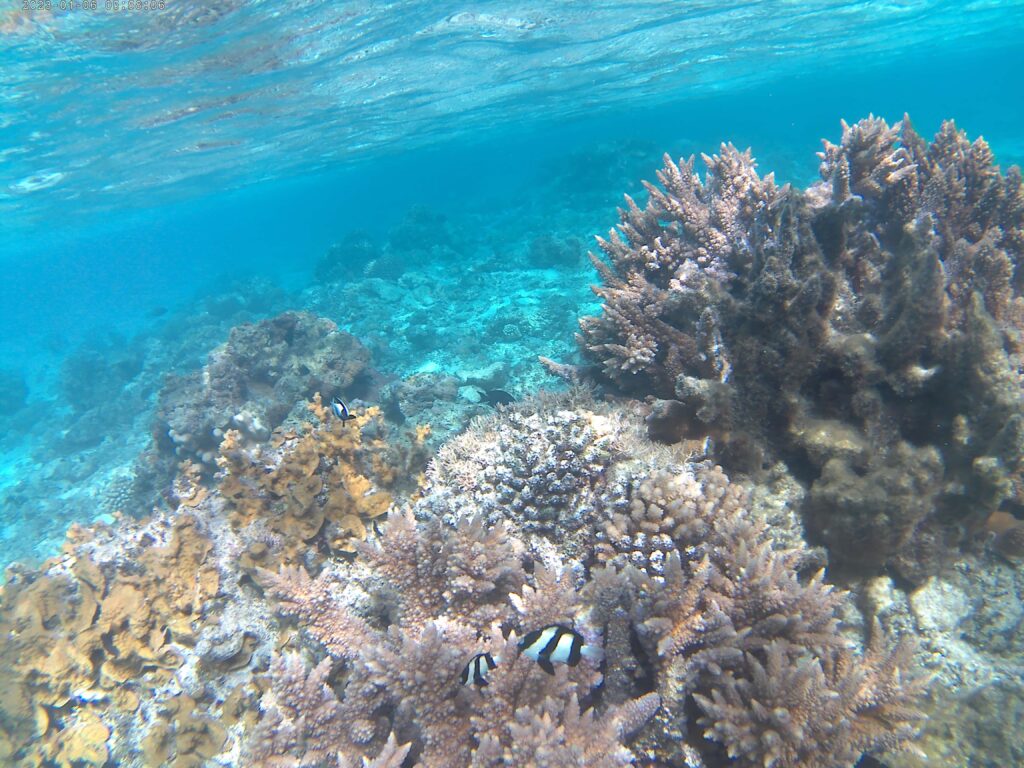
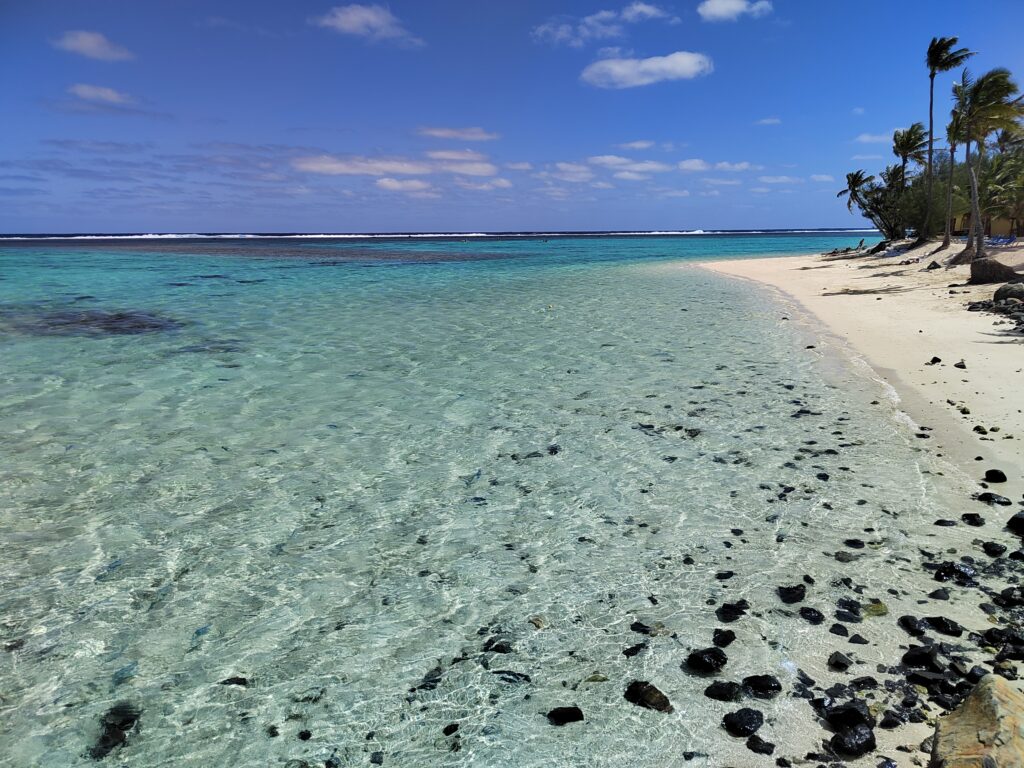
Snorkeling at Aroa Beach is phenomenal, with a beautiful reef visible just a few meters from the shore. We end the day with dinner at a beachfront restaurant near our lodge.
Day 8: Rarotonga, Avarua and flight back
We end our trip by spending the morning of our last day visiting Avarua, the capital of the Cook Islands. It is a very small town with a few shops and little else, but given the limited time available, we take the opportunity to buy some souvenirs to take home. I won’t go into too much detail about the town, because honestly, you can survive without visiting it.
In the early afternoon, we take the bus to the airport, where a long journey awaits us, during which, among other things, our luggage will be lost. But who cares, we’ve just visited paradise!
Conclusions
Looking back, I wouldn’t change anything about our itinerary. The time spent on each island seemed just right for visiting everything we wanted to see, apart from the fact that we never wanted to go home.
Between Rarotonga and Aitutaki, I preferred the latter, and I think I understand why it is considered the most beautiful lagoon in the world, even though I haven’t seen all the others. Maybe one day I’ll change my mind (and I hope so), but I find it hard to believe that there could be a more beautiful place than that. The most memorable day was definitely the motu tour, which perfectly represents my idea of paradise. Even today, a few years later, looking back at the photos, I can’t believe I’ve been to places like that. All the beaches are beautiful, both in Aitutaki and Rarotonga.
Related articles:


