

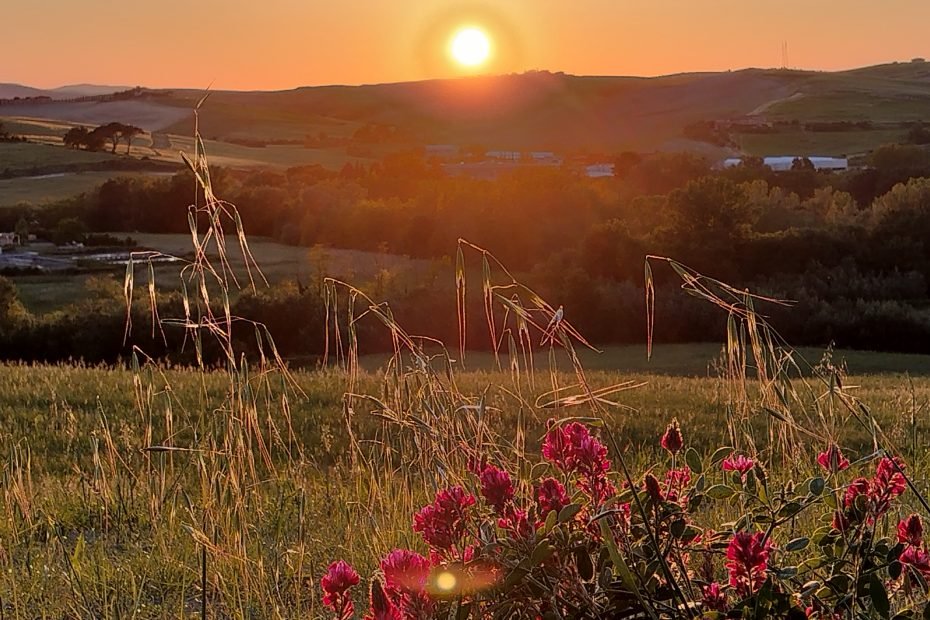
“My name is Maximus Decimus Meridius, commander of the Northern Army, general of the Felix legions, loyal servant of the one true emperor Marcus Aurelius. Father of a murdered son, husband of a murdered wife. And I will have my revenge, in this life or the next!”
From the movie Gladiator
Table of Contents
- Introduction
- Itinerary in pills
- Day 1: From Pienza to Chianciano
- Day 2: Bagni San Filippo and Montepulciano
- Conclusions
Introduction
Anyone who has seen the film “Gladiator” (R. Scott, 2000) will surely remember the final scene, in which the protagonist walks through a field of grass, accompanied by a beautiful soundtrack. I don’t want to reveal what happens in that scene to avoid spoilers for those who haven’t seen the film (while suggesting that they fill this gap), but I’m taking inspiration from it to start writing the article you are reading, as the scene I am referring to was shot near Pienza (SI), one of the most renowned villages in the Tuscan Val d’Orcia.
It was from Pienza that the first group trip I have coordinated began, hoping that it will be just the first of many more to come in the future. During the short but intense weekend, I was accompanied by my wife and five other people, among family members and friends. The decision to meet in Val d’Orcia was dictated by its location, roughly halfway between each of our departure cities.
The tour I will describe in the rest of this article took place over a weekend in May 2025, during which we were lucky enough to enjoy pleasant weather.
Itinerary in pills
The itinerary took place over two full days, departing on Saturday morning and returning on Sunday evening. The first part of Saturday and the second part of Sunday were mainly devoted to traveling by car from our various homes to our destination and back.
The first day was the most exploratory. We started, as mentioned, in Pienza, continuing on to Montalcino, Bagno Vignoni, and San Quirico, and ending the day in Chianciano, the town we chose for our accommodation.
On the second day, we opted for Bagni San Filippo, then stopped briefly in Montepulciano before returning to our respective homes. Below is a summary table with maps of the various routes.
| Day | Locations (with maps) | Road maps |
|---|---|---|
| 1 | Pienza, Montalcino, Bagno Vignoni, Chianciano | From Pienza to Chianciano |
| 2 | Bagni San Filippo, Montepulciano | Bagni San Filippo and Montepulciano |
Day 1: From Pienza to Chianciano
Pienza (SI)
Our tour begins with an early morning wake-up call, as we have several kilometers ahead of us and a couple of stops to meet up with the rest of the team.
The village of Pienza was my favorite of all. The most complicated part is finding parking, even though there are several lots, all of which are to be paid. Once parked, getting around the village is quite simple, and a map is unnecessary.
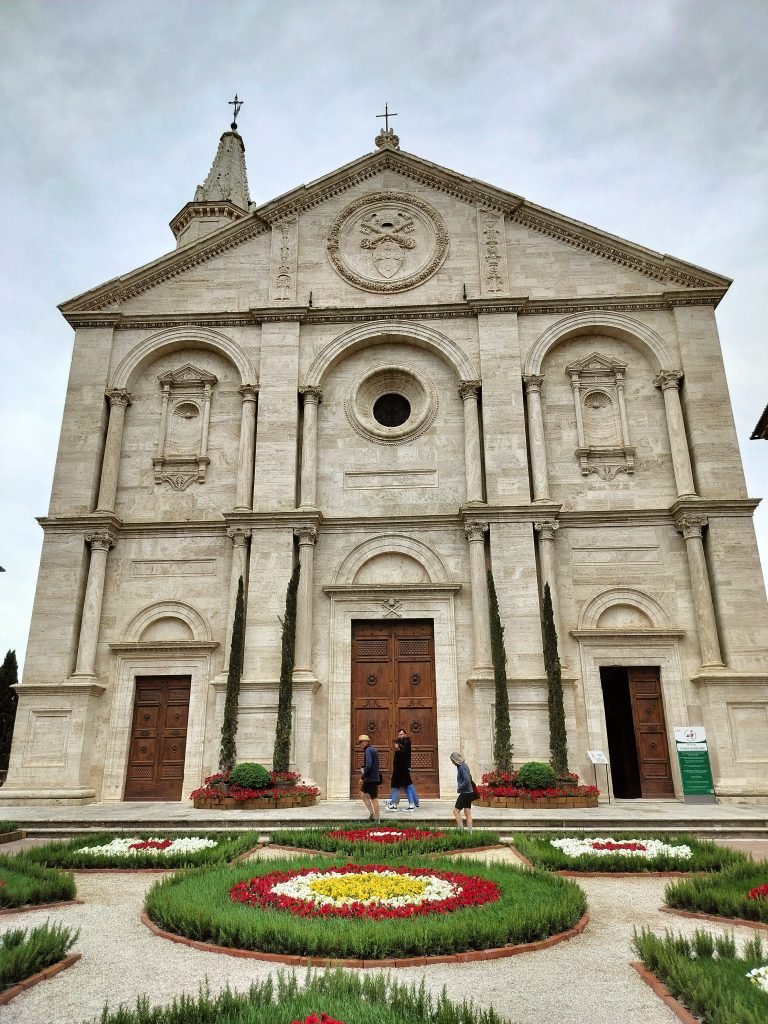
The main point of the village is Piazza Pio II, named after the pope of the same name who entrusted the Italian architect Bernardo Rossellino with the design of the city in the mid-15th century. The square is home to several points of interest:
- The Gothic-style Cathedral of the Assumption (Duomo), which also contains several works from the Sienese school. It is worth visiting inside, and admission is free.
- Palazzo Piccolomini, originally the summer residence of Pope Pius II (born Silvio Enea Piccolomini), a native of the area, which in turn houses the first hanging garden of the Renaissance.
- The Town Hall, whose frescoes in the Council Chamber are quite renowned.
- Palazzo Borgia (Diocesan Museum), which houses works ranging from medieval to modern.
The flower beds that adorn the square are very striking, with beautiful colors that stand out in spring.
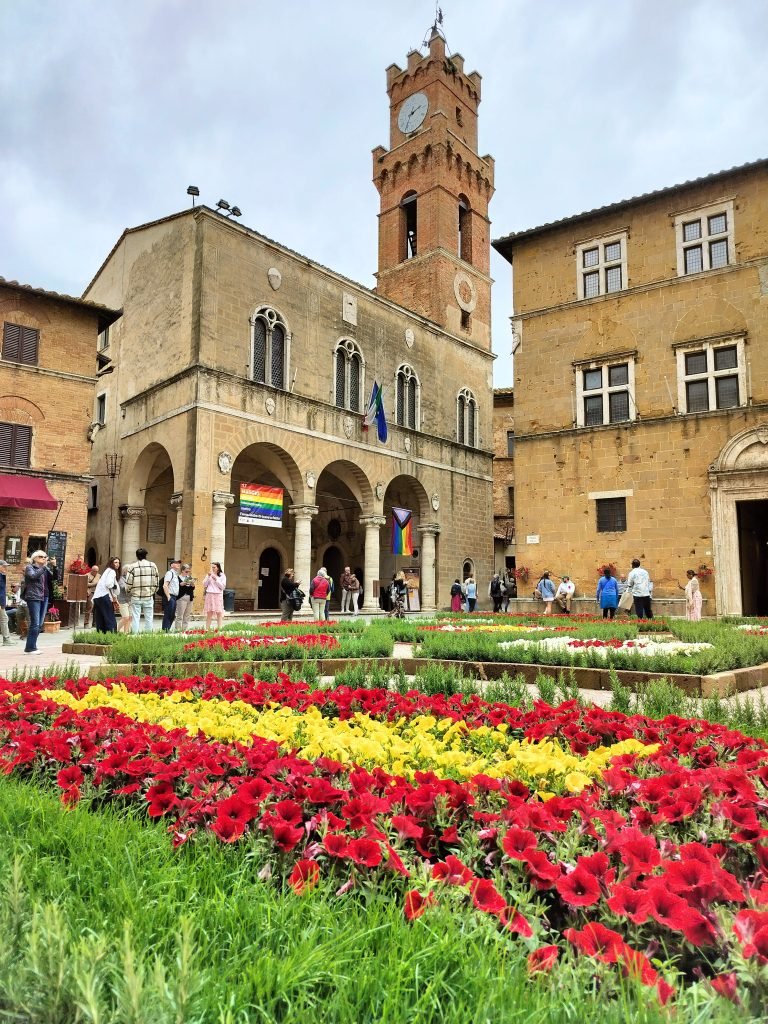
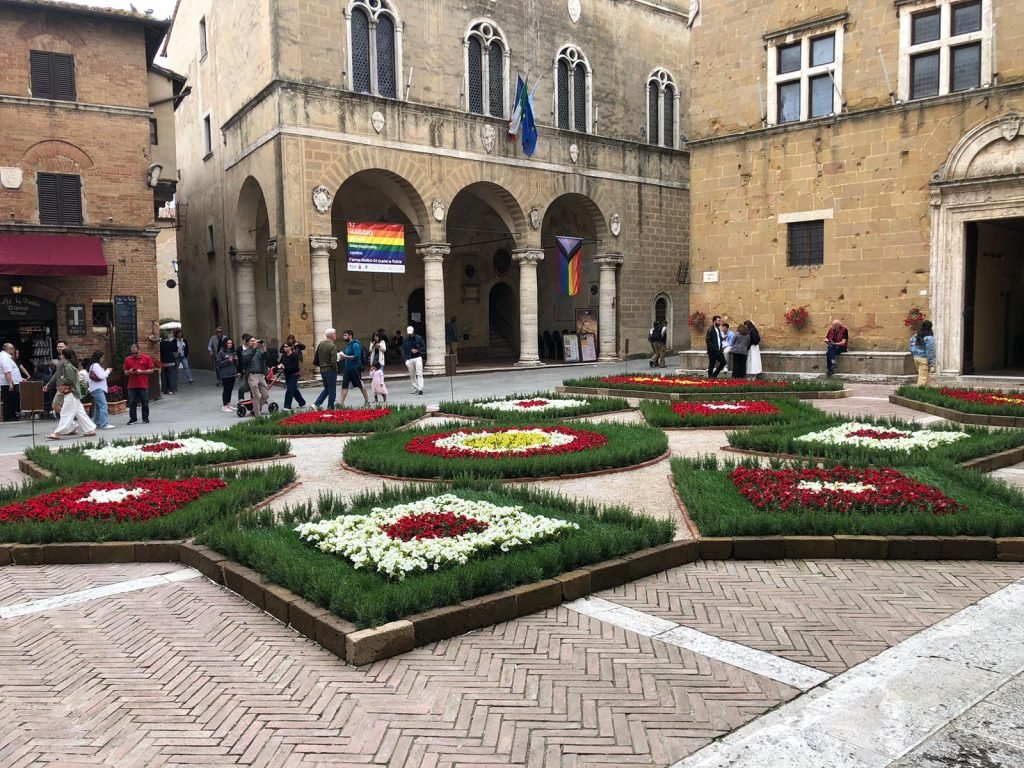
Walking randomly around Piazza Pio II, you can explore the various streets that make up the village. Among these, Via del Bacio and Via dell’Amore are definitely worth mentioning, as well as those that offer views of the valley.
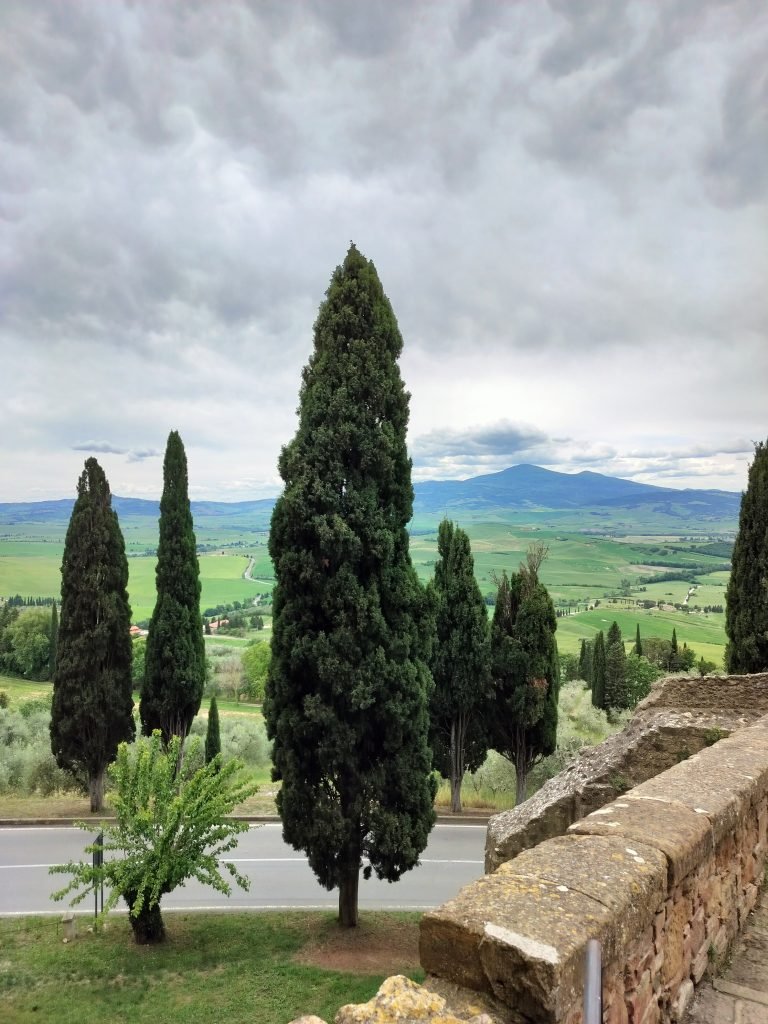
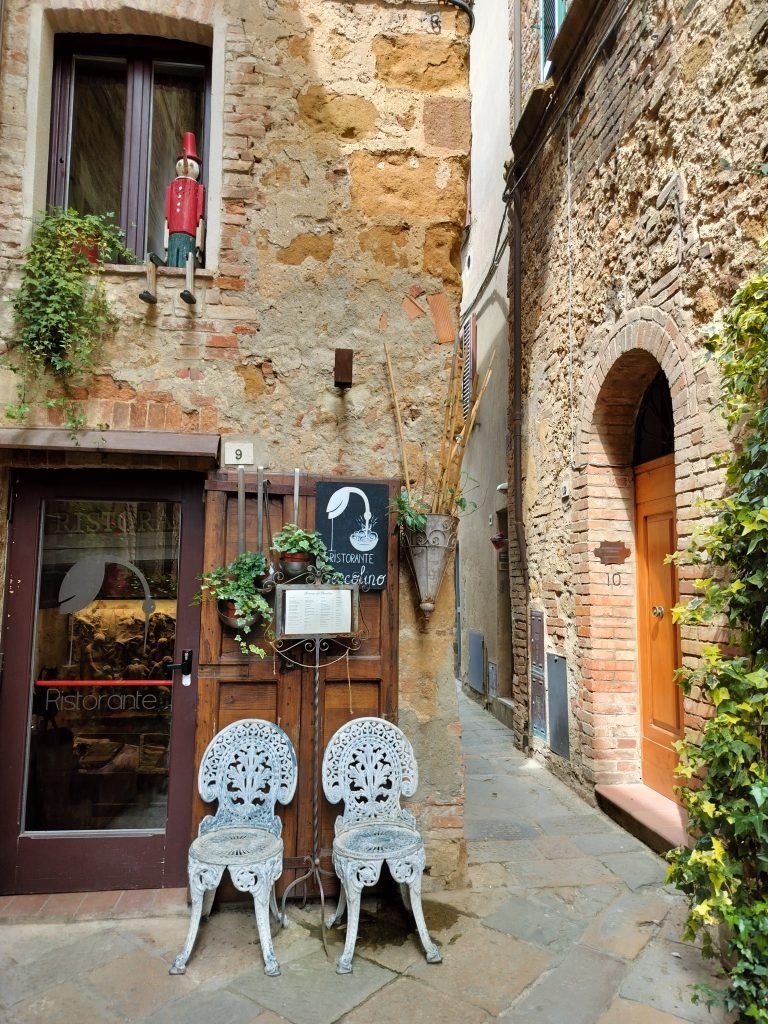
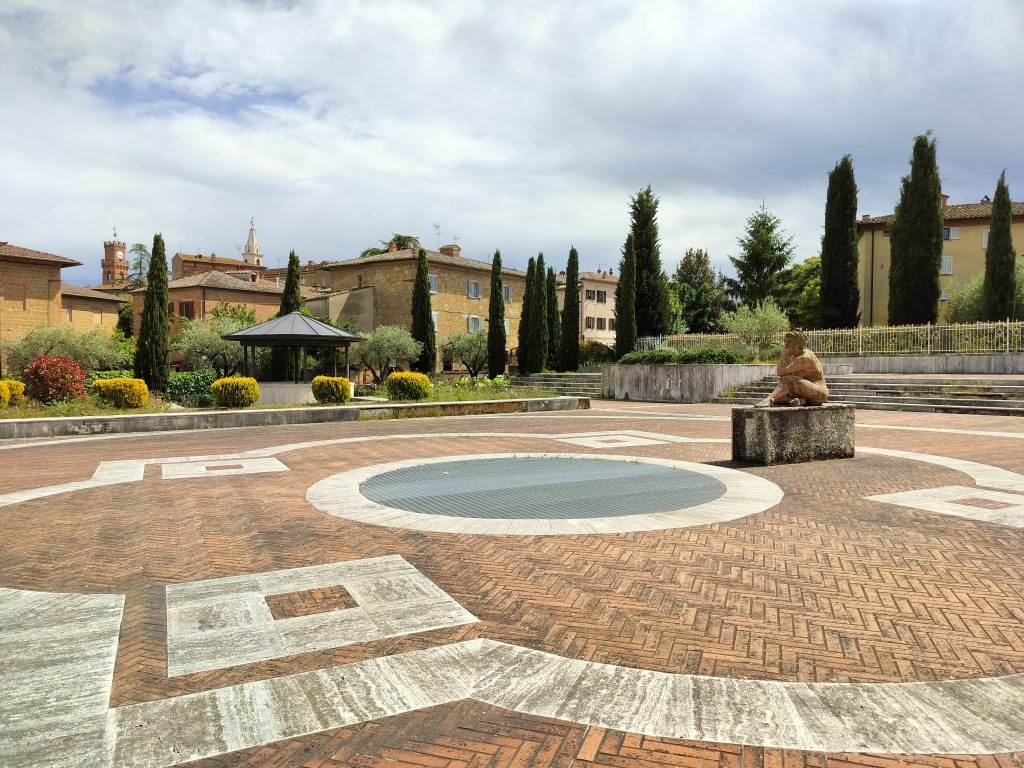
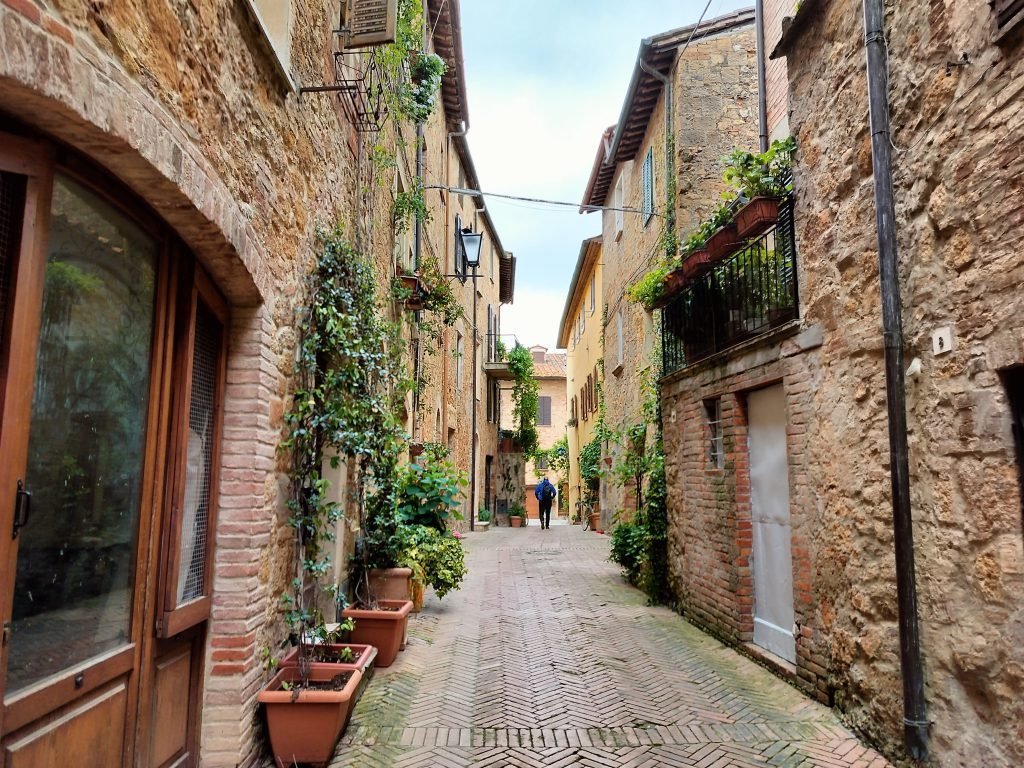
A couple of hours is enough for a visit to Pienza, including lunch.
Montalcino (SI)
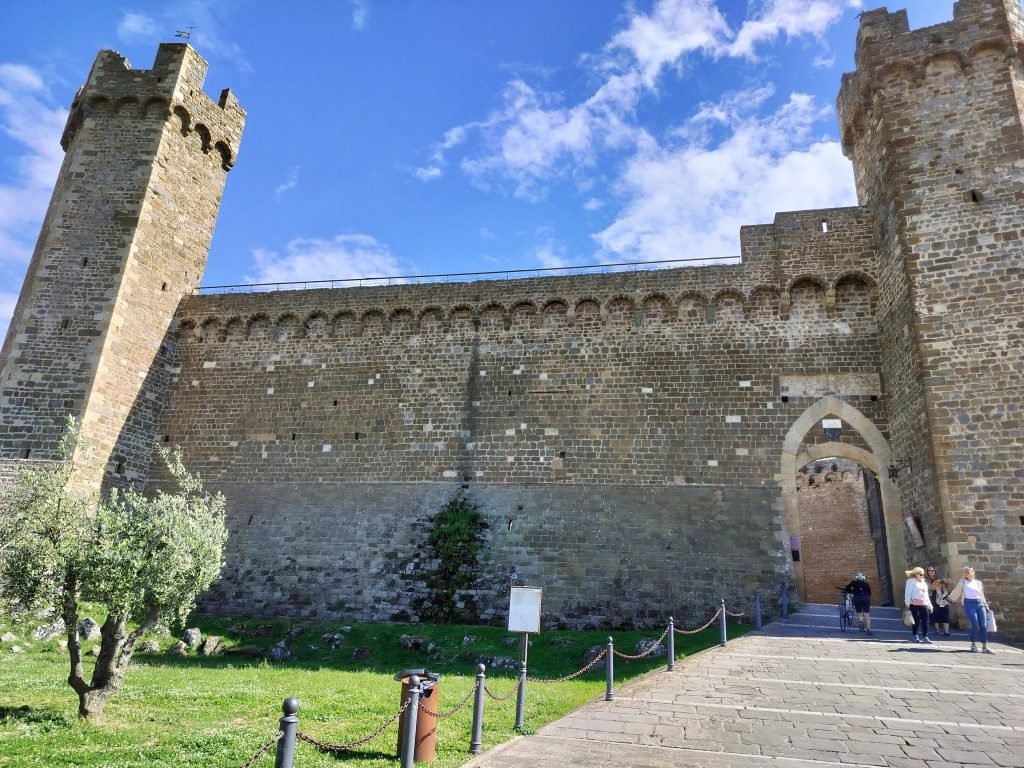
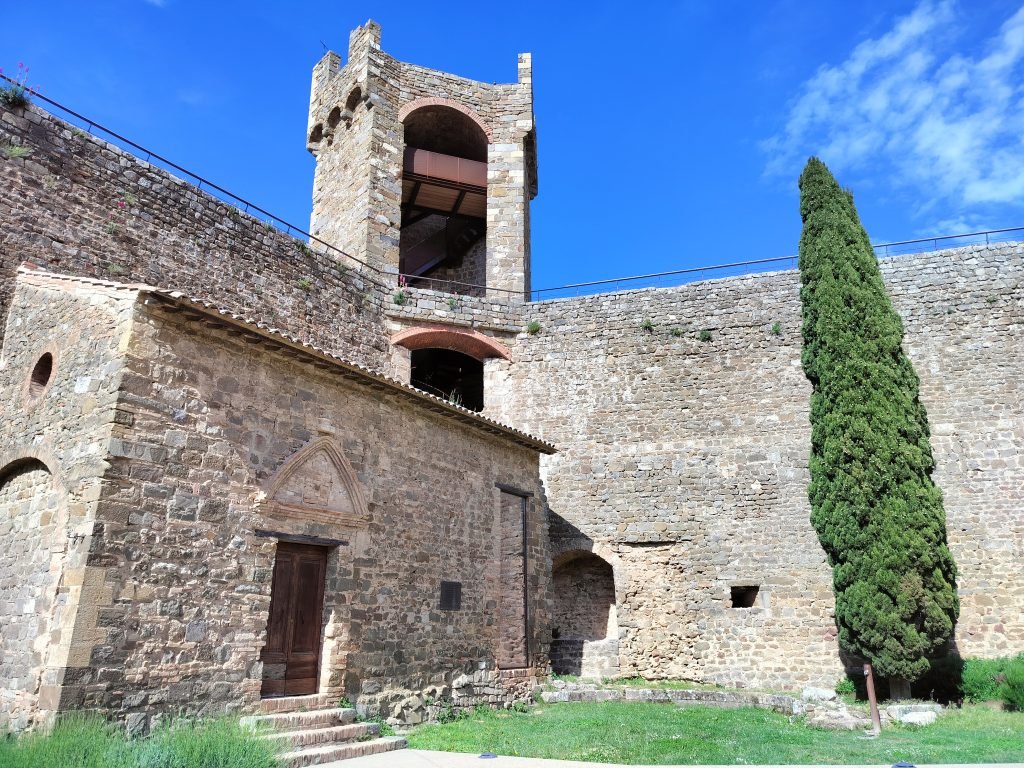
After picking up our cars, we head towards Montalcino, the home of Brunello wine. The tour of the village begins at the Rocca (Fortress), consisting of walls dating back to the 13th century, where the Bastione San Giovanni, dating back to the mid-16th century, stands out. You can visit the large pentagonal courtyard free of charge, while access to the panoramic view from the walls is subject to a fee.
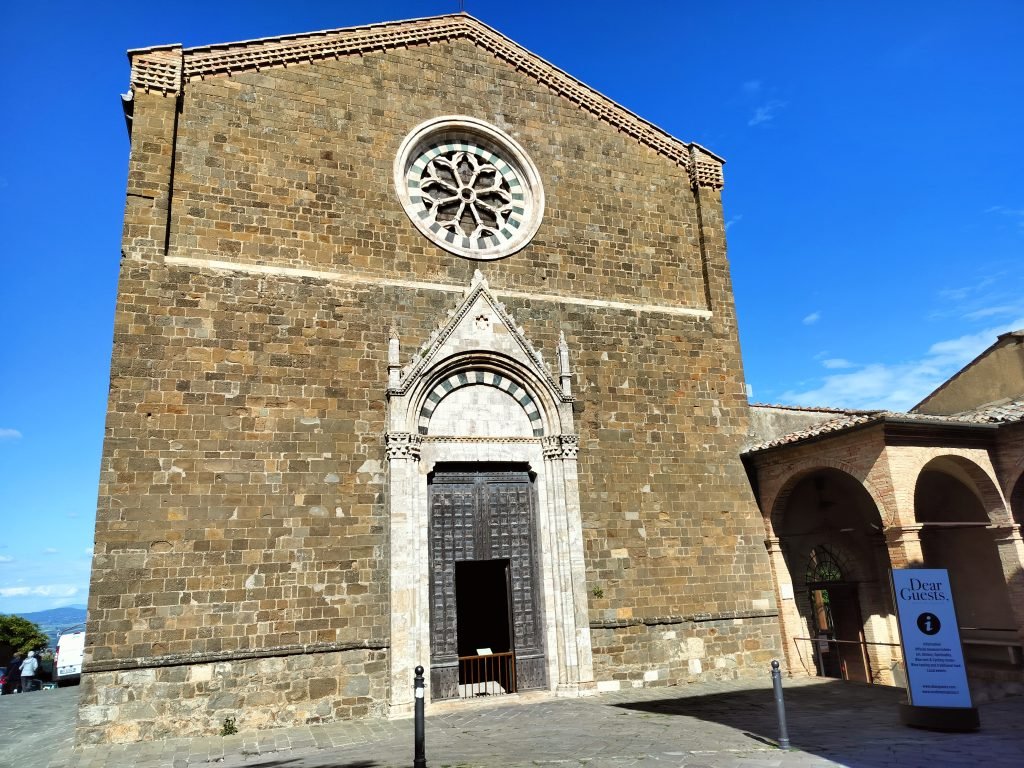
Continuing towards the center, we first find the Church of St. Egidio, dating back to the mid-14th century, with a Romanesque façade bearing the coat of arms of Siena, and then the Church of St. Augustine, which includes the convent and also dates back to the 14th century. It is worth visiting the interior of the church to see the frescoes, although they are not very well preserved.
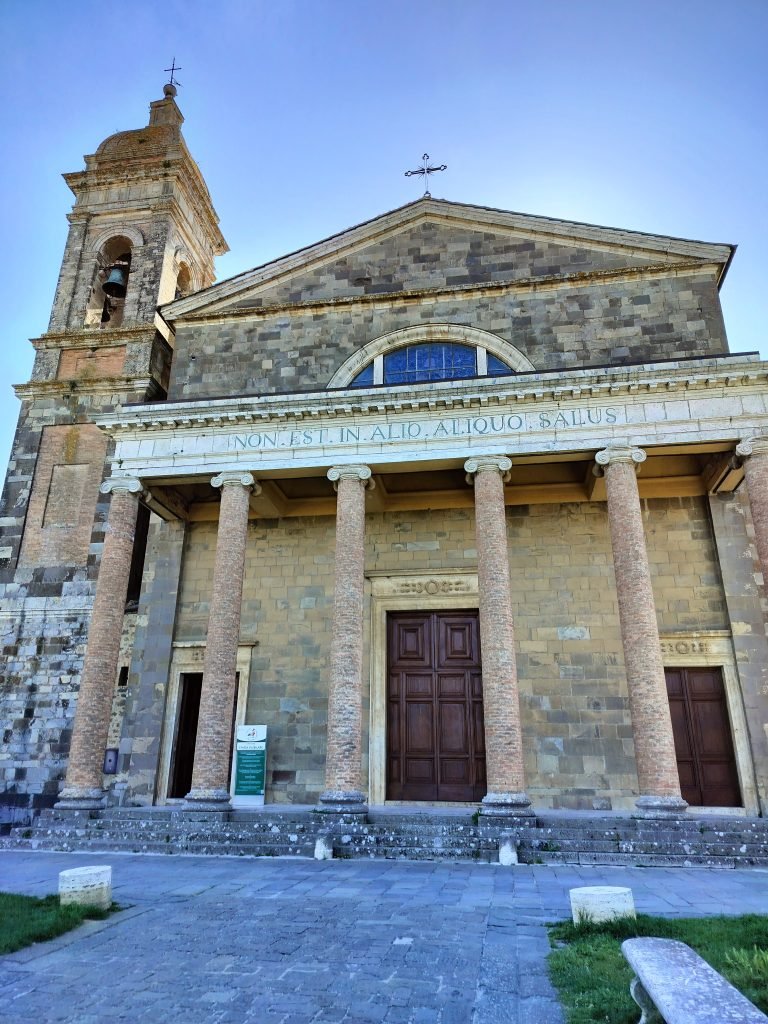
Passing the church of St. Augustine, continuing northward we arrive at the Co-Cathedral of the Holy Savior, or the Cathedral of Montalcino, located at the highest point of the village. The first walls of the Cathedral date back to the year 1000, but it was only at the end of the 15th century that it became a cathedral, at the behest of the usual Pius II.
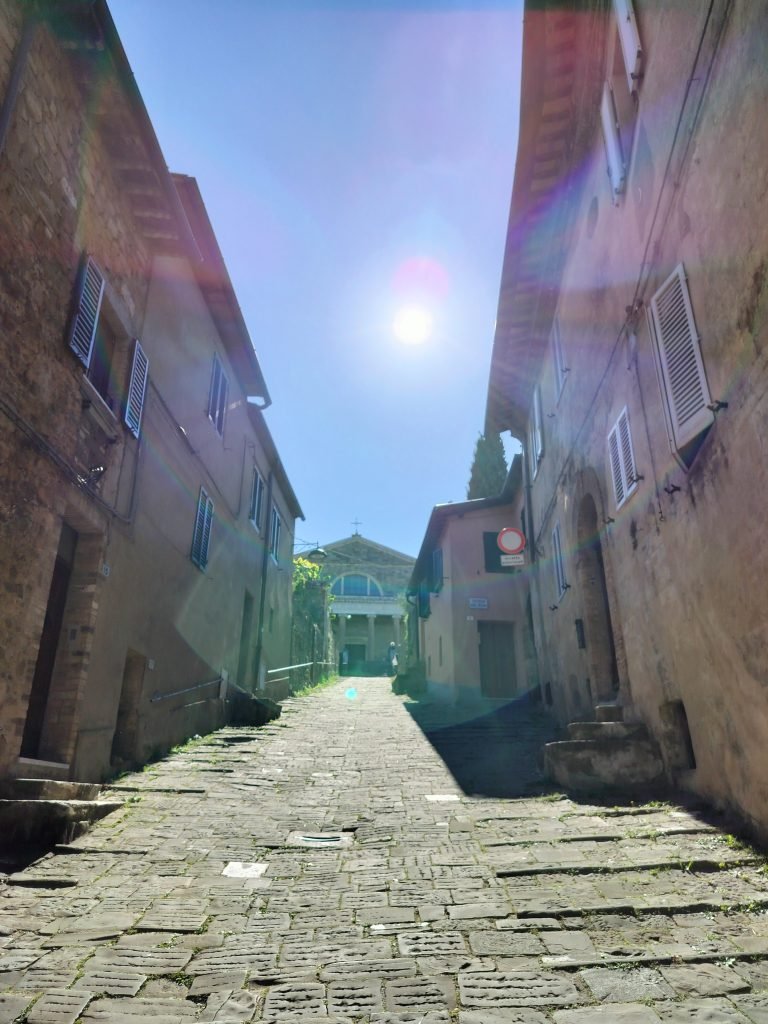
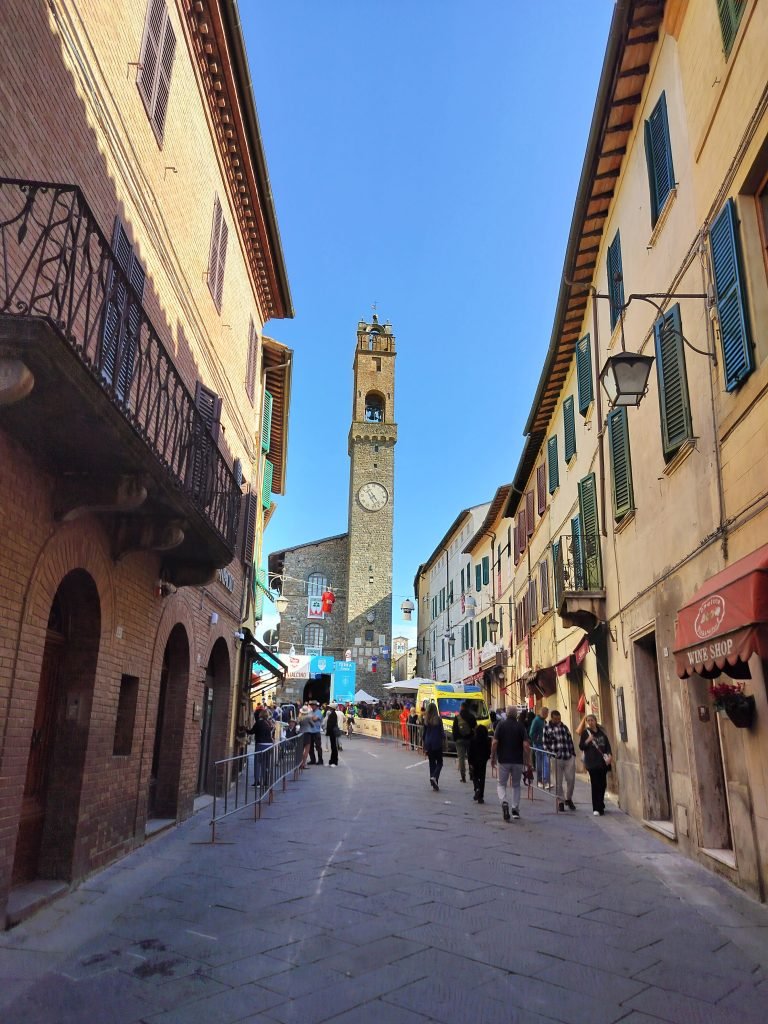
From the cathedral, you can walk downhill to Piazza del Popolo, the main square of the village. The elongated square is home to a number of points of interest:
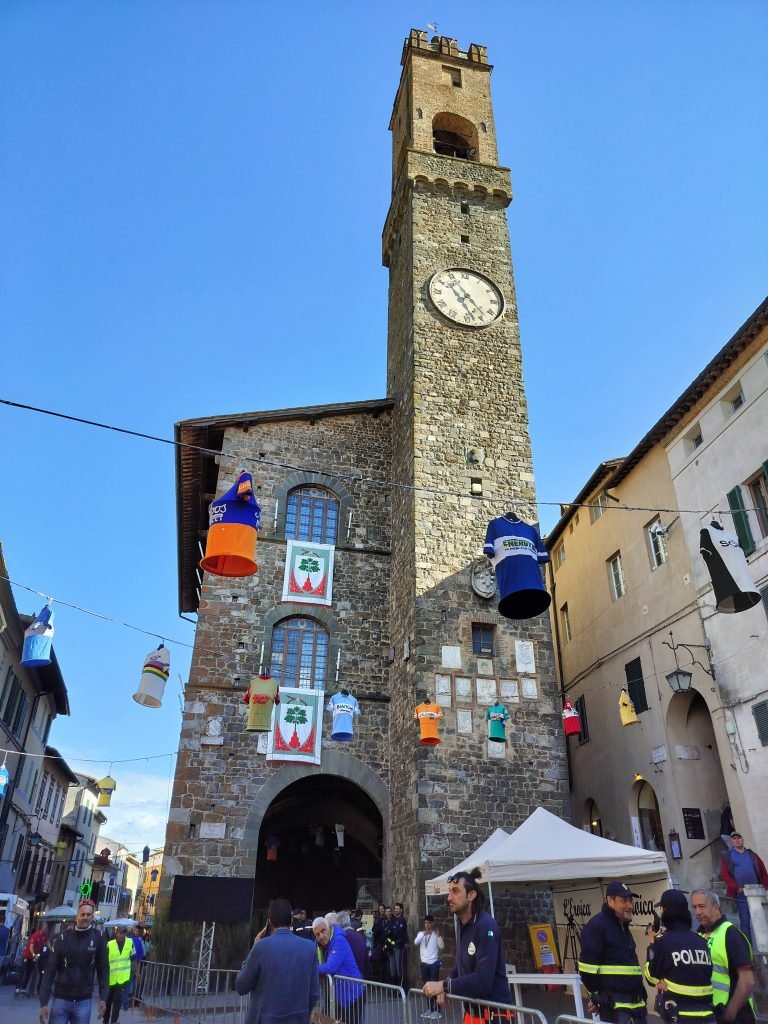
- The Palazzo dei Priori, the main building in the square. It is an elongated stone building dating back to the 14th century. The facade features the coats of arms of the mayors who have ruled the city, while the structure is dominated by the tall clock tower and the portico at the base, under which stands the statue of Cosimo dei Medici.
- The Loggia di Montalcino, consisting of six arches and dating back to the 14th century in its original construction.
- The Astrusi Theater, dating back to the 17th century.
Behind the square, it is worth mentioning the Colonna Pretoria, a marble column topped with a representation of the roman wolf, a copy of the original dating back to the 17th century..
Further away from the square, finally, are the Church of Madonna del Soccorso, with its charming Baptistery, and the deconsecrated church of San Francesco, now owned by the municipality.
The visit to Montalcino also takes us a couple of hours.
Bagno Vignoni (SI)
It is now late afternoon, and our final goal is to watch the sunset from the cypress trees of San Quirico d’Orcia. Since there is still some time before sunset, we make a stop in Bagno Vignoni, a tiny village to say the least. We park for free before entering the village, walking up the road to reach the center.
The visit to the village is very short, as all the points of interest are concentrated in the main square, Piazza delle Sorgenti. The center of the square is almost entirely occupied by a thermal bath, which is no longer in use (but still filled with water). Along the perimeter of the square, there are several buildings:
- The loggia of St. Catherine, consisting of the remains of a church dedicated to the saint of the same name (today there is a small chapel), linked to the city.
- The Church of St. John, closed at the time of our visit.
- The Palazzo del Rossellino, designed by the architect nicknamed Rossellino because of the color of his hair (this is the same Rossellino who designed Pienza).
The loggia of Santa Caterina separates Piazza delle Sorgenti from Piazza del Moretto, the second square in the village, surrounded by stone buildings and containing a well inside.
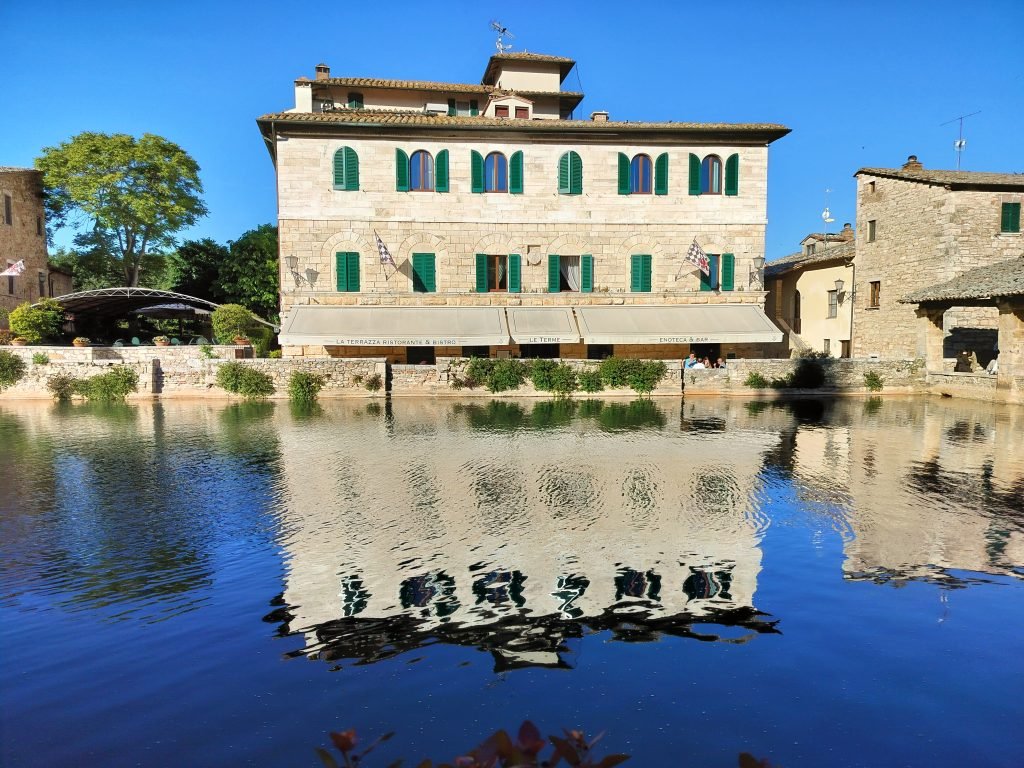
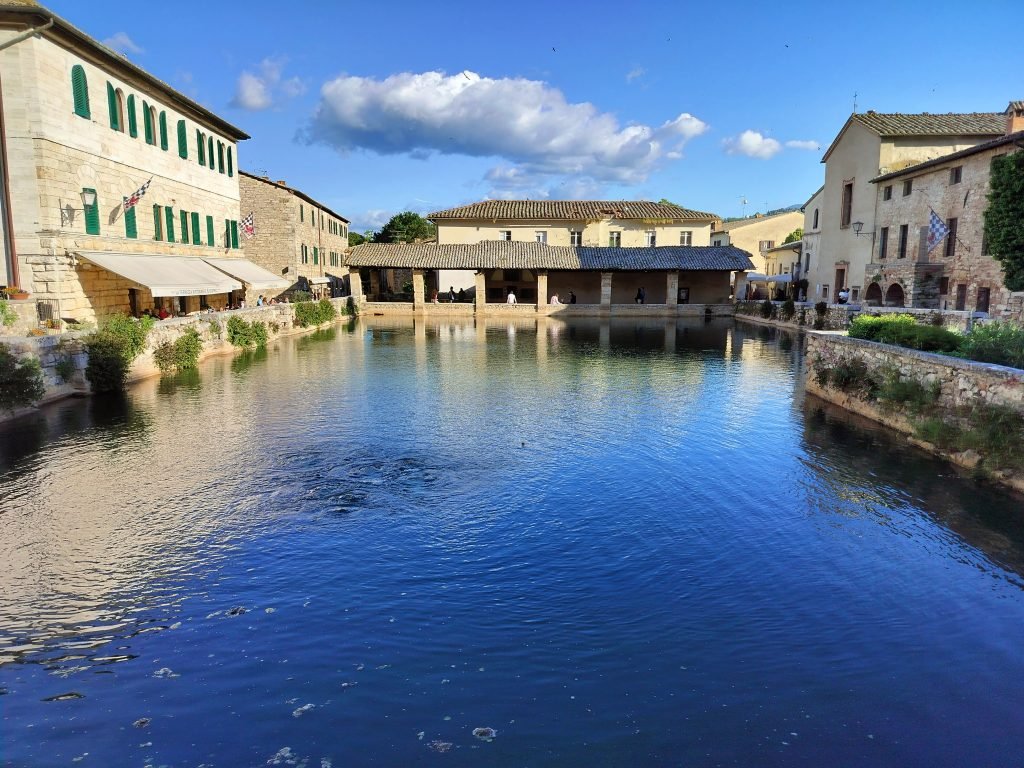
Near the village are also the thermal baths of Bagno Vignoni, which we did not visit, preferring to postpone our bath until the following day at the thermal baths of San Filippo.
San Quirico d’Orcia (SI)
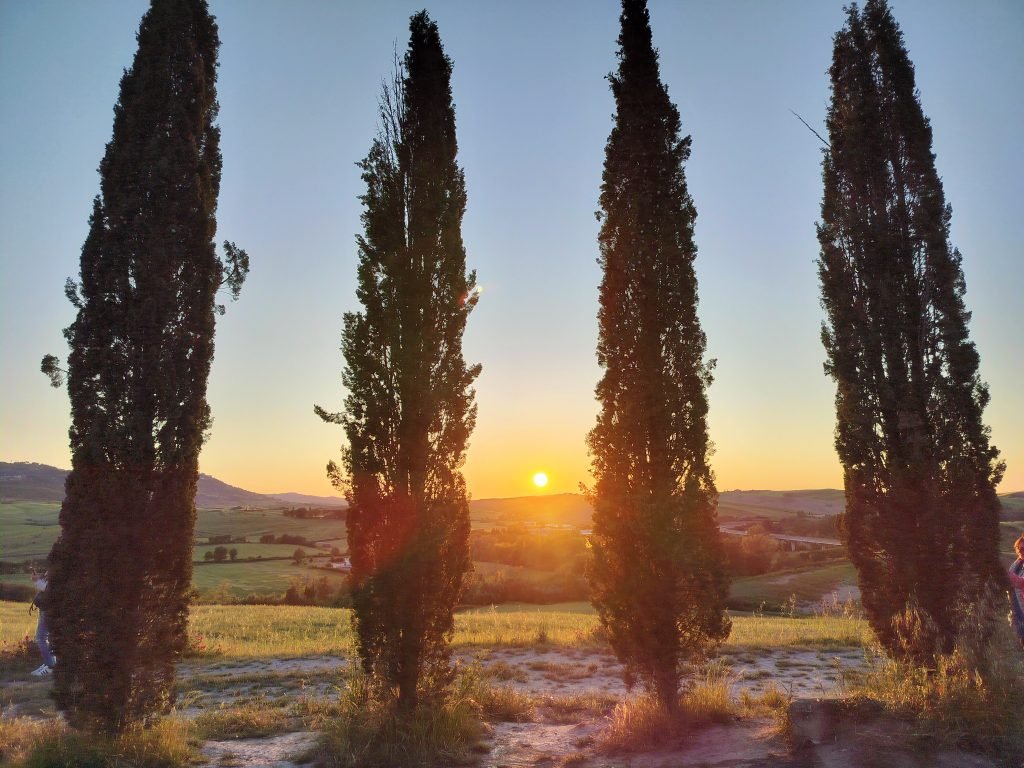
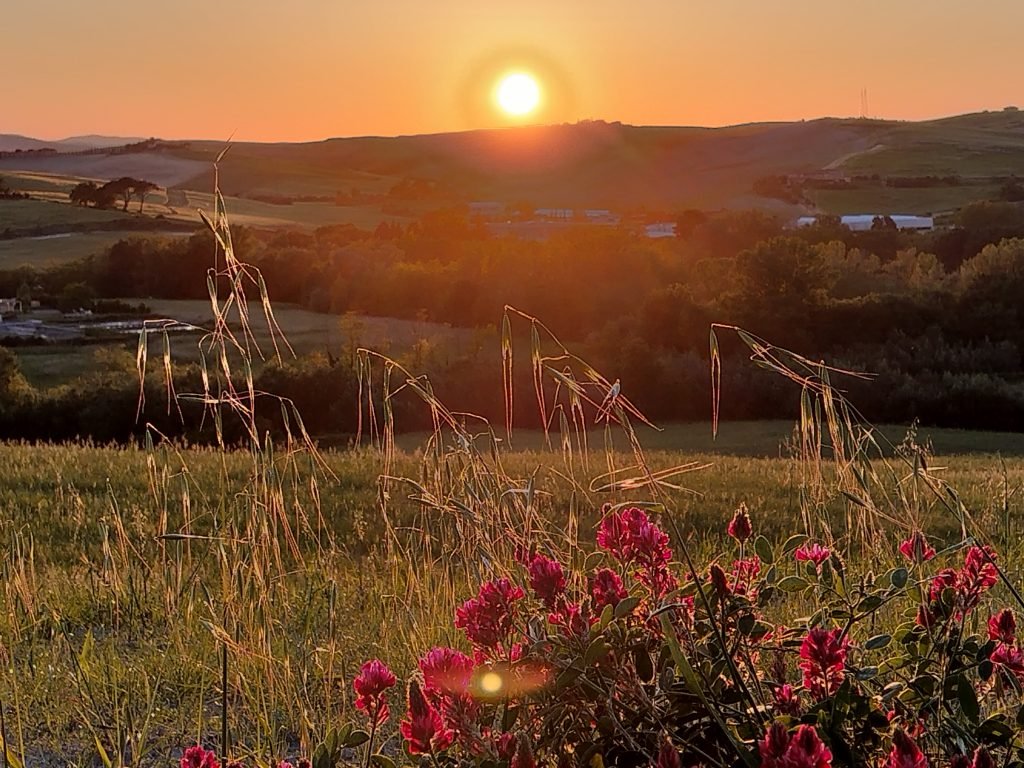
After our quick tour of Bagno Vignoni, we head to San Quirico d’Orcia to watch the sunset. On Maps, just set “cipressi di San Quirico” to get to the parking lot, not far from the area where you can watch the sunset. I must say that my expectations were not very high, but I was pleasantly surprised. The colors of the sky and the surrounding countryside become truly beautiful as the sun sets. I’ll let the photos speak for themselves.
Chianciano (SI)
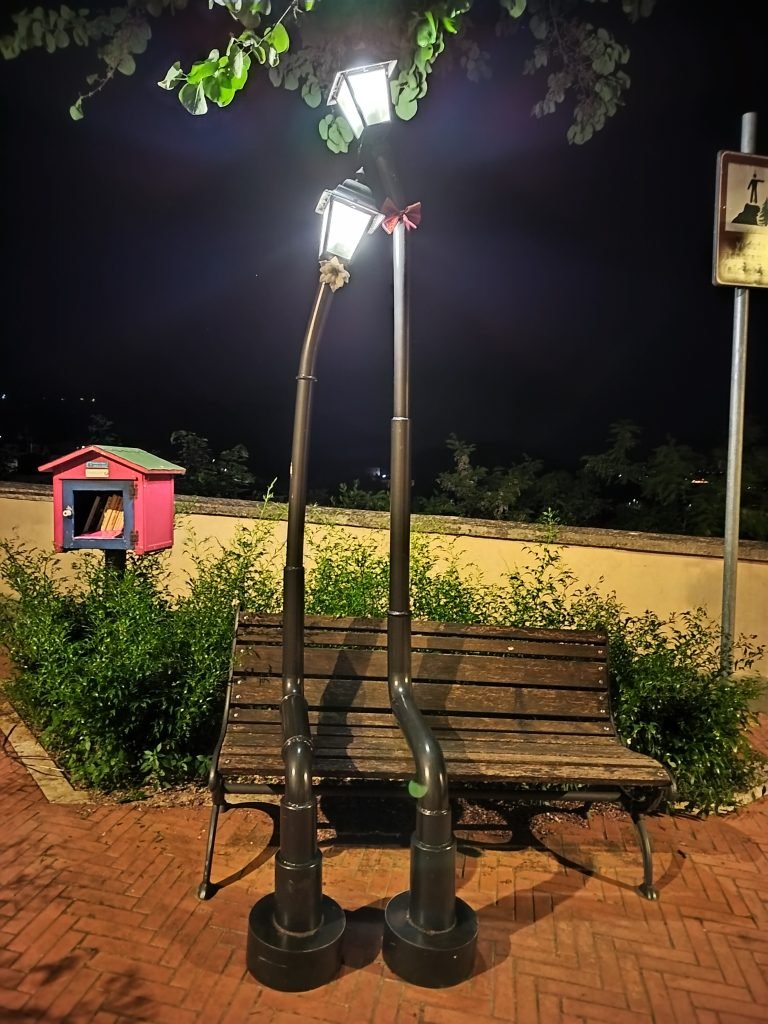
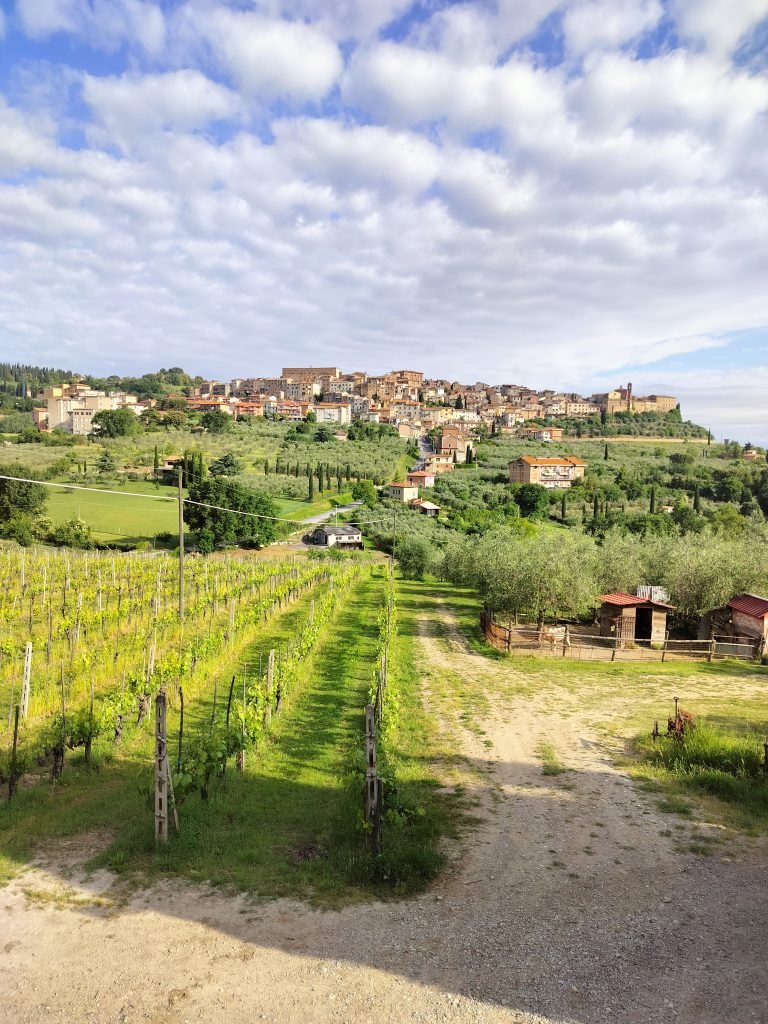
Our last stop is Chianciano, where we arrive in the evening and visit by night. Of course, the main buildings are all closed, so we just take a walk through the streets of the village. We pass by the Clock Tower and the Church of the Madonna della Rosa, probably the two most famous buildings in the village. Finally, we have dinner at the restaurant of our accommodation, Agriturismo La Pietriccia, which is highly recommended for its rooms and cuisine, as well as for its beautiful view of Chianciano.
Day 2: Bagni San Filippo and Montepulciano
Bagni San Filippo (SI)
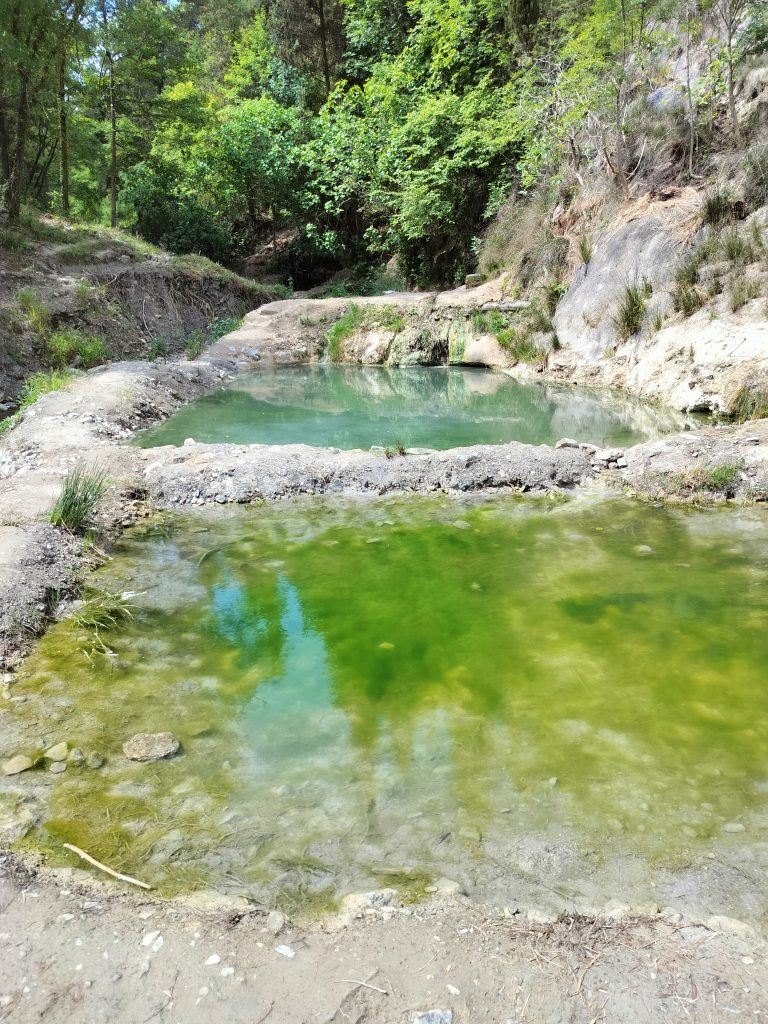
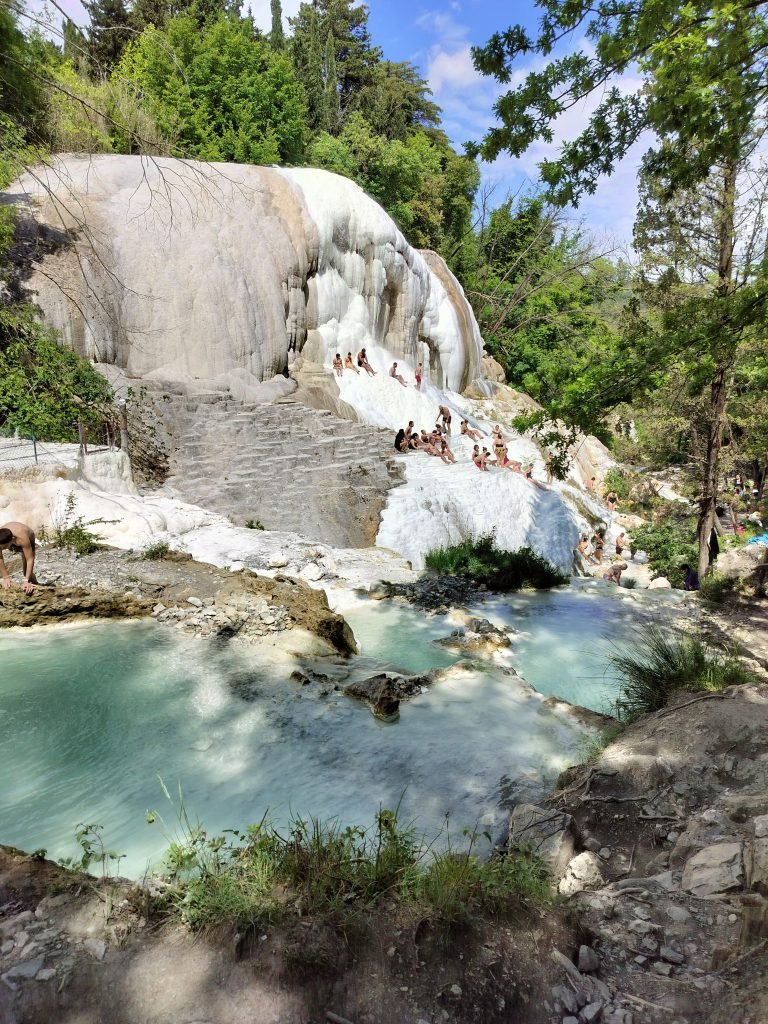
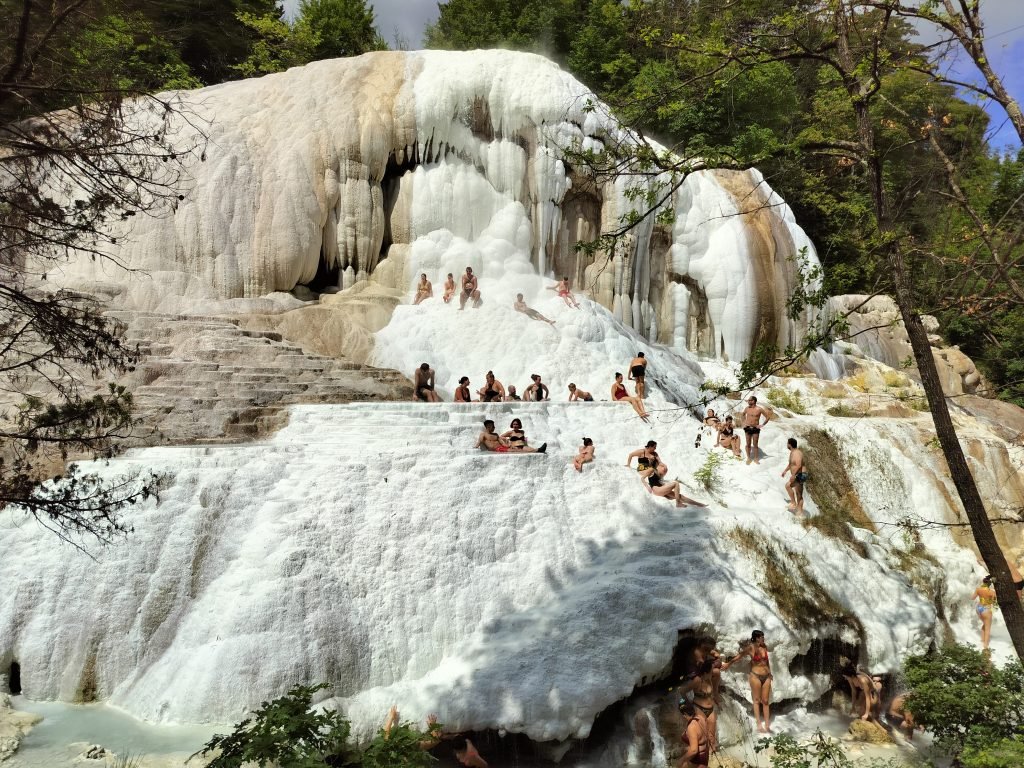
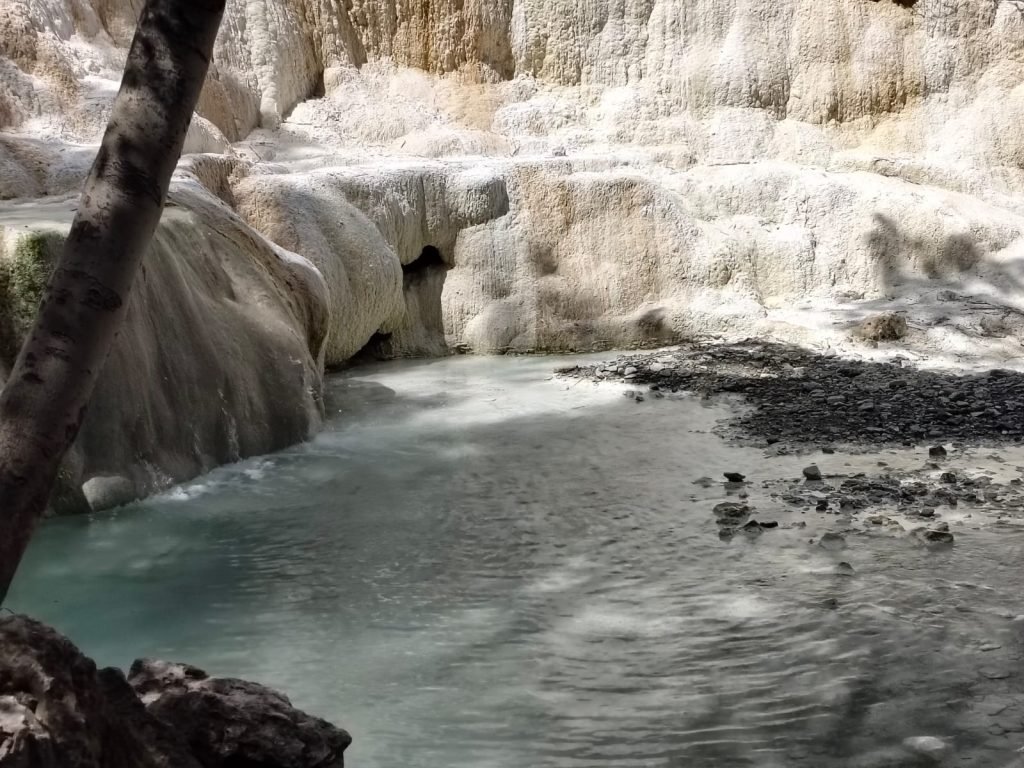
The morning of our second day is mainly devoted to bathing at the Fosso Bianco thermal baths in Bagni San Filippo. Access to the entire area is free, but be careful with paid parking. Along the way, we saw several fines on cars parked without tickets (parking is also paid on Sundays). The spa area is quite large, and the route is accessible on foot, but for those with mobility issues, it may not be ideal due to the slightly uneven and sloping terrain. The first pools you come across on the way down from the parking lot have rather cold water. To find warm water, you have to go all the way to the Cascata della Balena Bianca, a limestone formation formed by thermal water sediments, so named because its shape vaguely resembles a whale’s mouth. The rock formations are truly impressive. We stay at the thermal baths until lunchtime.
Montepulciano (SI)
After bathing at the spa, we head to Montepulciano, arriving in time for lunch at the restaurant “Salcheto”, which I highly recommend. After lunch, we take a stroll through the streets of Montepulciano to aid digestion. The main attractions are concentrated around Piazza Grande, which houses:
- The town hall, a building dating back to the 15th century, whose façade was designed by the architect Michelozzo.
- The Duomo (Cathedral of Santa Maria Assunta), dating back to the 17th century.
- The noble palaces of the Contucci, Nobili-Tarugi, and Capitano families.
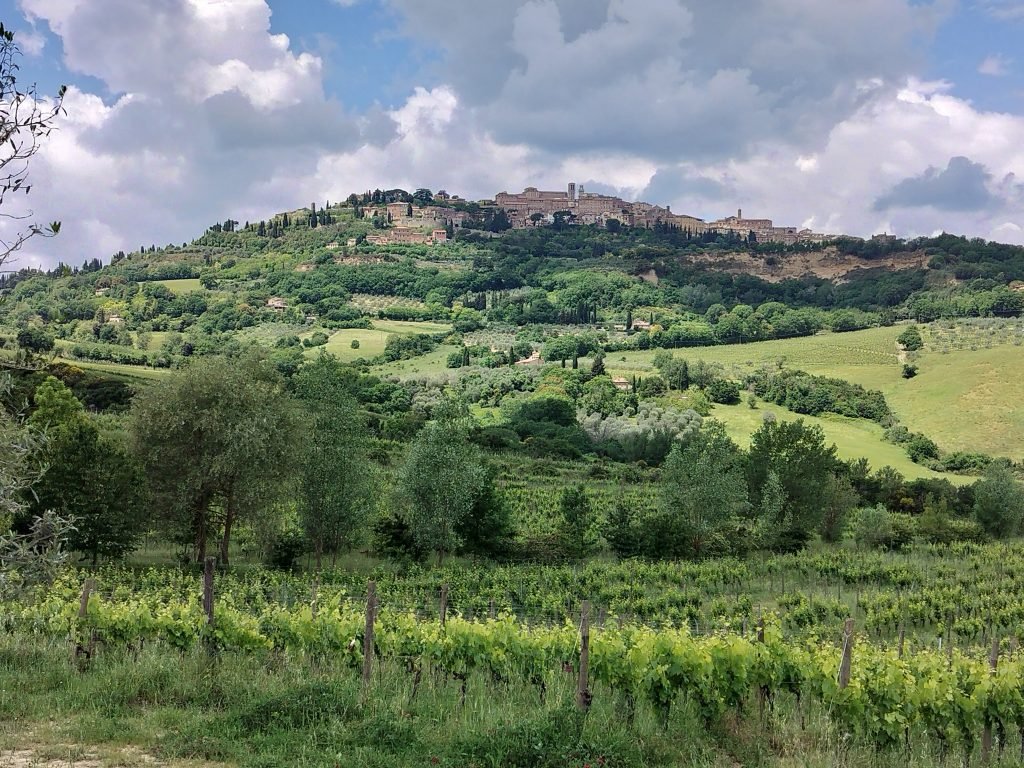
Finally, we return to our homes after a more exhausting journey back than expected due to traffic jams on several sections of the highway, arriving just in time for dinner.
Conclusions
My expectations for Val d’Orcia were quite high, but I must say that they were exceeded. The villages we saw are very small, so it was a good idea to visit more than one. If I had to choose my top three favorite moments, I would say:
- The sunset from the cypress trees of San Quirico. Truly beautiful and exciting colors, among the best sunsets seen in Italy.
- Pienza, the village I liked the most.
- A dip in the thermal baths, a little relaxation surrounded by nature.
We highly recommend both the farmhouse where we stayed and the restaurant where we had lunch in Montepulciano.